Association between dietary calcium intake and benign prostatic hyperplasia: a population-based result from NHANES 2003 to 2008
- PMID: 40529014
- PMCID: PMC12170208
- DOI: 10.21037/tau-2025-43
Association between dietary calcium intake and benign prostatic hyperplasia: a population-based result from NHANES 2003 to 2008
Abstract
Background: Benign prostatic hyperplasia (BPH), as a cause of various lower urinary tract symptoms (LUTS), can improve patients' quality of life when effectively controlled. To elaborate on the effect of dietary calcium intake on BPH, we investigated the association between dietary calcium intake and the risk of BPH using data from the National Health and Nutrition Examination Survey (NHANES).
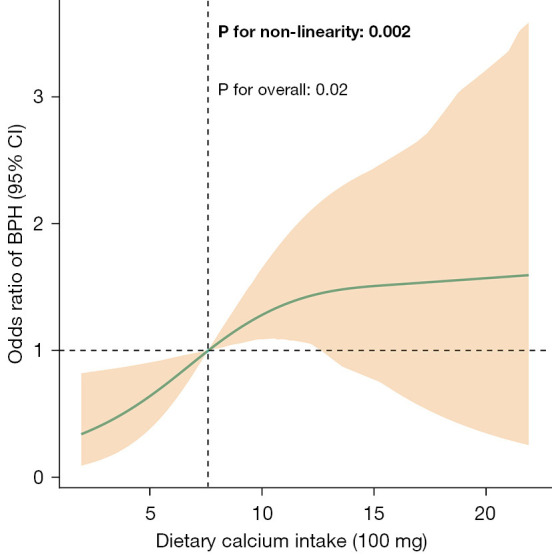
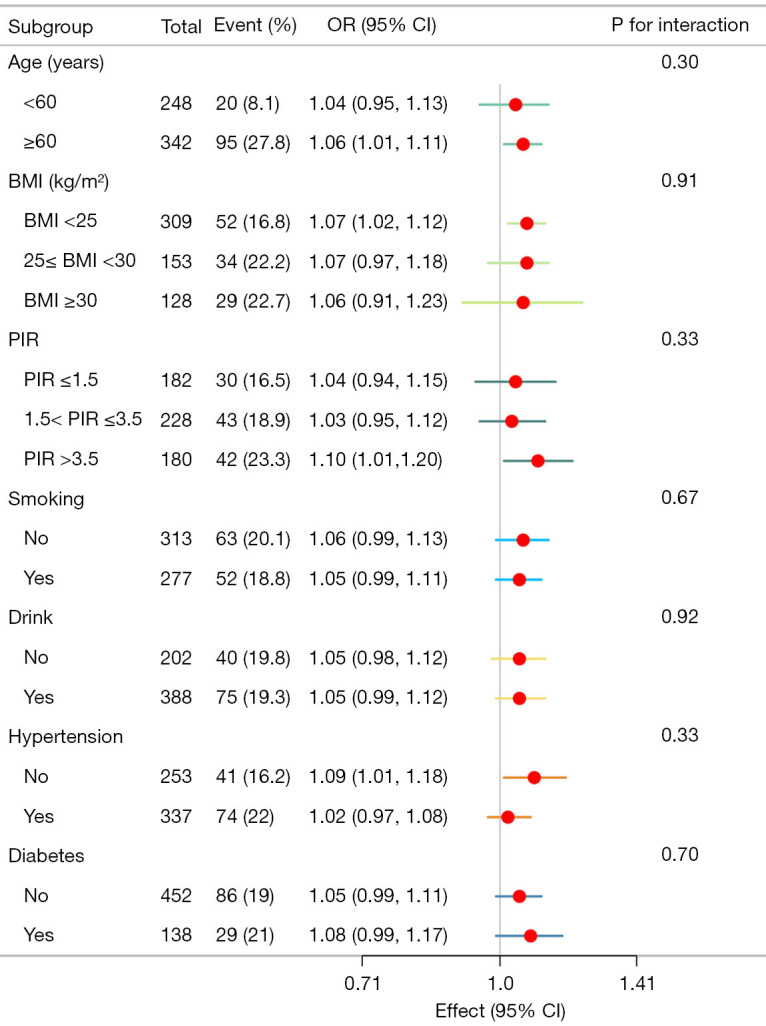
Methods: Data from the NHANES conducted from 2003 to 2008 were utilized. BPH was identified through self-reported questionnaires, and dietary calcium intake was calculated based on the mean of two 24-hour dietary recall interviews. Multivariable logistic regression analyses were performed to assess the association, supplemented by restricted cubic spline analysis and subgroup analyses.
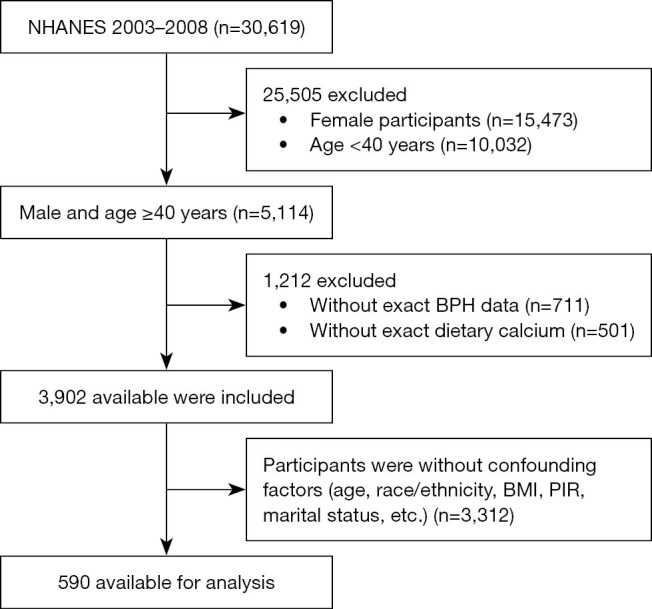
Results: A total of 590 males aged 40 years and older were included in the study, of whom 138 had BPH. After adjusting for all covariates, a higher dietary calcium intake was associated with an increased risk of BPH [odds ratio (OR), 1.05; 95% confidence interval (CI): 1.01-1.09; P=0.04], and those without hypertension.
Conclusions: The study found a positive association between dietary calcium intake and the risk of BPH among U.S. men aged 40 years and older. High calcium intake may be associated with the occurrence of BPH, particularly in older individuals. These findings underscore the importance of monitoring dietary calcium intake as part of BPH prevention strategies.
Keywords: Benign prostatic hyperplasia (BPH); National Health and Nutrition Examination Survey (NHANES); cross-sectional study; dietary calcium intake; men’s health.
Copyright © 2025 AME Publishing Company. All rights reserved.
Conflict of interest statement
Conflicts of Interest: All authors have completed the ICMJE uniform disclosure form (available at https://tau.amegroups.com/article/view/10.21037/tau-2025-43/coif). The authors have no conflicts of interest to declare.
Figures
References
LinkOut - more resources
Full Text Sources