


Next-Generation Sequencing-Based Molecular Profiling of Conjunctival Squamous Cell Carcinoma and Its Potential Application for Therapy
- PMID: 40529102
- PMCID: PMC12173057
- DOI: 10.1016/j.xops.2025.100801
Next-Generation Sequencing-Based Molecular Profiling of Conjunctival Squamous Cell Carcinoma and Its Potential Application for Therapy
Abstract
Objective: Targeted next-generation sequencing-based genomic and transcriptomic analyses of conjunctival squamous cell carcinoma (cSCC) samples using a panel of >1700 cancer-related genes.
Design: Prospective case series.
Participants: Twenty patients with invasive cSCC consecutively managed at an academic ocular oncology setting.
Methods: Integrative exome and transcriptome analysis of fresh-frozen tumor and matching normal samples.
Main outcome measures: Molecular characterization of invasive cSCCs (for somatic mutations, tumor mutation burden (TMB) and signatures, structural variations, viral transcripts, outlier gene expression) and its potential clinical applications.
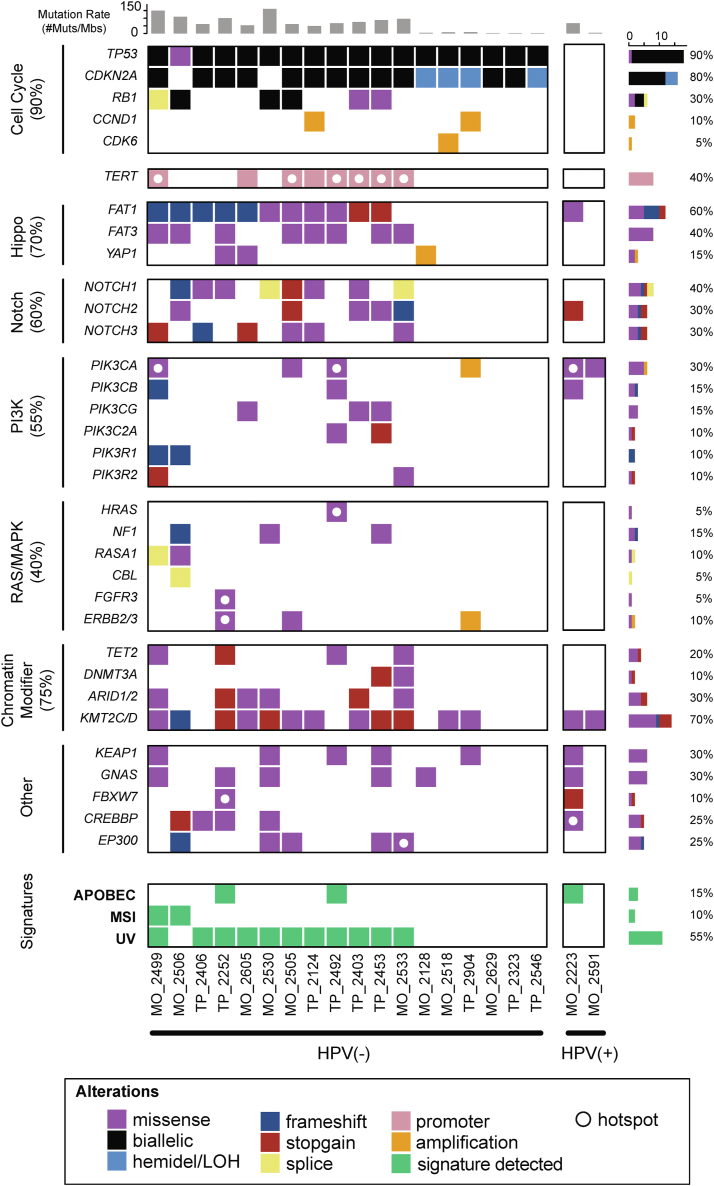
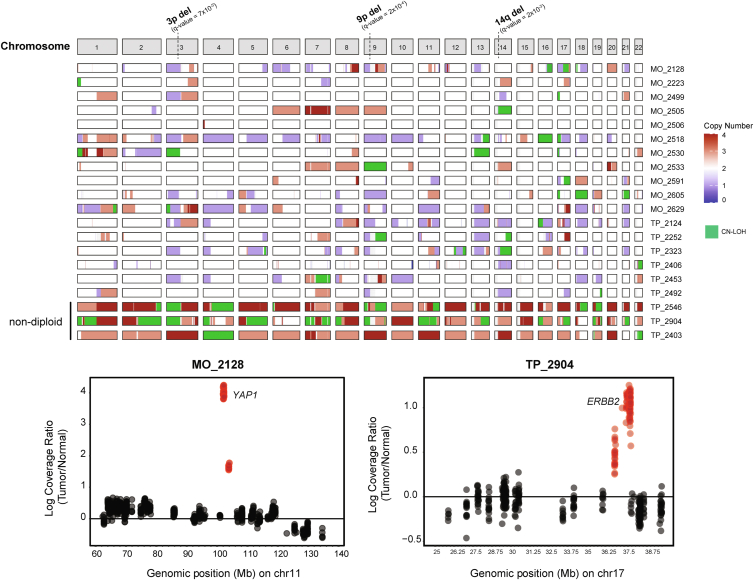
Results: Of the 20 invasive cSCCs, only 2 were positive for human papillomavirus (HPV). All 18 HPV-negative tumors had genetic alterations in TP53 and 16 also had alterations in CDKN2A. The 2 HPV-positive tumors showed no alterations in these cell cycle regulators but harbored mutations in PIK3CA. Other frequently altered genes included KMT2C /D (70%), FAT1/3 (65%), and NOTCH1/2/3 (60%), which were implicated in both the HPV-negative and positive tumors. The average TMB was 58.41 mutations per megabase (Mut/Mb). The TMB was >20 Mut/Mb in 13 cases (65%, range: 49.3-160.8 Mut/Mb), of which 11 had ultraviolet (UV) mutational signature, 3 had APOBEC signature, and 2 had microsatellite instability. Most UV-driven tumors (8 of 11) also harbored TERT promoter mutations. The most recurrent large-scale copy number alterations were the deletions affecting chromosomes 3p, 9p, and 14q. Uncommon but potentially drug-targetable copy number gains were also detected affecting several oncogenes. The most frequent gene expression outlier was the aberrantly expressed TP63 found in 19 tumors.
Conclusions: In our invasive cSCC cohort, HPV infection was not a major contributor to tumor etiopathogenesis. Our results confirmed the central role of TP53 genetic alterations and the common presence of UV signature in the HPV-negative cSCCs. Irrespective of HPV status, other commonly observed genetic alterations included those affecting chromatin modifiers followed by Hippo or Notch pathway-related genes. Ultraviolet-driven TERT promoter mutations co-occurred with other driver gene alterations. The commonly observed high TMB makes immunotherapy a good treatment choice for invasive cSCC. Moreover, several cSCC-associated molecular alterations represent potentially actionable targets, while further studies are necessary to understand their roles in cSCC development and invasion.
Financial disclosures: Proprietary or commercial disclosure may be found in the Footnotes and Disclosures at the end of this article.
Keywords: Conjunctival squamous cell carcinoma; Copy number alterations; Mutations; Tumor mutation burden; UV signature.
© 2025 by the American Academy of Ophthalmologyé.
Figures
References
LinkOut - more resources
Full Text Sources
Research Materials
Miscellaneous
