


Tumor-infiltrating lymphocytes are the key determinants of pathological features associated with pathogenic BRCA variants in high-grade serous ovarian carcinoma
- PMID: 40529128
- PMCID: PMC12172505
- DOI: 10.3389/fmed.2025.1555883
Tumor-infiltrating lymphocytes are the key determinants of pathological features associated with pathogenic BRCA variants in high-grade serous ovarian carcinoma
Abstract
Background: High-grade serous ovarian carcinoma (HGSOC), an aggressive cancer associated with pathogenic BRCA variants, causes genomic instability and sensitivity to poly (ADP-ribose) polymerase inhibitors. Identifying pathogenic BRCA variants is crucial for the treatment of HGSOC; however, genetic testing is expensive and time-consuming. This study aimed to explore pathological features, particularly the presence of tumor-infiltrating lymphocytes (TILs), as potential surrogates to streamline patient selection for genetic testing.
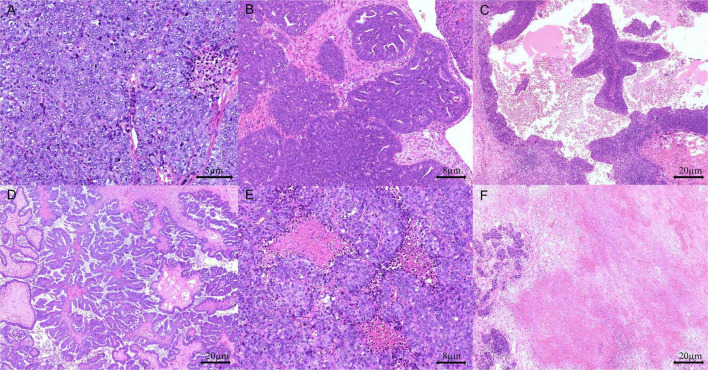
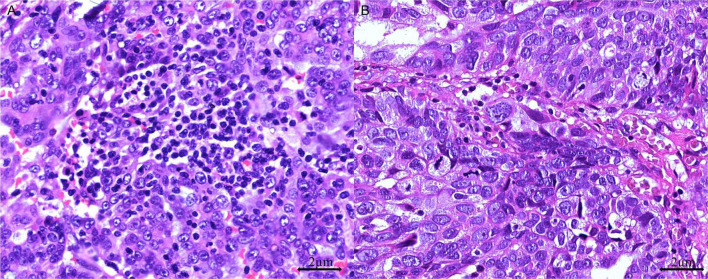
Methods: We retrospectively analyzed 58 cases of HGSOC with known BRCA variant profiles. Tumors were categorized as TIL-positive or TIL-negative based on the presence of > 40 or ≤ 40 intraepithelial lymphocytes in a single high-power field (HPF), respectively. Key pathological features, including solid, endometrioid, and transitional (SET) architecture patterns; necrosis; and mitotic activity, were evaluated within these subgroups. Statistical analyses were used to determine the associations between these features and BRCA variant status.
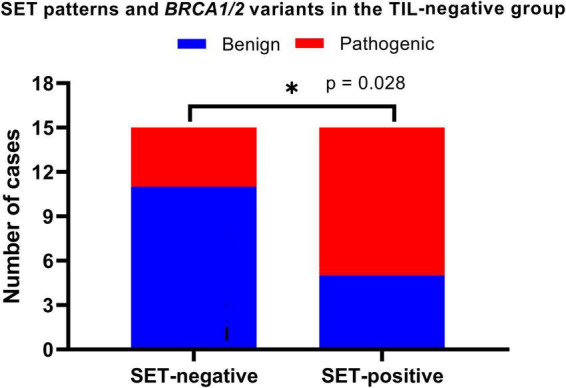
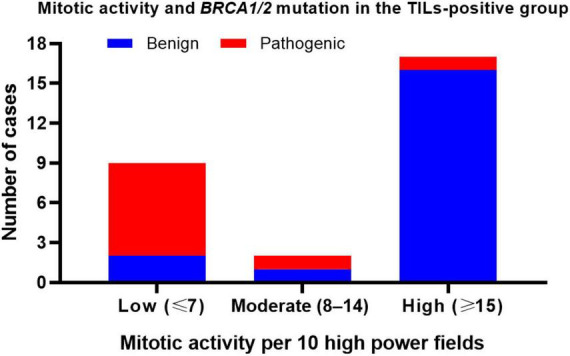
Results: In TIL-negative HGSOCs, SET patterns were strongly associated with pathogenic or likely pathogenic BRCA variants (p = 0.028), emerging as the most reliable morphological marker in this group. In TIL-positive HGSOCs, low mitotic activity (≤7 mitotic figure per 10 HPFs) was significantly correlated with pathogenic BRCA variants (p = 0.0002), underscoring its diagnostic significance. Necrosis and mitotic activity in TIL-negative cases and SET patterns in TIL-positive cases were not significantly associated with pathogenic BRCA variants. Combined analysis of both TIL subgroups diluted these associations, underscoring the significance of stratifying cases by the immune context.
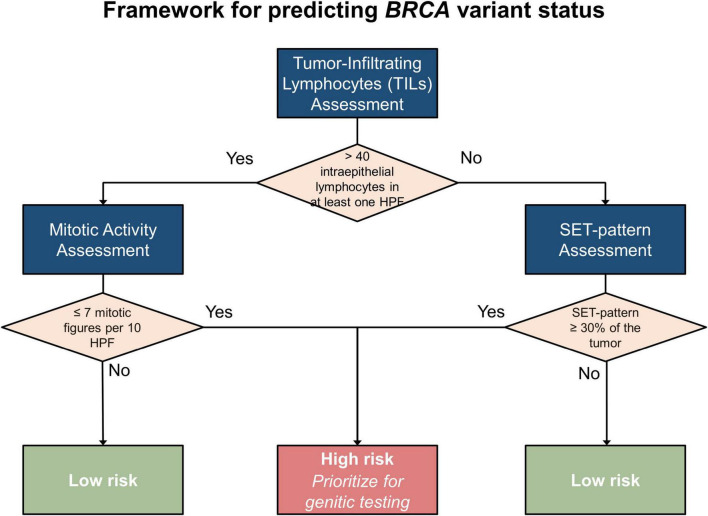
Discussion: The presence of TILs affects the diagnostic value of pathological features for BRCA variant status in HGSOC. Regarding pathogenic BRCA variants, SET patterns and low mitotic activity were identified as critical markers in TIL-negative tumors and TIL-positive tumors, respectively. These associations likely stem from interactions among genomic instability, immune response, and tumor growth. Our framework leverages these insights to prioritize high-risk cases for genetic testing, thereby optimizing resource allocation.
Conclusion: The presence of TILs is critical for understanding the association between pathological features and pathogenic BRCA variants in HGSOC. To improve pathogenic BRCA variant prediction, optimize genetic testing, and guide tailored intervention, our framework integrates immune context and morphological markers. This approach is especially useful in resource-limited settings and can enhance diagnostic efficiency and clinical decision-making.
Keywords: BRCA; high-grade serous ovarian carcinoma; histology; mitosis; ovary; tumor infiltrating lymphocyte.
Copyright © 2025 Nguyen-Phan, Dang, Dang, Huynh, Nguyen, Tran, Ngo, Doan, Thai and Chen.
Conflict of interest statement
The authors declare that the research was conducted in the absence of any commercial or financial relationships that could be construed as a potential conflict of interest.
Figures
References
LinkOut - more resources
Full Text Sources
