


Biomarkers of traumatic brain injury: narrative review and future prospects in neurointensive care
- PMID: 40529152
- PMCID: PMC12170592
- DOI: 10.3389/fmed.2025.1539159
Biomarkers of traumatic brain injury: narrative review and future prospects in neurointensive care
Abstract
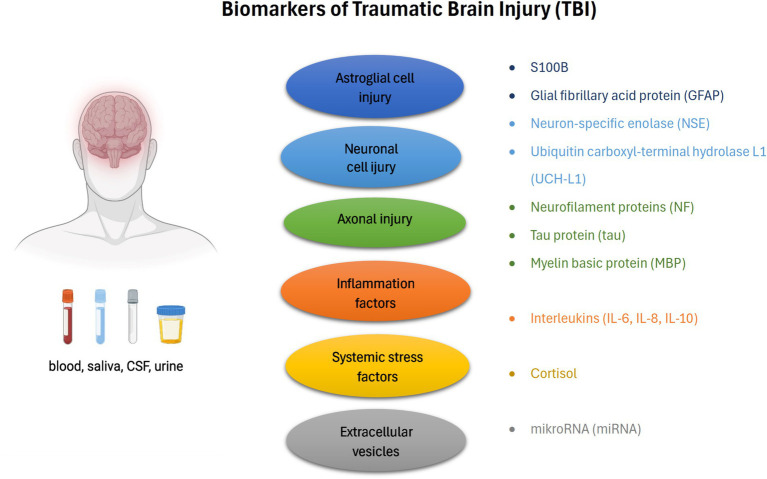
Traumatic brain injury (TBI) is a significant medical problem because of its high early mortality rate in intensive care and high risk of severe neurological complications in long-term follow-ups. Craniocerebral injuries are one of the most important issues in intensive therapy due to the limited prognostic possibilities for the neurological consequences of such injuries. Computed tomography and magnetic resonance imaging are the most common and available radiological tools for presenting and describing morphological brain damage in the acute and chronic phases of TBI. The use of biomarkers may improve the accuracy of establishing the severity and prognoses in patients with severe traumatic brain damage. Based on the available publications, there is no definitive and accurate single marker that has high prognostic value regarding neurological brain tissue damage; however, the combination of several biomolecules (i.e., biomarkers of neuronal, astrocyte, and cytoskeleton disruption and chemokines) significantly increases the diagnostic value. Most scientific studies are based on serum and cerebrospinal fluid assays. This publication presents the current state of the knowledge about the markers of nervous tissue damage in the brain and their clinical utility in mortality prediction and neurological prognosis in critical neurointensive care. Moreover, this review article presents the correlations between the biomarkers, radiological signs of brain injury, and clinical scales, as well as the latest scientific and publication trends, such as microRNA genetic studies and different laboratory assay methodologies using various biological materials.
Keywords: brain; critical care; exosome; neuroprognosis; neurotrauma.
Copyright © 2025 Pryzmont, Kosciuczuk and Maciejczyk.
Conflict of interest statement
The authors declare that the research was conducted in the absence of any commercial or financial relationships that could be construed as a potential conflict of interest.
Figures
References
-
- Schwartz V, Bjarkam C, Mathiesen T, Poulsen F, Botker M, Husted A, et al. The prognostic significance of biomarkers in cerebrospinal fluid following severe traumatic brain injury: a systematic review and meta-analysis. Neurosurg Rev. (2022) 45:2547–64. doi: 10.1007/s10143-022-01786-4, PMID: - DOI - PubMed
Publication types
LinkOut - more resources
Full Text Sources
