


Strong, antioxidant, and biodegradable gelatin methacryloyl composite hydrogel for oxidative stress protection in Schwann cells
- PMID: 40529174
- PMCID: PMC12171727
- DOI: 10.3389/fbioe.2025.1586380
Strong, antioxidant, and biodegradable gelatin methacryloyl composite hydrogel for oxidative stress protection in Schwann cells
Abstract
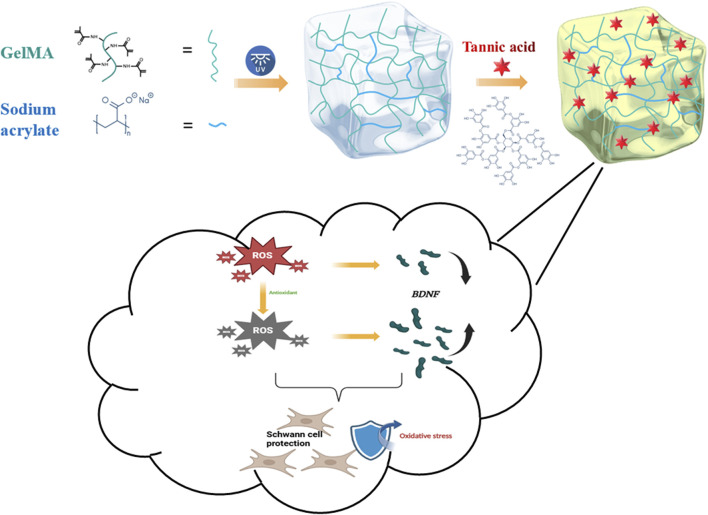
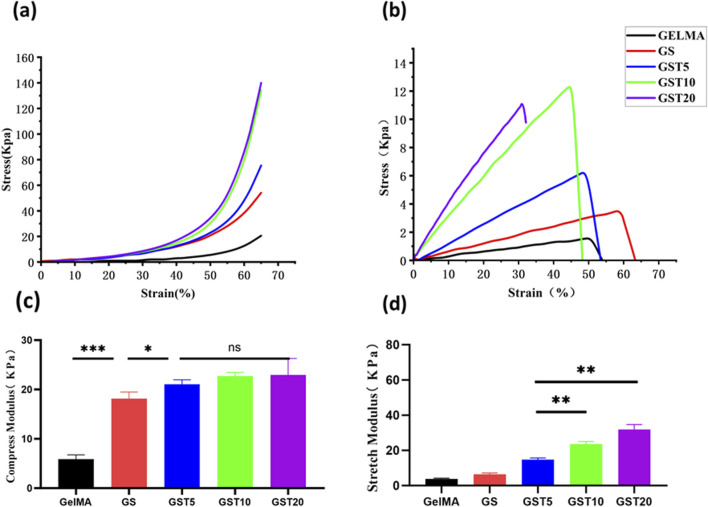
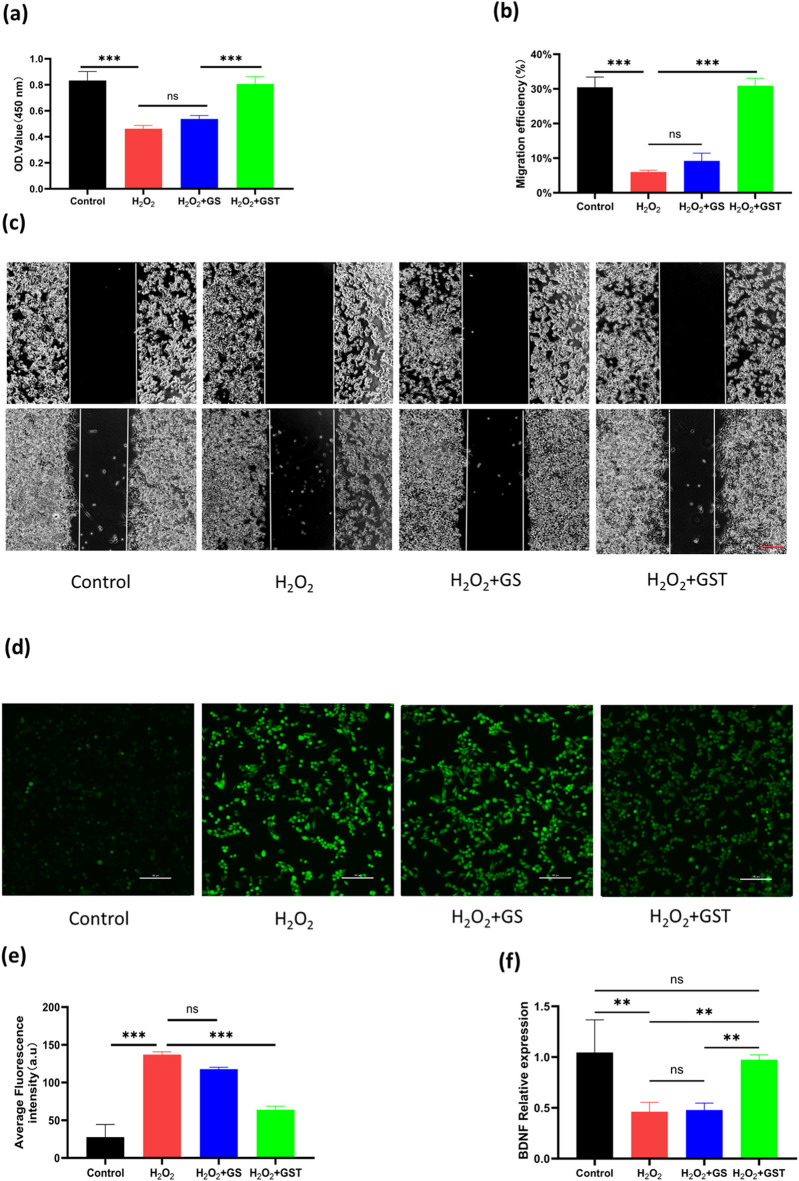
Gelatin methacryloyl (GelMA), a biomaterial widely used in tissue engineering, exhibits excellent biocompatibility and cell adhesion properties. However, its poor mechanical strength and functional monotony restrict broader clinical applications of this material. In this study, we introduced sodium acrylate (SA) and tannic acid (TA) into the GelMA system via a two-step crosslinking strategy, successfully fabricating a GelMA/SA-TA (GST) composite hydrogel that achieved dual enhancement of mechanical and antioxidant properties. The incorporation of SA and TA significantly improved the mechanical performance of the hydrogel, which exhibited a maximum tensile modulus of 31.83 ± 2.84 kPa. At the same time, TA endowed the hydrogel with exceptional antioxidant ability, resulting in a free radical scavenging rate of 89.93% ± 0.9% in vitro. Biological tests revealed that the GST hydrogel effectively alleviated oxidative stress damage in rat Schwann cells (RSC96) by suppressing the generation of reactive oxygen species (ROS) and promoting the secretion of brain-derived neurotrophic factor (BDNF). This work presents the first report of an antioxidant hydrogel capable of protecting Schwann cells without compromising their mechanical integrity, highlighting its transformative potential for peripheral nerve injury repair. The synergistic SA-TA modification strategy provides new insights into the design of multifunctional biomaterials for neural regeneration applications.
Keywords: Schwann cell; antioxidant; gelatin methacryloyl; peripheral nerve injury; tannic acid.
Copyright © 2025 Han, Ji, Yang, Pang, Chen, Zhu, Cao and Song.
Conflict of interest statement
The authors declare that the research was conducted in the absence of any commercial or financial relationships that could be construed as a potential conflict of interest.
Figures
References
-
- Choi B.-S., Sapkota K., Kim S., Lee H. J., Choi H.-S., Kim S.-J. (2010). Antioxidant activity and protective effects of tripterygium regelii extract on hydrogen peroxide-induced injury in human dopaminergic cells, SH-SY5Y. Neurochem. Res. 35, 1269–1280. 10.1007/s11064-010-0185-4 - DOI - PMC - PubMed
-
- Doce R. R., Hervás G., Belenguer A., Toral P. G., Giráldez F. J., Frutos P. (2009). Effect of the administration of young oak (Quercus pyrenaica) leaves to cattle on ruminal fermentation. Anim. Feed Sci. Technol. 150, 75–85. 10.1016/j.anifeedsci.2008.08.005 - DOI
LinkOut - more resources
Full Text Sources
Research Materials
