


Intestinal flora metabolites indole-3-butyric acid and disodium succinate promote IncI2 mcr-1- carrying plasmid transfer
- PMID: 40529306
- PMCID: PMC12170664
- DOI: 10.3389/fcimb.2025.1564810
Intestinal flora metabolites indole-3-butyric acid and disodium succinate promote IncI2 mcr-1- carrying plasmid transfer
Abstract
Introduction: Plasmid-driven horizontal transfer of resistance genes in bacterial communities is a major factor in the spread of resistance worldwide. The gut microbiome, teeming with billions of microorganisms, serves as a reservoir for resistance genes. The metabolites of gut microorganisms strongly influence the physiology of their microbial community, but the role of the metabolites in the transfer of resistance genes remains unclear.
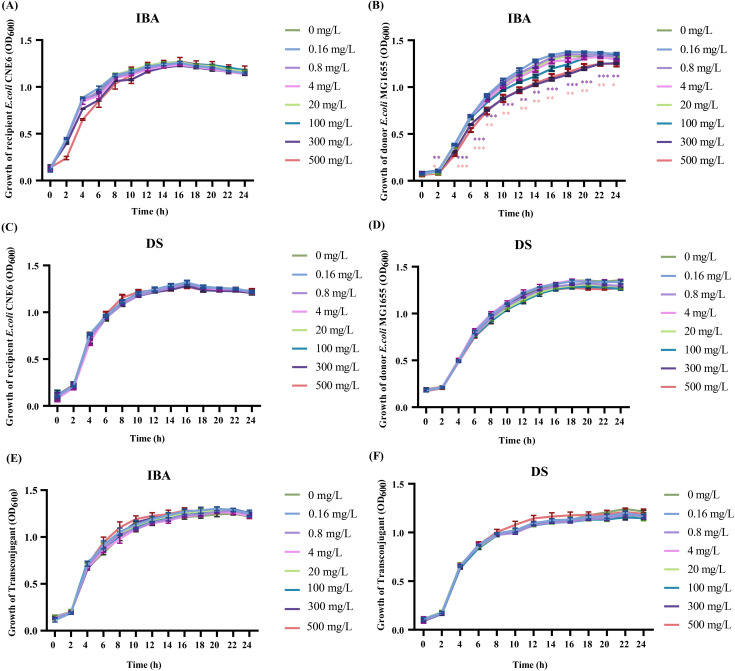
Methods: A dual-fluorescence conjugation model was established. We assessed the effects of different concentrations of indole-3-butyric acid (IBA) and disodium succinate (DS) on plasmid transfer using conjugation assays. The growth of bacteria (donors, recipients, and transconjugants), the reactive oxygen species (ROS) levels and membrane permeability were measured under IBA and DS exposure. The plasmid copy number, and transcriptional levels of conjugation-related genes (including the related genes of the regulation of ROS production, the SOS response, cell membrane permeability, pilus generation, ATP synthesis, and the type IV secretion system (T4SS) ) were evaluated by qPCR.
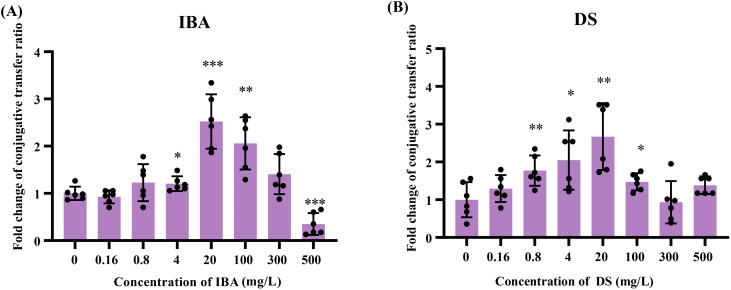
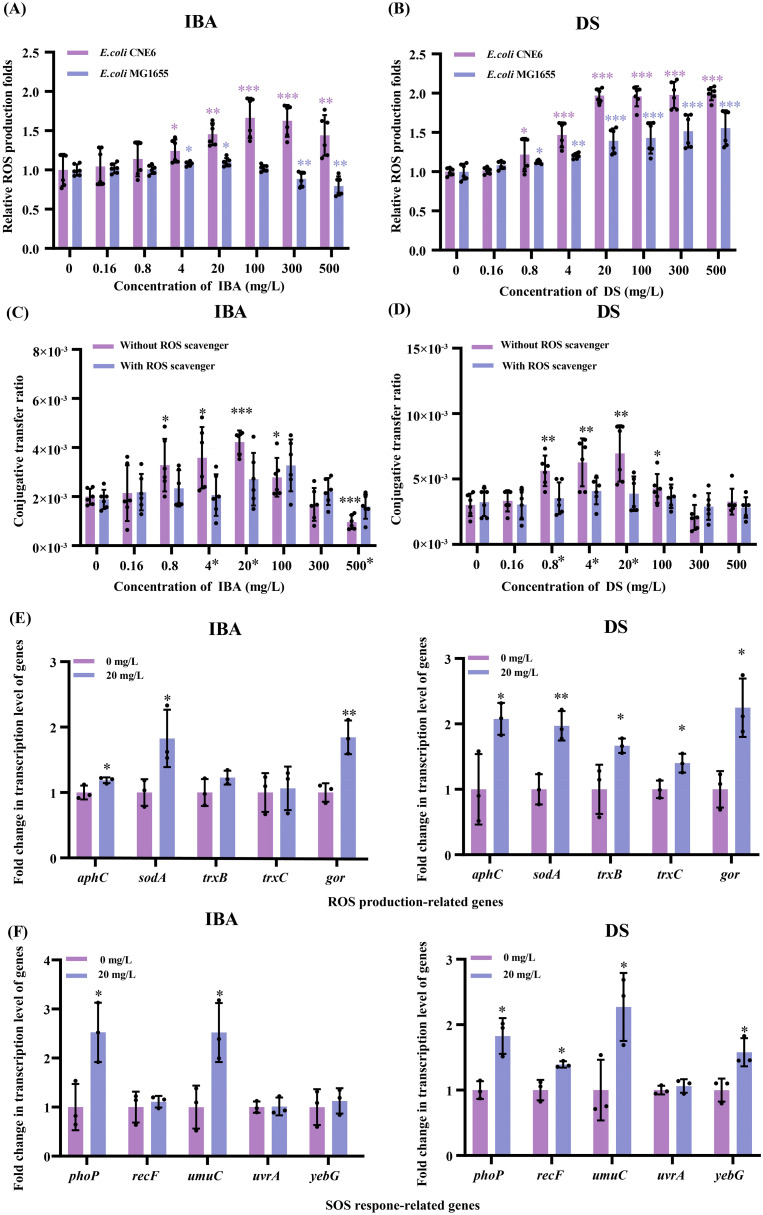
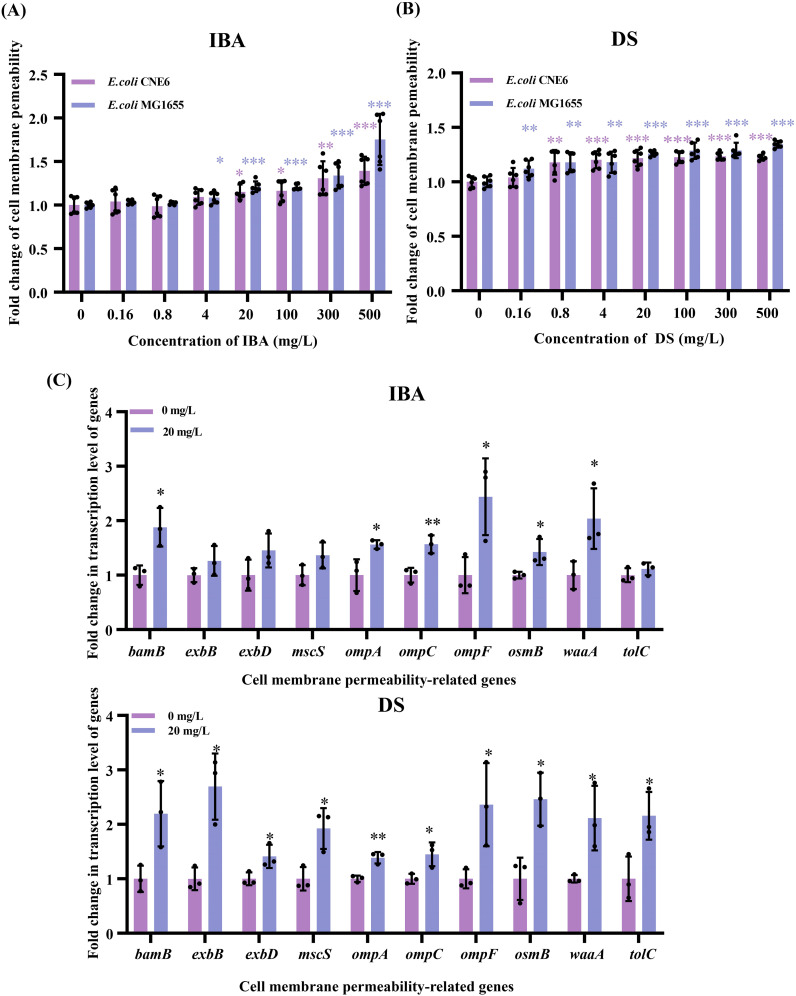
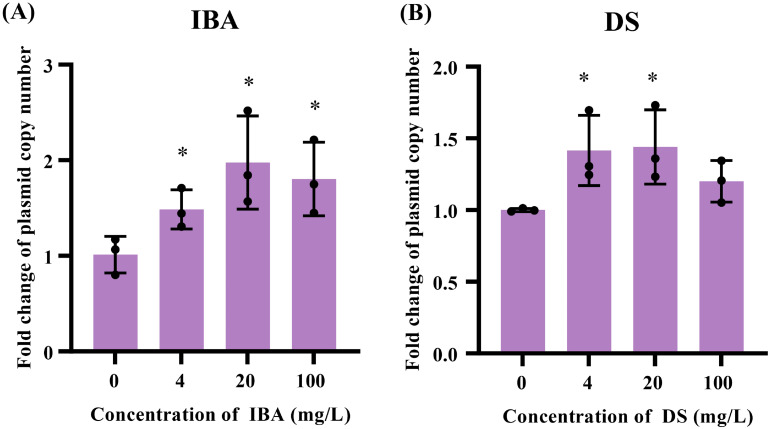
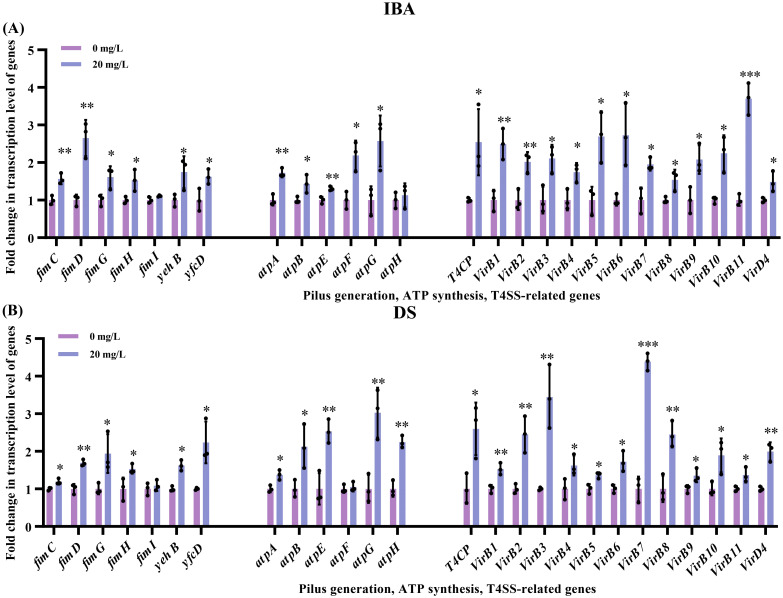
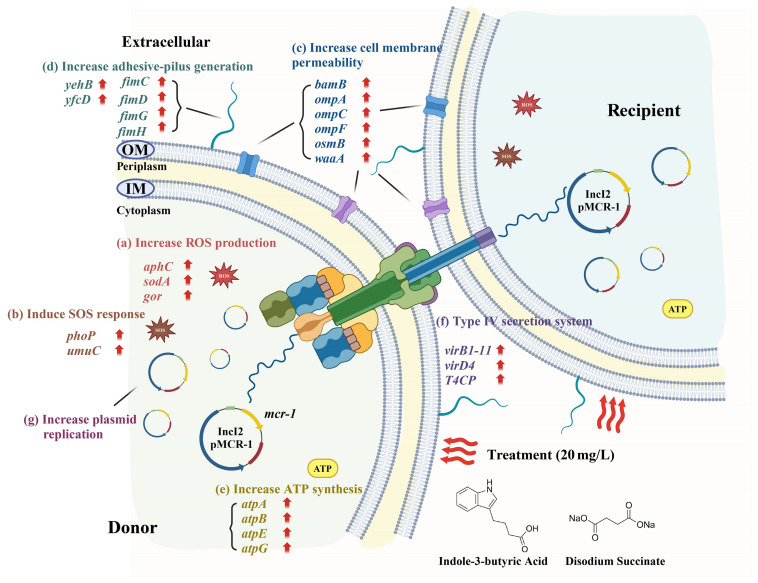
Results: In this study, we demonstrated that IBA and DS at low concentrations, which can also be ingested through diet, enhance the interspecies transfer ratio of IncI2 mcr-1-carrying plasmid in Escherichia coli. At 20 mg/L, the transfer ratios in the presence of IBA or DS increased by 2.5- and 2.7-fold compared to that of the control, respectively. Exposure to this concentration of IBA or DS increased the production of reactive oxygen species (ROS), the SOS response, cell membrane permeability, and plasmid copy number. The transcription of genes of the related pathways and of pilus, ATP, and the T4SS was upregulated.
Discussion: Our findings revealed that low-dose gut microbiota metabolites-particularly those with dietary origins-promote plasmid-mediated resistance gene dissemination through multifaceted mechanisms involving oxidative stress, SOS activation, and conjugation machinery enhancement. This highlights potential public health risks associated with microbiota metabolites, especially those utilized in food production.
Keywords: DS; IBA; IncI2; conjugation; intestinal flora metabolite; mcr-1-carrying plasmid.
Copyright © 2025 Xu, Zhang, Yan, Li and Lu.
Conflict of interest statement
The authors declare that the research was conducted in the absence of any commercial or financial relationships that could be construed as a potential conflict of interest.
Figures
References
-
- Brooks J. B., Nunez-montiel O. L., Wycoff B. J., Moss C. W. (1984). Frequency-pulsed electron capture gas-liquid chromatographic analysis of metabolites produced by Clostridium difficile in broth enriched with amino acids. J. Clin. Microbiol 20, 539–548. doi: 10.1128/jcm.20.3.539-548.1984 - DOI - PMC - PubMed
MeSH terms
Substances
LinkOut - more resources
Full Text Sources
