


Unveiling the role of NAD glycohydrolase CD38 in aging and age-related diseases: insights from bibliometric analysis and comprehensive review
- PMID: 40529366
- PMCID: PMC12171214
- DOI: 10.3389/fimmu.2025.1579924
Unveiling the role of NAD glycohydrolase CD38 in aging and age-related diseases: insights from bibliometric analysis and comprehensive review
Abstract
Background: CD38, a glycoprotein with a single transmembrane structure, is extensively found in erythrocytes, immune cells, and endothelial cells. Primarily located on cell membranes, it plays a critical role in metabolizing nicotinamide adenine dinucleotide (NAD), thereby maintaining NAD homeostasis in vivo. As a vital coenzyme, NAD is involved in numerous biological processes, including energy metabolism, apoptosis, and DNA repair. CD38, as a major NAD-depleting enzyme, is pivotal in regulating intracellular NAD levels and various physiological processes. Given its significance, understanding the function of CD38 and its implications in aging and age-related diseases is crucial for elucidating disease pathogenesis and developing therapeutic strategies.
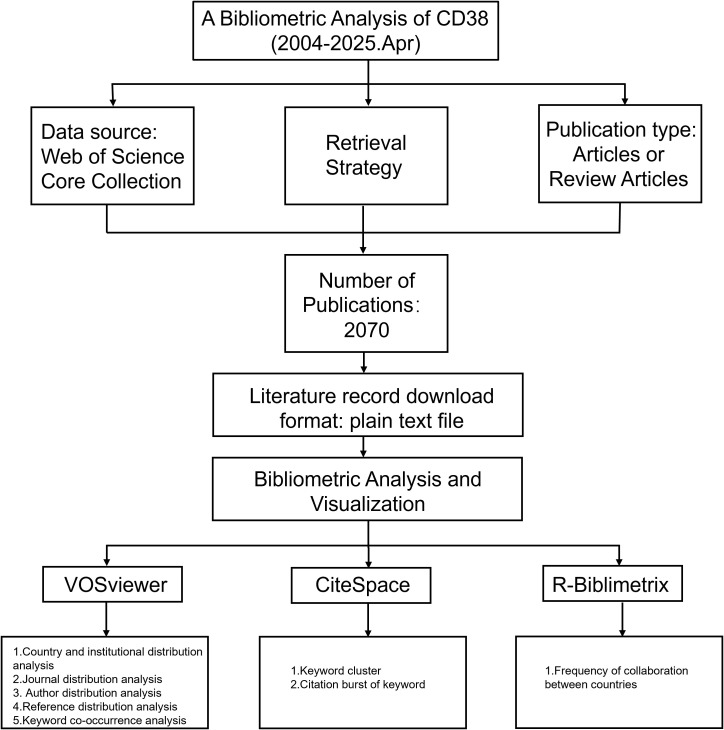
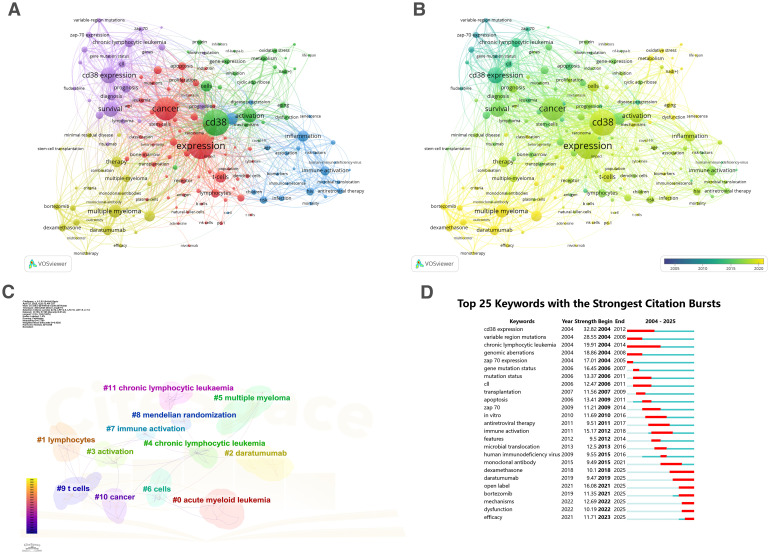
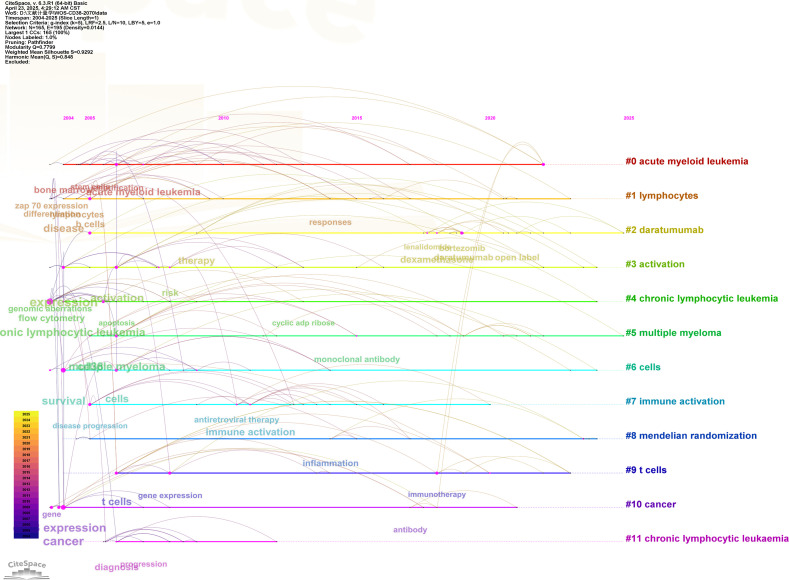
Methods: This study conducted a bibliometric analysis to explore recent research trends and advancements in the field of CD38. Research articles were retrieved from the Web of Science database, followed by a bibliometric assessment using CiteSpace and VOSviewer to visualize key publication trends, contributions by countries and institutions, and keyword distributions. Based on the bibliometric analysis, key insights were synthesized to elucidate the role of CD38 in aging and age-related diseases, its underlying mechanisms, and its applications in clinical evaluation, detection methods, interventions, and therapeutic targets.
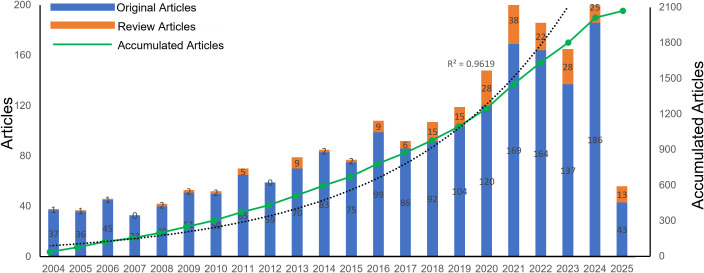
Results: The bibliometric analysis revealed an exponential increase in the number of published articles over time, with the United States and China emerging as the leading research hubs. The predominant keywords included 'CD38' and 'blood-related disorders'. Furthermore, key findings highlighted the critical role of CD38 in aging and age-related diseases, emphasizing its mechanisms in NAD metabolism and its potential as a therapeutic target. Moreover, current applications of CD38 in clinical evaluation and detection methods were discussed, showcasing its growing importance in biomedical research.
Conclusion: This study underscores the growing interest in CD38 research, particularly its role in aging and age-related diseases. The findings highlight the significance of CD38 in maintaining NAD homeostasis and its potential as a therapeutic target. The exponential growth in publications and the dominance of the United States and China in this field reflect the global importance of CD38 research. Future studies should further explore the mechanistic insights and clinical applications of CD38 to advance therapeutic strategies for age-related diseases.
Keywords: CD38; aging; bibliometric analysis; metabolic diseases; tumors.
Copyright © 2025 Zhao, Lv, Cai, Dong, Chen, Sun and Yang.
Conflict of interest statement
The authors declare that the research was conducted in the absence of any commercial or financial relationships that could be construed as a potential conflict of interest.
Figures
References
-
- Available online at: https://www.who.int/news-room/fact-sheets/detail/ageing-and-health. (Accessed September 23, 2024).
-
- Sum G, Choo RWM, Nai ZL, Goh SF, Lim WS, Ding YY, et al. A novel integrated geriatric services hub for frailty identification and comprehensive management of community-dwelling older adults in Singapore: impact on health service utilization. J Am Geriatr Soc. (2025). doi: 10.1111/jgs.19339 - DOI - PMC - PubMed
Publication types
MeSH terms
Substances
LinkOut - more resources
Full Text Sources
Medical
Research Materials
