


Impact of clinical pharmacist video-based education on self-care and glycemic control in Sudanese adults with type 2 diabetes: A pre-post interventional study
- PMID: 40529382
- PMCID: PMC12171818
- DOI: 10.1016/j.rcsop.2025.100617
Impact of clinical pharmacist video-based education on self-care and glycemic control in Sudanese adults with type 2 diabetes: A pre-post interventional study
Abstract
Background: Diabetes affects various body systems, increasing the risk of complications.
Objectives: This study assessed the impact of clinical pharmacist-associated education on diabetes self-care practices and glycemic control in Sudanese individuals with Type 2 Diabetes Mellitus (T2DM).
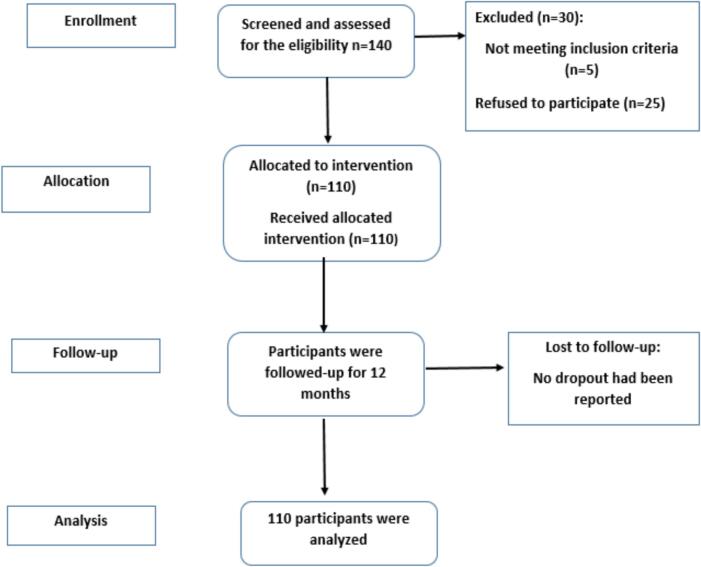
Design and methods: This quasi-experimental study with no control group recruited 110 adults with T2DM from a diabetes clinic over 12 months using simple random sampling. We collected data through interviews and calls. Participants received 12 educational videos covering diabetes management. The intervention was video-based and delivered over 5 months. We analyzed data using SPSS version 28.
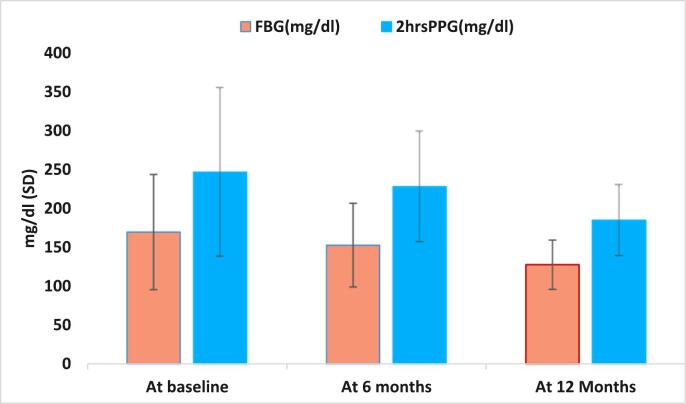
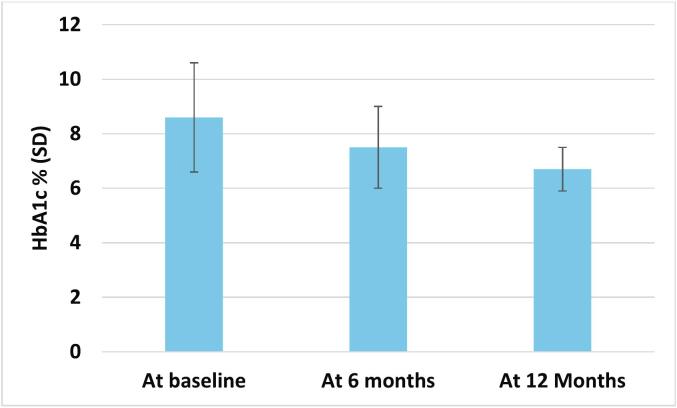
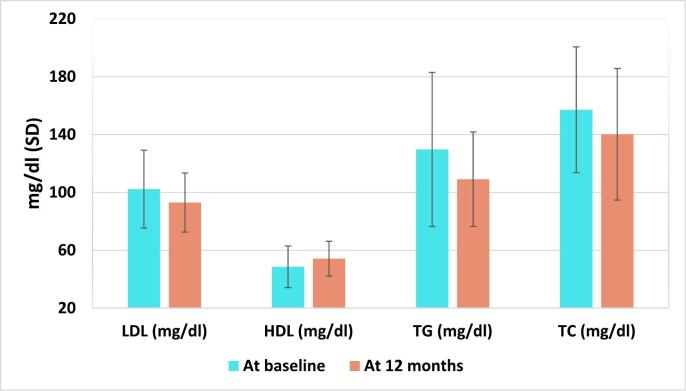
Results: The mean age of participants was 56.2 ± 10.3 years. Self-care practices significantly improved over time. Fasting blood glucose (FBG) levels decreased by 16.7 mg/dL at 6 months (p = 0.009) and 41.9 mg/dL at 12 months (p < 0.001). Two-hour postprandial glucose levels dropped by 18.7 mg/dL at 6 months (p = 0.006) and 61.8 mg/dL at 12 months (p < 0.001). HbA1c levels decreased by 1 % at6 months (p < 0.001) and 1.9 % at 12 months (p < 0.001). The effect size (Cohen's d) was increased from 0.26 at 6 months to 0.74 at 12 months. Similarly, it was increased for 2hrsPPG from 0.2 at 6 months to 0.74 at 12 months. For HbA1c, it was increased from 0.62 at 6 months to 1.25 at 12 months, indicating clinically meaningful improvement in long-term glycemic control following the pharmacist intervention. LDL decreased by 9.2 mg/dL at 12 months (p < 0.001), and HDL increased by 5.5 mg/dL at 12 months (p = 0.002). Changes in BUN and serum creatinine were insignificant.
Conclusion: Clinical pharmacist education improved diabetes self-care practices and metabolic outcomes, including glycemic control and lipid profiles, demonstrating its role in achieving therapeutic goals for patients with T2DM.
Keywords: Clinical pharmacist; Diabetes control; Education; Glycemic parameters; Self-care practices.
© 2025 Published by Elsevier Inc.
Conflict of interest statement
The authors declare that they have no known competing financial interests or personal relationships that could have appeared to influence the work reported in this paper.
Figures
References
-
- Elmadhoun W.M., Noor S.K., Ibrahim A.A.A., Bushara S.O., Ahmed M.H. 2016. Prevalence of Diabetes Mellitus and its Risk Factors in Urban Communities of North Sudan : Population-Based Study. - PubMed
-
- El-sayed E.F., et al. Diabetes & Metabolic Syndrome: Clinical Research & Reviews Sugar intake in Sudanese individuals was associated with some features of the metabolic syndrome: population based study. Diabetes Metab Syndr Clin Res Rev. 2017;3(12):1–6. - PubMed
-
- Almobarak A.O., Awadalla H., Osman M., Ahmed M.H. Prevalence and predictive factors for heart failure among Sudanese individuals with diabetes: population based survey. 2018;2:1–8.
LinkOut - more resources
Full Text Sources
