


Delivering youth nutrition interventions through school-based gardening of indigenous vegetables and fruits and WhatsApp nutrition education in Southwest Nigeria: non-randomized study protocol
- PMID: 40529422
- PMCID: PMC12171202
- DOI: 10.3389/fnut.2025.1539861
Delivering youth nutrition interventions through school-based gardening of indigenous vegetables and fruits and WhatsApp nutrition education in Southwest Nigeria: non-randomized study protocol
Abstract
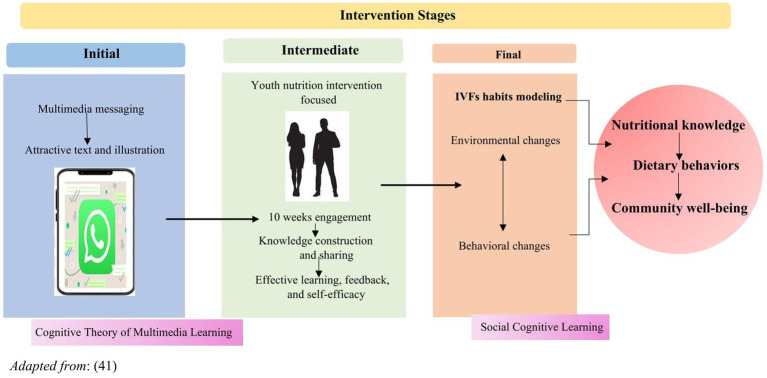
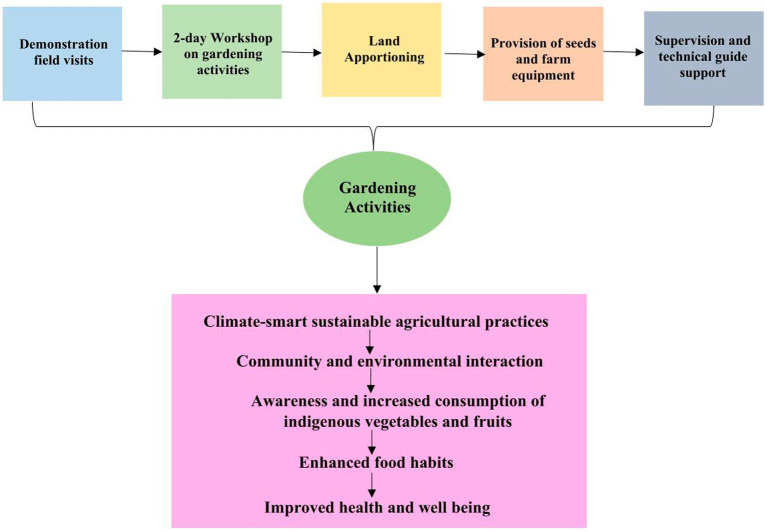
Introduction: The poor dietary habits and limited nutritional knowledge, particularly regarding indigenous vegetables and fruits (IVFs) among youth in southwest Nigeria, highlight the need for an integrated intervention approach. Integrating school-based gardening focused on IVFs with a nutrition education program delivered via WhatsApp combines experiential learning with digital tools.
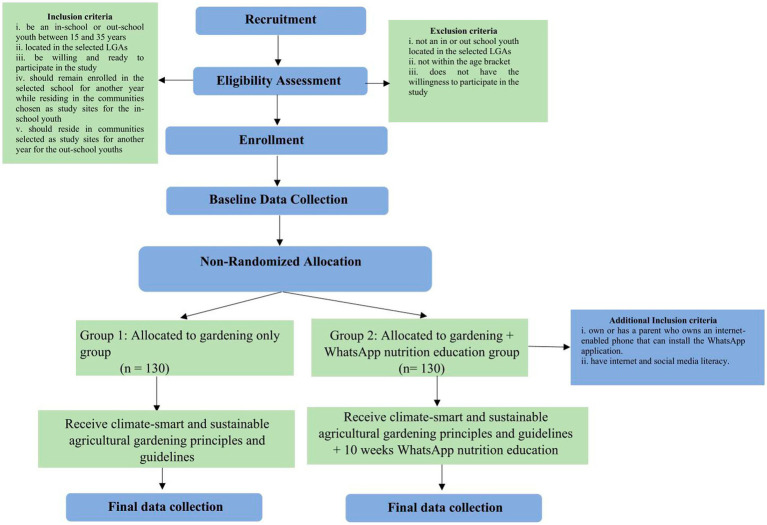
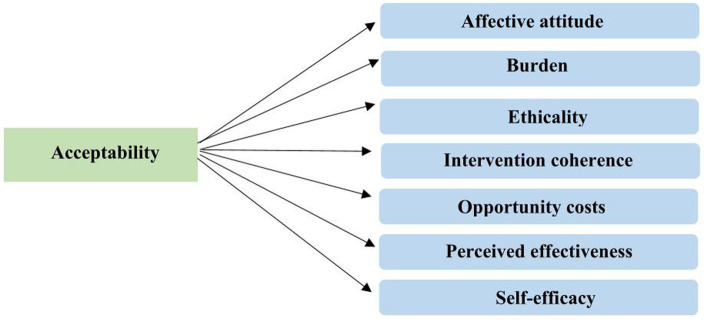
Methods and analysis: This is a non-randomized, mixed-methods study involving youths between 15 and 35 years who will participate in gardening activities and/or interactive nutrition education via WhatsApp. Participants will be provided technical support on growing IVFs, while nutrition education messaging via WhatsApp will include texts, images, and videos on nutrition and healthy eating behavior. Data at baseline will be collected on the study's primary outcomes (awareness and interest in IVFs, household food security, nutritional knowledge and practices, fruits and vegetables intake, food safety self-efficacy, dietary diversity, anthropometric, and biomarker indicators). In contrast, data collection during the intervention and at post-intervention will include the study's secondary outcomes (WhatsApp engagement, knowledge retention, and intervention acceptability). Mixed model regression and the Mann-Whitney U Test will be used to analyze the data collected. All analyses will be performed using IBM SPSS (version 23), and the statistical significance will be set at a p-value <0.05.
Discussion: The present study will focus on the acceptability and feasibility of gardening and incorporate nutrition education delivered through WhatsApp to address the improvements in food security, dietary diversity, and other nutrition-related outcomes of youth in low-income countries. The expected outcomes include enhanced nutrition knowledge, healthier dietary habits, and greater acceptance of indigenous gardening. The result will support the development of effective, culturally acceptable strategies to promote healthy eating behavior among youths and influence future school-based nutrition programs in similar settings.
Keywords: WhatsApp-based nutrition education; dietary behaviors; indigenous vegetables and fruits; nutrition-related outcomes; school-based gardening; youth nutrition.
Copyright © 2025 Atoloye, Atoloye, Olasoji, Tanimonure, Awoleye, Atere, Owoyemi and Oladejo.
Conflict of interest statement
The authors declare that the research was conducted in the absence of any commercial or financial relationships that could be construed as a potential conflict of interest.
Figures
References
-
- Ministry of Youth and Sports Development N . (2019). Second National Youth Policy Document of the Federal Republic of Nigeria 2009. Available online at: https://prb.org/wp-content/uploads/2019/06/Nigeria_2009_National_Youth_P... (Accessed April 4, 2025).
-
- Akanni Akinyemi. (2023). The conversation. Nigeria’s growing population can be an advantage, with better data and a policy focus on young people. Available online at: https://theconversation.com/nigerias-growing-population-can-be-an-advant... (Accessed November 8, 2024).
LinkOut - more resources
Full Text Sources
