


Mesenchymal stem cell-derived exosomes for the treatment of knee osteoarthritis: a systematic review and meta-analysis based on rat model
- PMID: 40529485
- PMCID: PMC12171193
- DOI: 10.3389/fphar.2025.1588841
Mesenchymal stem cell-derived exosomes for the treatment of knee osteoarthritis: a systematic review and meta-analysis based on rat model
Abstract
Background: In this study, we systematically evaluated the efficacy of mesenchymal stem cell (MSC) derived exosomes (MSC-exos) in the treatment of osteoarthritis (OA) through multimodal evaluation of cartilage protection, anti-inflammatory activity and tissue regeneration. A comparative analysis of drug delivery strategies was performed to explore better therapeutic effects.
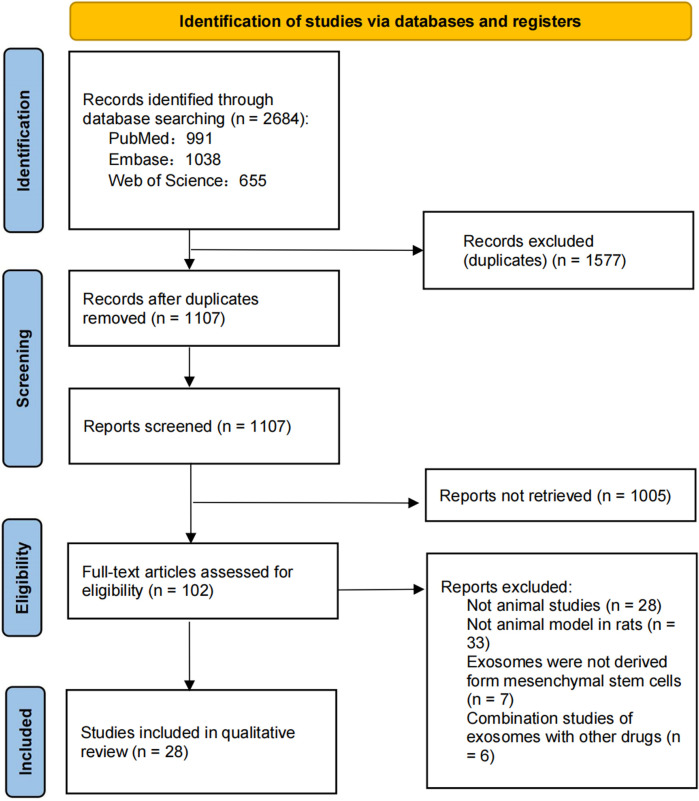
Methods: The study employed a systematic search of PubMed, Embase, and Web of Science databases for comparative studies on exosome treatments in rat knee OA models with cartilage damage up to July 2024. Two researchers independently reviewed the literature, extracted data, evaluated bias, and conducted a meta-analysis using RevMan 5.4.1, Stata IC 15, and Stata 18.
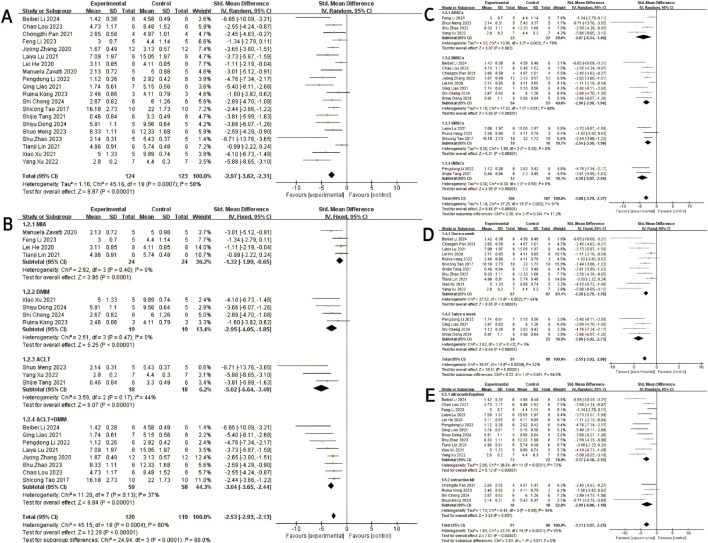
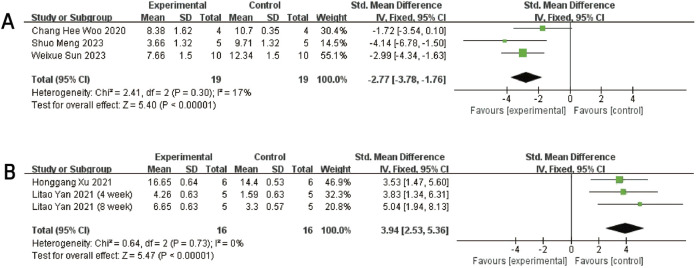
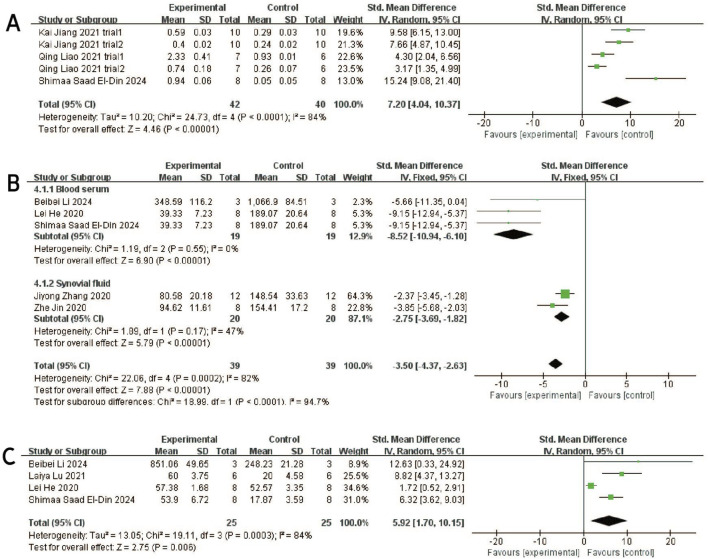
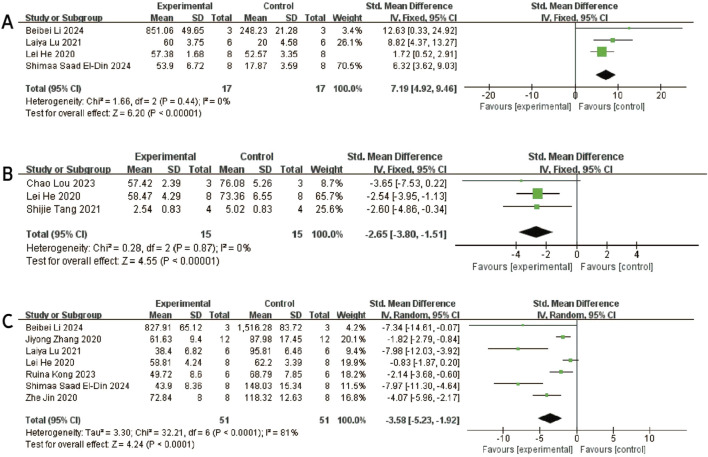
Results: Our systematic review incorporated 28 preclinical studies demonstrating that MSC-exos consistently exhibited therapeutic advantages in cartilage repair, as evidenced by significant improvements across validated histological scoring systems, such as Osteoarthritis Research Society International (OARSI), Mankin, and International Cartilage Repair Society (ICRS) metrics. Mechanistic analyses revealed coordinated anabolic-catabolic modulation, with marked upregulation of cartilage-specific anabolic factors including collagen type II, aggrecan core protein, and interleukin-10. Concomitantly, MSC-exos suppressed pro-inflammatory mediators through downregulation of interleukin-1β, interleukin-6, matrix metalloproteinase-13, and tumor necrosis factor-alpha, critical regulators of extracellular matrix degradation in OA pathogenesis. Subgroup analysis of MSC types may suggest that exosomes derived from synovial fluid mesenchymal stem cells (SF-MSC-exos) and umbilical cord mesenchymal stem cells (UMSC-exos) have better effects on cartilage repair. Biweekly exosome injections are more effective than weekly injections in repairing OA.
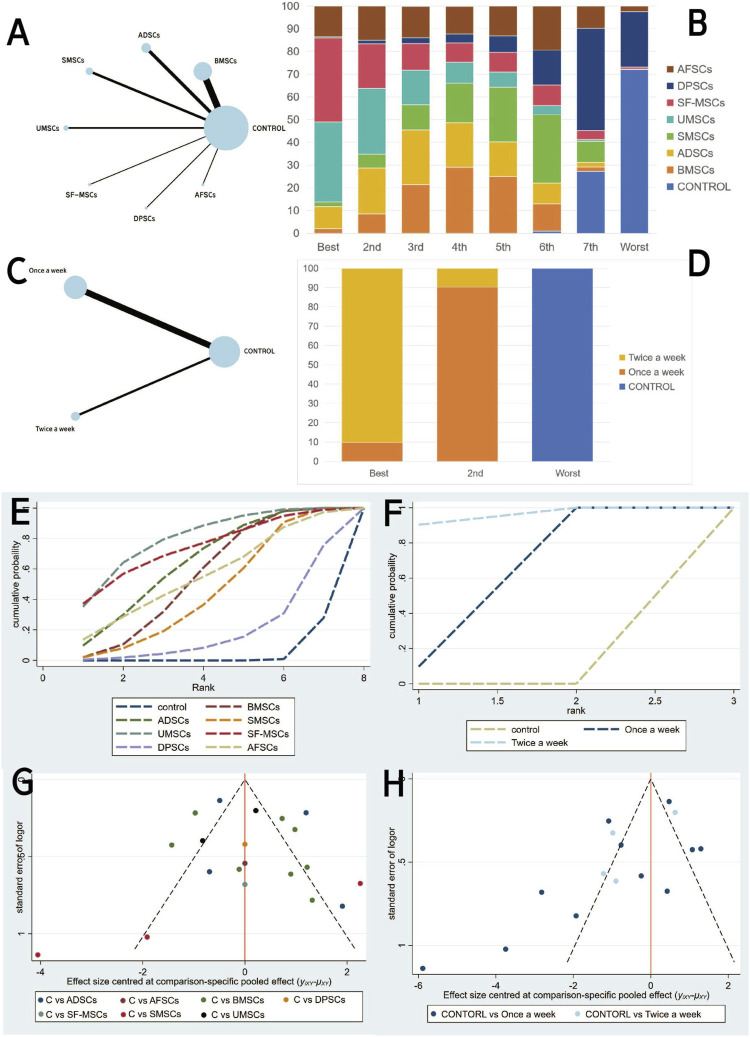
Conclusion: This meta-analysis, by combining existing evidence with network meta-analysis, suggests that UMSC-exos and SF-MSC-exos are the most effective treatment options and that twice-weekly doses are the optimal frequency of treatment. MSC-exos significantly improved the histopathological score of oOA through bidirectional regulation of cartilage anabolic activation and catabolic inhibition. The results of the subgroup analysis provide suggestions for future clinical treatment of OA with exosomes. In the future, more high-quality randomised controlled animal and clinical trials are needed to determine the optimal type, frequency and dose of exosomes for OA treatment.
Systematic review registration: https://www.crd.york.ac.uk/PROSPERO/view/CRD42024599998, PROSPERO, CRD42024599998.
Keywords: cartilage; cartilage injury; exosomes; mesenchymal stem cells; osteoarthritis.
Copyright © 2025 Wang, Hu, Niu, Xu and Qi.
Conflict of interest statement
The authors declare that the research was conducted in the absence of any commercial or financial relationships that could be construed as a potential conflict of interest.
Figures
References
Publication types
LinkOut - more resources
Full Text Sources
