


The impact of ambient temperature on frailty progression in older adults: Evidence from a longitudinal study in China
- PMID: 40529676
- PMCID: PMC12170505
- DOI: 10.3389/fpubh.2025.1507400
The impact of ambient temperature on frailty progression in older adults: Evidence from a longitudinal study in China
Abstract
Background: The aging population and frailty-related diseases pose significant public health challenges. This study examined the relationship between ambient temperature and frailty progression in older adults using data from the China Health and Retirement Longitudinal Study (CHARLS).
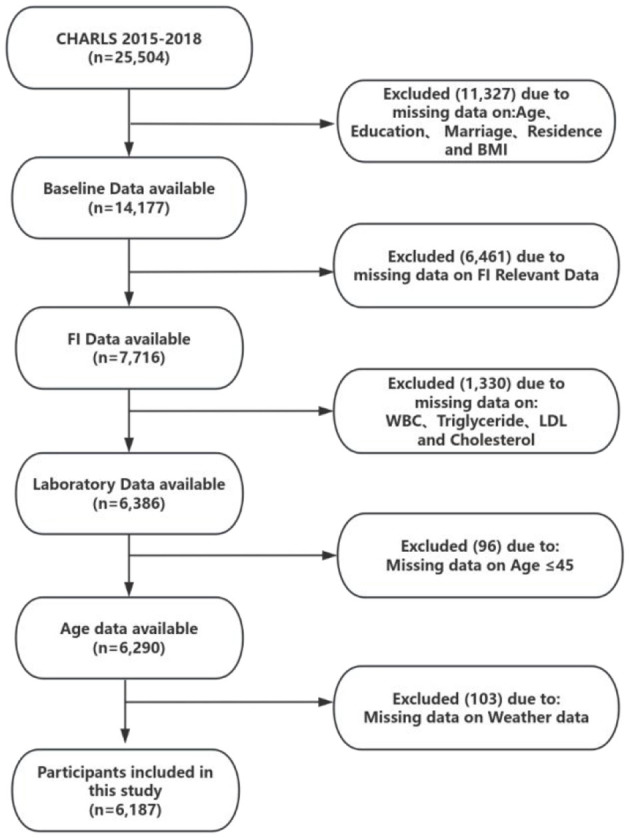
Materials and methods: Data from 6,187 participants (2015-2018) were analyzed using a standardized Frailty Index (FI). Participants were categorized into the Frailty Progress Rapid Group (FPRG) and Non-Frailty Rapid Progression Group (NFPRG) based on FI changes. Temperature data from 121 Chinese cities were analyzed using logistic regression and subgroup analyses to explore potential modifiers.
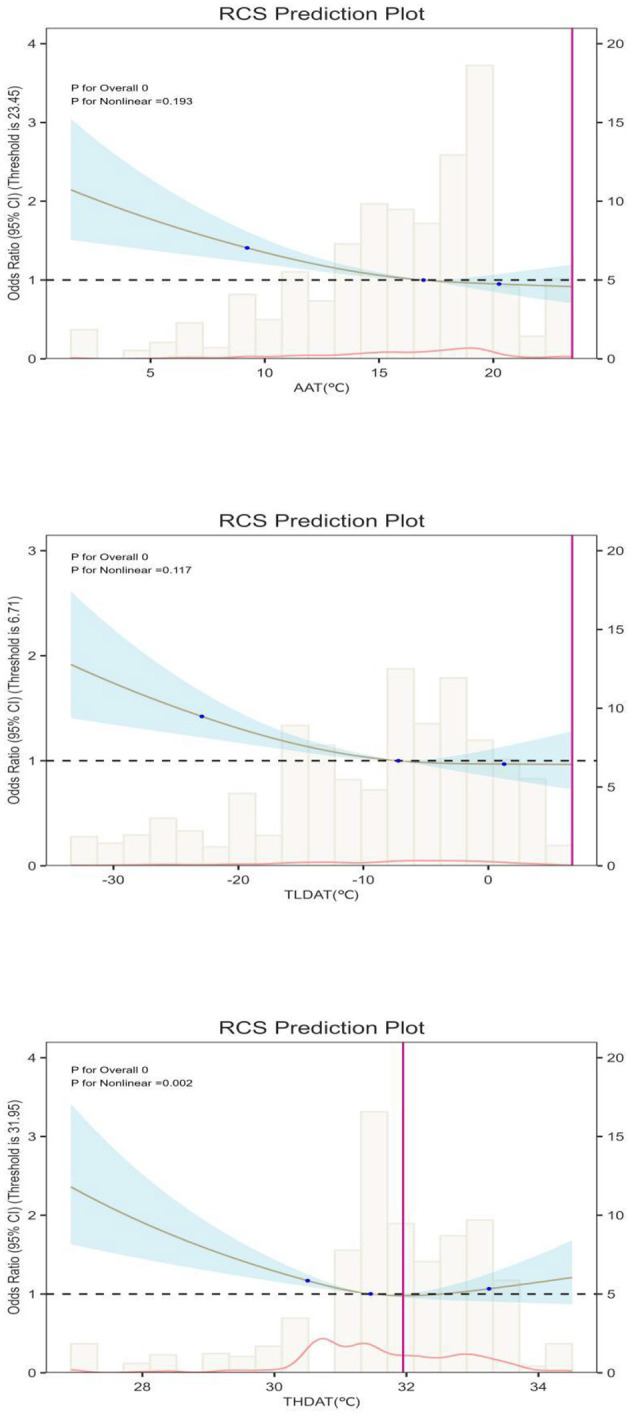
Results: The Lowest Daily Average Temperature (TLDAT) and Average Annual Temperature (AAT) showed a negative association with frailty progression. The relationship between The Highest Daily Average Temperature (THDAT) and frailty progression was non-linear, with a turning point at 31.8°C. Subgroup analyses revealed that higher THDAT had a stronger impact on frailty progression in individuals with lower education and those living in rural areas.
Conclusion: Older adults benefit from environments with a TLDAT above -9°C, a THDAT below 31.8°C, and an AAT above 17°C. Public health strategies should consider temperature thresholds alongside sociodemographic factors like education and residence, which influence frailty progression.
Keywords: ambient temperature exposure; frailty progression; longitudinal cohort study; older adults; temperature thresholds.
Copyright © 2025 He, Cheng and Cao.
Conflict of interest statement
The authors declare that the research was conducted in the absence of any commercial or financial relationships that could be construed as a potential conflict of interest.
Figures
References
MeSH terms
LinkOut - more resources
Full Text Sources
Research Materials
Miscellaneous
