


Machine learning-driven model for predicting knowledge, attitudes, and practices regarding medication safety among residents in Hubei, China
- PMID: 40529704
- PMCID: PMC12171192
- DOI: 10.3389/fpubh.2025.1574531
Machine learning-driven model for predicting knowledge, attitudes, and practices regarding medication safety among residents in Hubei, China
Abstract
Objective: To evaluate the current state and determinants of medication safety knowledge, attitudes, and practices (KAP) among residents in Hubei Province, and to offer guidance for targeted educational initiatives.
Methods: A standardized questionnaire from the Science and Technology Development Center of the Chinese Pharmaceutical Association was utilized. Responses were scored systematically. Univariate and multivariate Logistic regression analyses, along with machine learning (ML) techniques, were applied to identify risk factors associated with medication safety KAP.
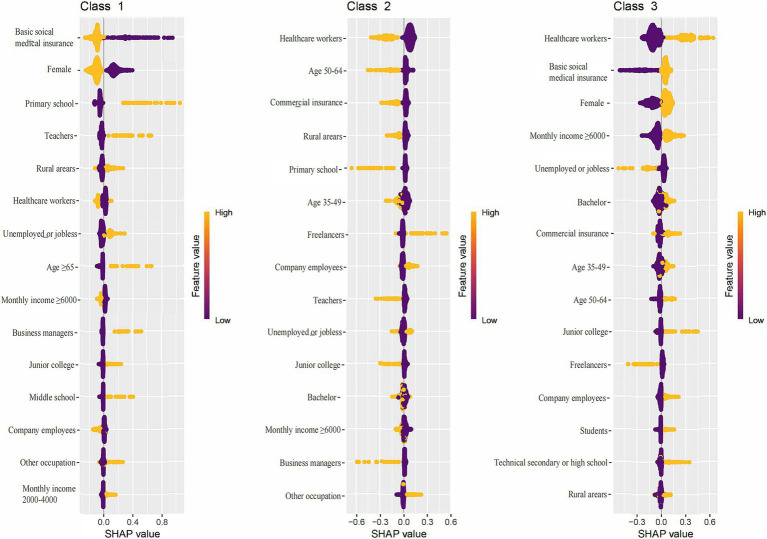
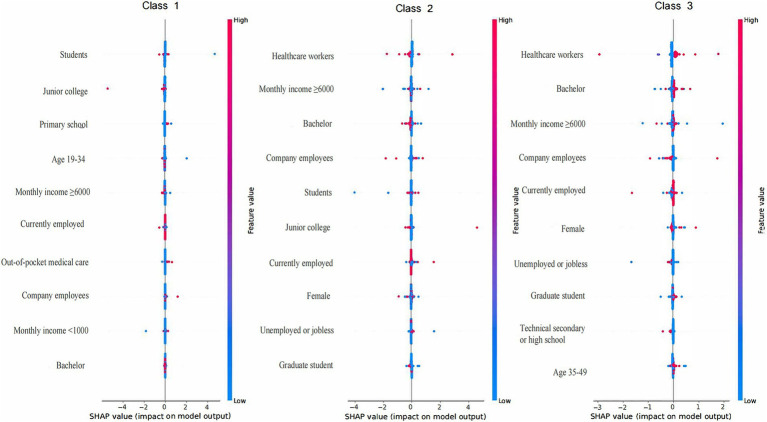
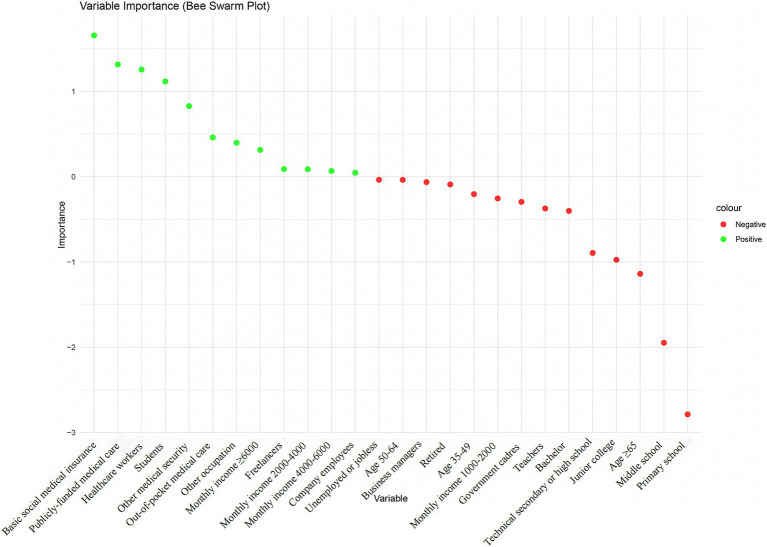
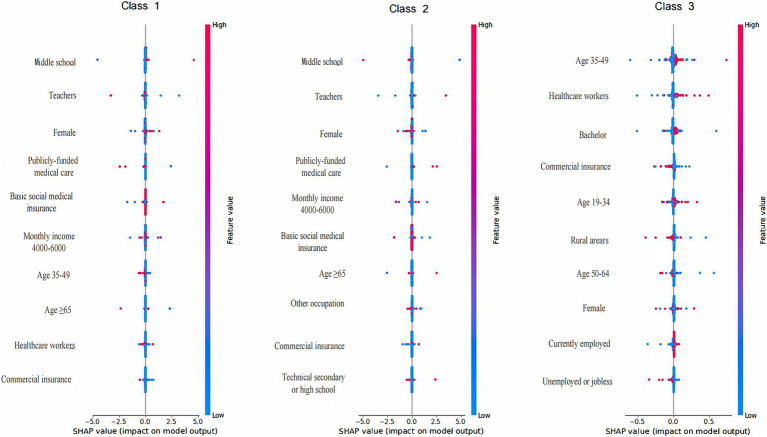
Results: Out of 1,065 distributed questionnaires, 1,042 were valid (91.8% response rate). The study revealed that 30.2% of residents demonstrated 'excellent' medication knowledge, while attitude and practice scores were lower 10.3 and 46.3%, respectively. Univariate analysis indicated that age, monthly income, employment status, and occupation significantly influenced KAP. Multivariate analysis further identified age (≥65 years: OR = 0.27), education level (Middle school: OR = 0.36, Primary school: OR = 0.16), occupation (Healthcare workers: OR = 3.67), and medical insurance coverage (Basic social medical insurance: OR = 17.48, Out-of-pocket medical care: OR = 7.44, Publicly-funded medical care: OR = 11.92) as independent risk factors affecting the total KAP score. In evaluating ML models for predicting KAP, the eXtreme Gradient Boosting (XGB) model showed the best performance for predicting knowledge (training accuracy: 0.7014, Kappa: 0.3045; validation accuracy: 0.6186, Kappa: 0.1004). The Fully Connected Neural Network (FCNN) was optimal for attitude prediction (training accuracy: 0.7205, Kappa: 0.0778; validation accuracy: 0.7019, Kappa: 0.0008). The Ordered Multinomial Logistic Regression model was most accurate for practice prediction (training accuracy: 0.6471, Kappa: 0.3421; validation accuracy: 0.6302, Kappa: 0.3153). And the Deep Neural Network (DNN) model demonstrated the highest accuracy for predicting the total score (training accuracy: 0.7387, Kappa: 0.3211; validation accuracy: 0.7074, Kappa: 0.1902).
Conclusion: Residents of Hubei have a fundamental grasp of medication safety but also harbor certain misconceptions. Effective pharmaceutical science communication should take into account the characteristics of the residents and the identified risk factors.
Keywords: KAP; machine learning; medication behavior; model; rational drug use.
Copyright © 2025 Mei, Wu, Zhou, Lv, Zhang, Shi and Gong.
Conflict of interest statement
The authors declare that the research was conducted in the absence of any commercial or financial relationships that could be construed as a potential conflict of interest.
Figures
References
MeSH terms
LinkOut - more resources
Full Text Sources
