


An examination of factors associated with disparities in clinical trial eligibility guided by the Socioecological Model
- PMID: 40530674
- PMCID: PMC12263167
- DOI: 10.1002/cncr.35944
An examination of factors associated with disparities in clinical trial eligibility guided by the Socioecological Model
Abstract
Background: Patients from diverse demographic groups remain underrepresented in cancer clinical trials (CCTs) because of various factors, including disparities in eligibility. In the current study, the authors investigated associations between demographic characteristics and factors associated with CCT eligibility and enrollment using real-world data.
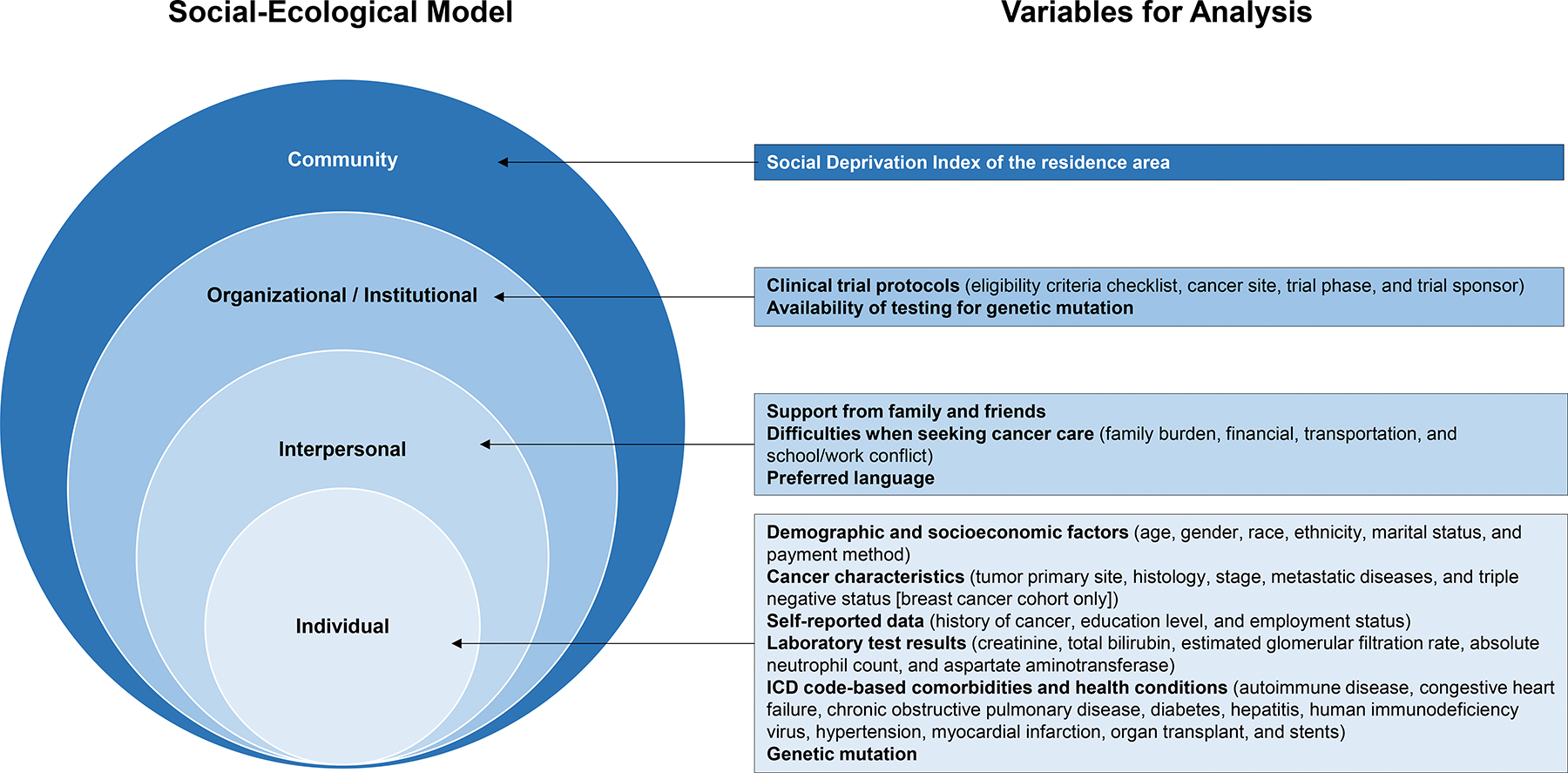
Methods: A cross-sectional analysis was conducted among 113,030 adult patients with cancer who were treated at Moffitt Cancer Center between 2011 and 2021. Eligibility criteria from 100 CCTs were manually abstracted and conceptually mapped to variables in the Moffitt Cancer Analytics Platform. Other factors potentially affecting patient eligibility or enrollment in CCTs were identified following the Socioecological Model and were compared across patient groups by age, sex, race, and ethnicity.
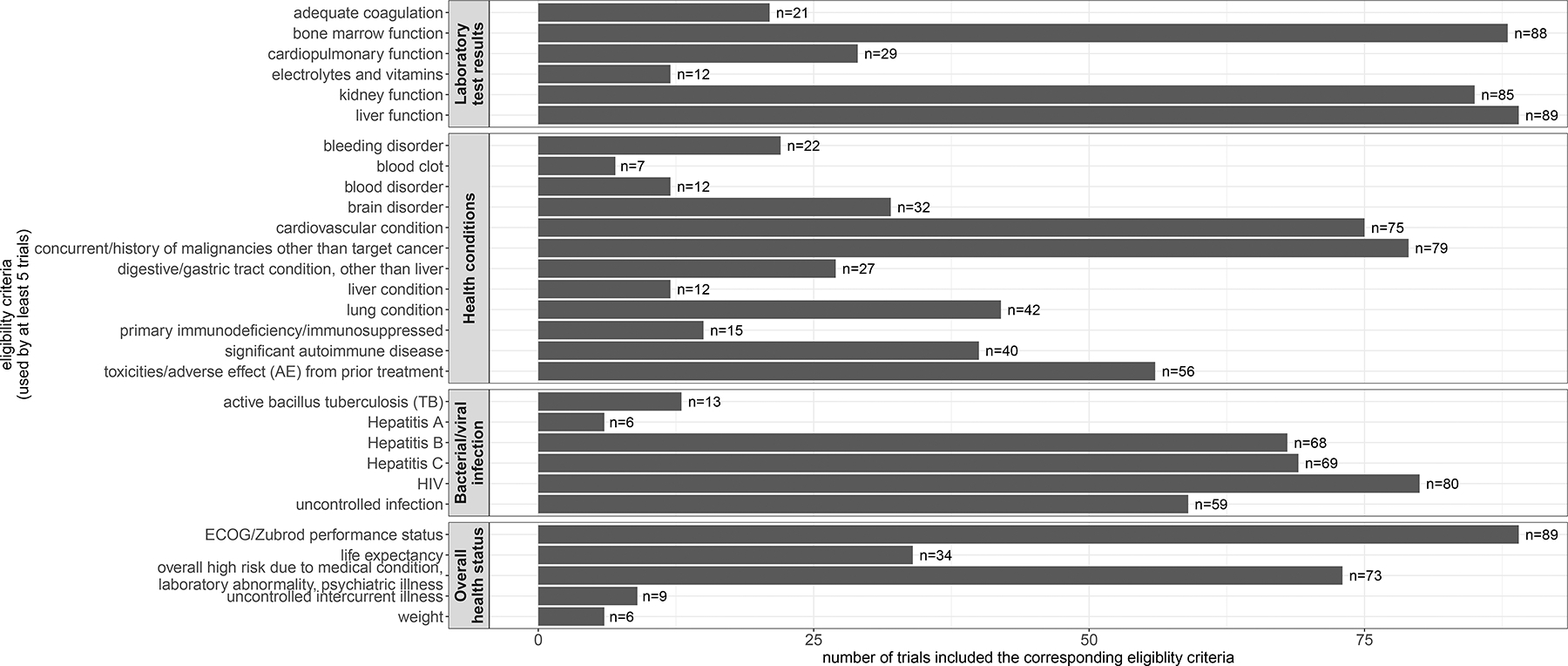
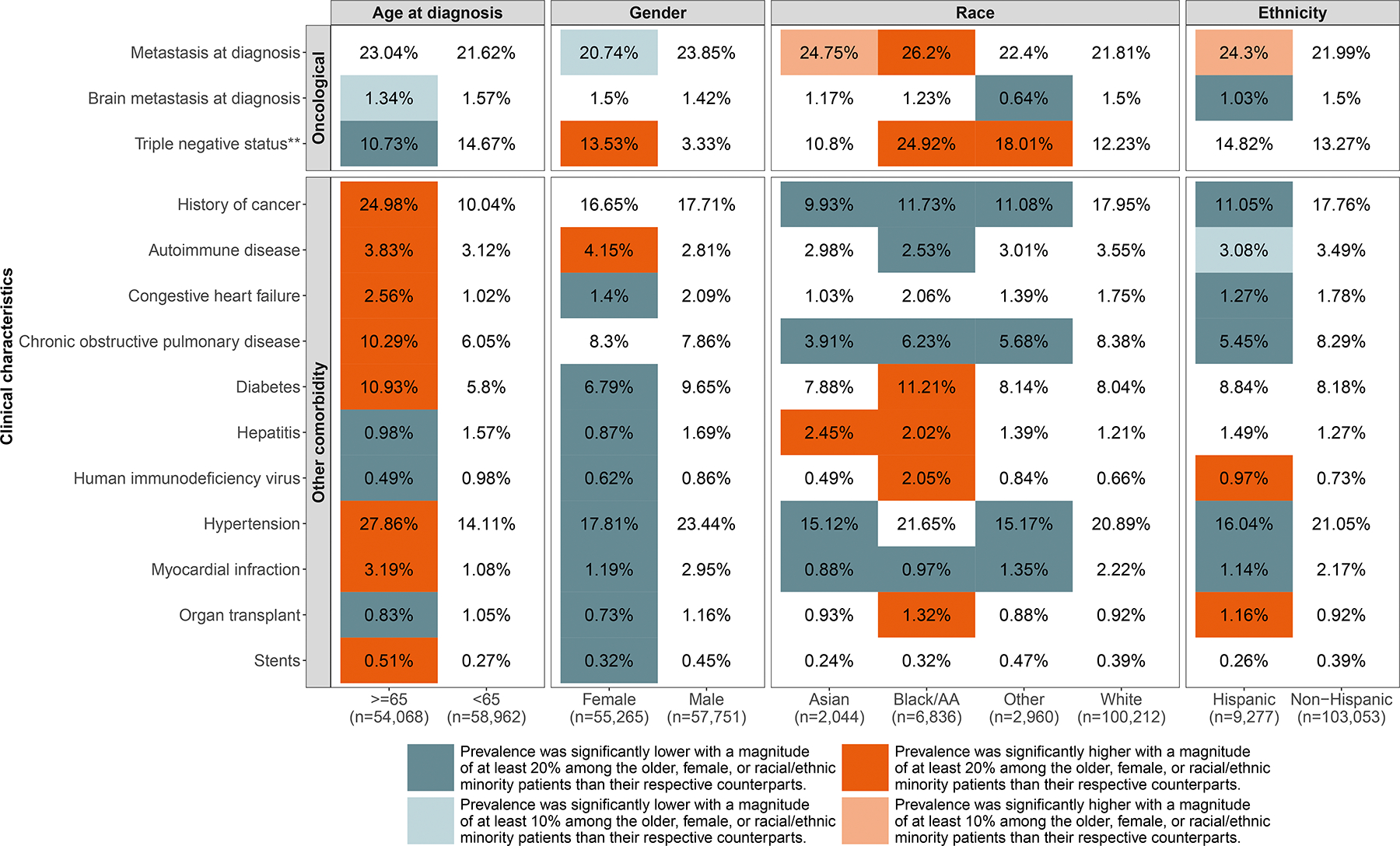
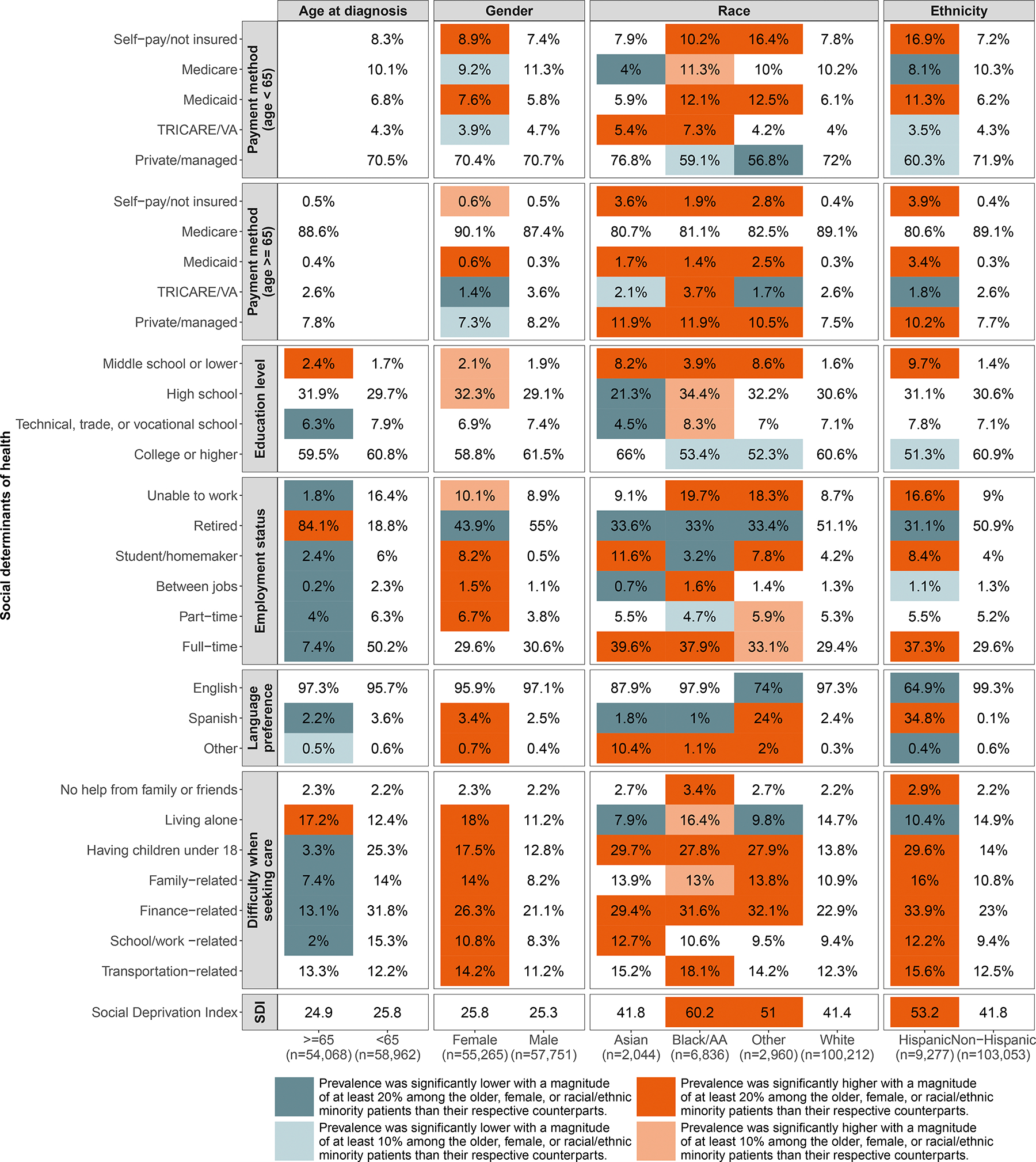
Results: The most frequent eligibility criteria in the abstracted CCTs included laboratory results associated with liver function (89%) and bone marrow function (88%). Thirty-nine percent of the protocols required genetic testing. Black/African American patients experienced a higher prevalence of diabetes (Δ = 3.2%), human immunodeficiency virus infection (Δ = 1.4%), and abnormal laboratory results compared with White patients. Hispanic patients experienced a higher prevalence of human immunodeficiency virus infection (Δ = 0.2%) and a history of organ transplantation (Δ = 0.2%) compared with non-Hispanic patients. Compared with younger patients, older adults had a higher prevalence of nononcologic conditions. Female, Black, and/or Hispanic patients were more likely to experience barriers to care, including childcare and transportation, and to live in more socially deprived areas compared with male, White, or non-Hispanic patients.
Conclusions: Restrictive CCT eligibility criteria and social determinants of health may pose structural barriers that disproportionately affect patient diversity. Investigators should leverage real-world data to design appropriate trial eligibility criteria.
Keywords: cancer treatment trials; clinical trials; disparities; eligibility criteria; oncology; social determinants of health (SDOH); socioecological model.
© 2025 American Cancer Society.
Conflict of interest statement
CONFLICT OF INTEREST STATEMENT
J. Kevin Hicks reports personal/consulting fees from ARUP, Bristol Myers Squibb Company, Eli Lilly and Company, and Jackson Laboratory outside the submitted work. Eric B. Haura reports grants/contracts from Revolution Medicines; personal/consulting fees from Ellipses Pharma and Kanpah; and support for other professional activities from Amgen Inc. and Janssen Scientific Affairs LLC outside the submitted work. Dana E. Rollison serves on the NanoString Technologies, Inc. Board of Directors. The remaining authors declared no conflicts of interest.
Figures
References
-
- Fashoyin-Aje LA, Fernandes LL, Keegan P, Sridhara R, Pazdur R. Enrollment of Hispanics in cancer clinical trials: an FDA analysis [abstract]. J Clin Oncol. 2018;36(15 suppl):e18670. doi: 10.1200/JCO.2018.36.15_suppl.e18670 - DOI
-
- Fashoyin-Aje LA, Fernandes LL, Lemery S, et al. Racial composition in trials supporting the U.S. approval of anti-cancer new molecular entities (NMEs): 2011–2016 [abstract]. J Clin Oncol. 2017;35(15 suppl):6518. doi: 10.1200/JCO.2017.35.15_suppl.6518 - DOI
MeSH terms
Grants and funding
LinkOut - more resources
Full Text Sources
Medical
