


Validation of established thyroid ultrasound volume norms in a Chernobyl cohort
- PMID: 40532045
- PMCID: PMC12229278
- DOI: 10.1530/ETJ-25-0085
Validation of established thyroid ultrasound volume norms in a Chernobyl cohort
Abstract
Objective: To establish thyroid ultrasound volume norms appropriate for studies of diffuse goiter in a cohort of children and adolescents from an iodine-deficient population exposed to 131I by the Chernobyl fallout.
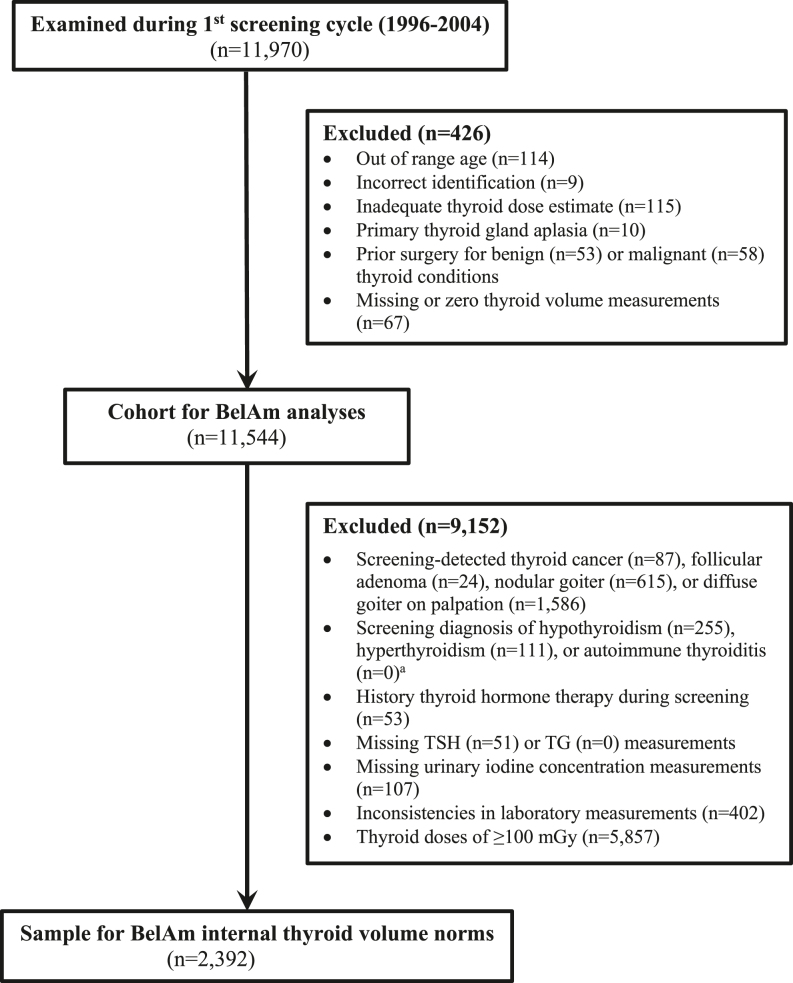
Methods: A cohort of 11,970 Belarusians aged ≤18 years at the time of the 1986 Chernobyl accident with individual thyroid radiation dose estimates was screened 10-18 years later. From these, a low-dose subset of 2,392 with no thyroid diseases was selected to construct age- and sex-specific normative values for thyroid ultrasound volume, compared to Belarusian Ministry of Health (MOH) norms and existing WHO and European standards.
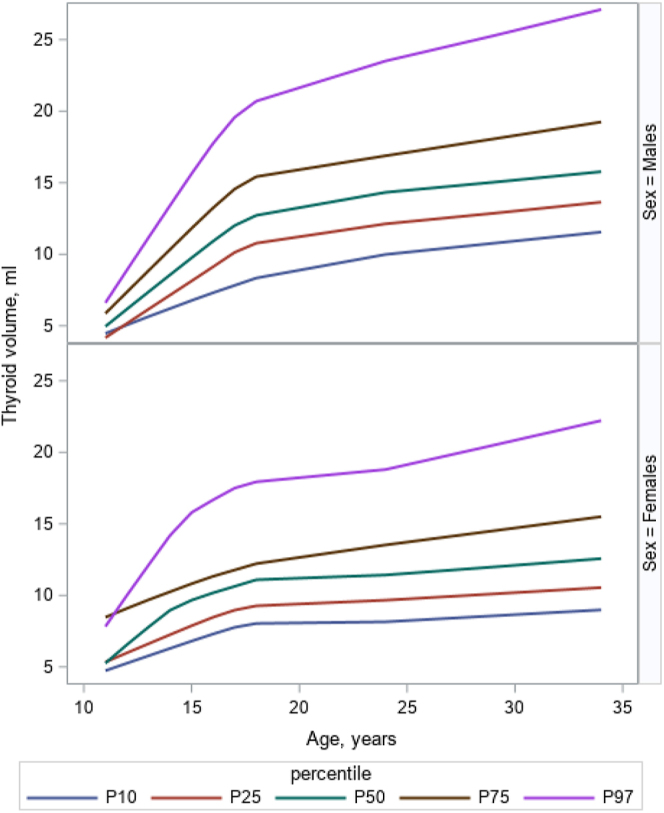
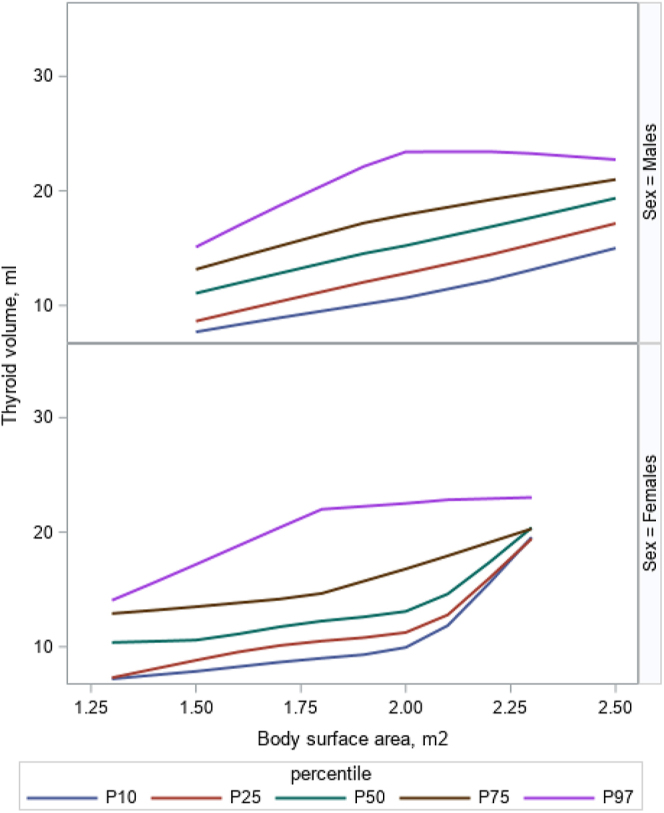
Results: Cohort-specific values were generally lower than MOH norms and WHO standards for 11-17-year-olds. For those aged ≥18 years, internal norms were 30% higher in males and 15-30% lower in females than MOH norms, and exceeded European values for both sexes. Thyroid volume norms were about 40% higher in males and 30% higher in females as a function of BSA compared to European values. Thyroid volume continued to increase in both sexes, and by age 30-34 years, cohort-specific norms were 6% higher in males and 26% higher in females than European values. Urinary iodine concentration did not significantly explain variance in thyroid volume beyond sex, age, and BSA.
Conclusions: In this iodine-deficient cohort of young Belarusians exposed to 131I by Chernobyl fallout, thyroid ultrasound volumes differed substantially from MOH norms and established WHO standards, prompting a revision of diffuse goiter definition using cohort-specific normative values.
Keywords: Chernobyl nuclear accident; diffuse goiter; iodine deficiency; iodine radioisotopes; radiation; thyroid ultrasound volume.
Conflict of interest statement
The authors declare that there is no conflict of interest that could be perceived as prejudicing the impartiality of the work reported.
Figures
References
Publication types
MeSH terms
Substances
Grants and funding
LinkOut - more resources
Full Text Sources
