


Optimised nanobody-based quenchbodies for enhanced protein detection
- PMID: 40533519
- PMCID: PMC12177037
- DOI: 10.1038/s42003-025-08359-3
Optimised nanobody-based quenchbodies for enhanced protein detection
Abstract
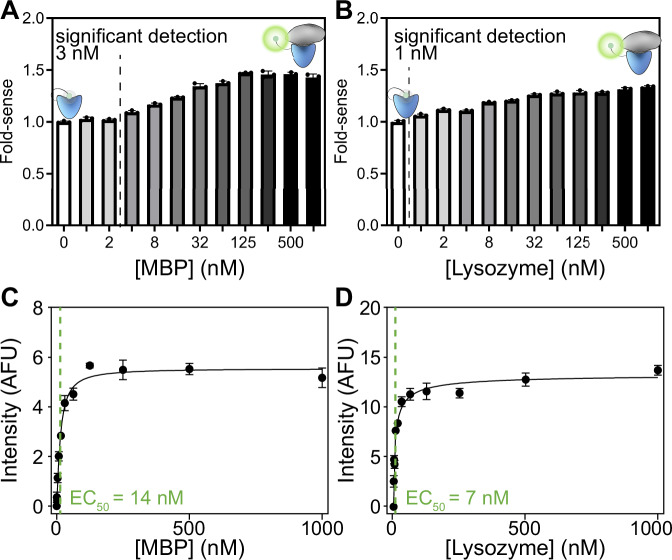
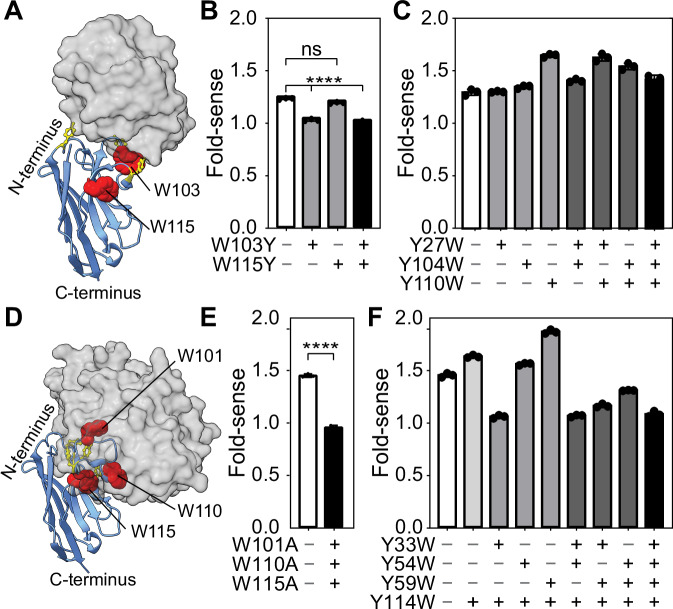
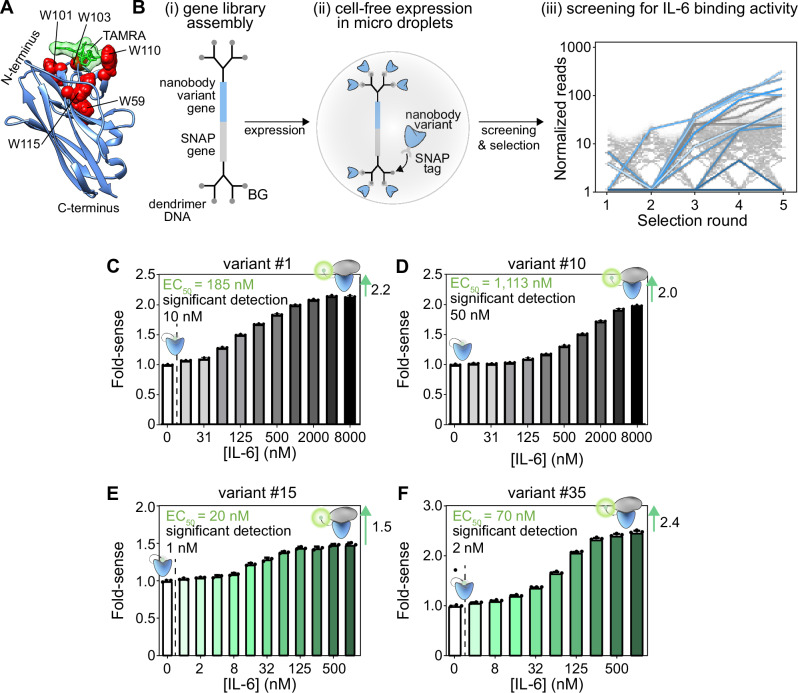
Quenchbodies, antibodies labelled with fluorophores that increase in intensity upon antigen binding, offer great promise for biosensor development. Nanobody-based quenchbodies are particularly attractive due to their small size, ease of expression, high stability, rapid evolvability, and amenability to protein engineering. However, existing designs for protein detection show limited dynamic range, with fluorescence increases of only 1.1-1.4 fold. Here we identify the tryptophan residues in the nanobody complementarity-determining regions (CDRs) that are critical to quenchbody performance. Using a combination of rational design and molecular dynamics simulations, we developed an optimised nanobody scaffold with tryptophans introduced at key positions. We used this scaffold in an in vitro directed-evolution screen against human inflammatory cytokine interleukin-6 (IL-6). This yielded quenchbodies with 1.5-2.4-fold fluorescence increases, enabling IL-6 detection down to 1-2 nM. Our scaffold provides a valuable platform for developing biosensors for diverse protein targets, with applications in research, diagnostics, and environmental monitoring.
© 2025. The Author(s).
Conflict of interest statement
Competing interests: This work was financially supported by Quantum-Si. Marco Ribezzi-Crivellari and Sebastian Hutchinson are employed by Quantum-Si. Antoine van Oijen and Andrew Griffiths were members of the Quantum-Si Scientific Advisory Committee.
Figures

References
MeSH terms
Substances
Grants and funding
LinkOut - more resources
Full Text Sources
