


Efficacy of transcranial direct current stimulation on seizure control in patients with refractory epilepsy: a systematic review and meta-analysis of randomized controlled trials
- PMID: 40533536
- PMCID: PMC12177013
- DOI: 10.1007/s10143-025-03657-0
Efficacy of transcranial direct current stimulation on seizure control in patients with refractory epilepsy: a systematic review and meta-analysis of randomized controlled trials
Abstract
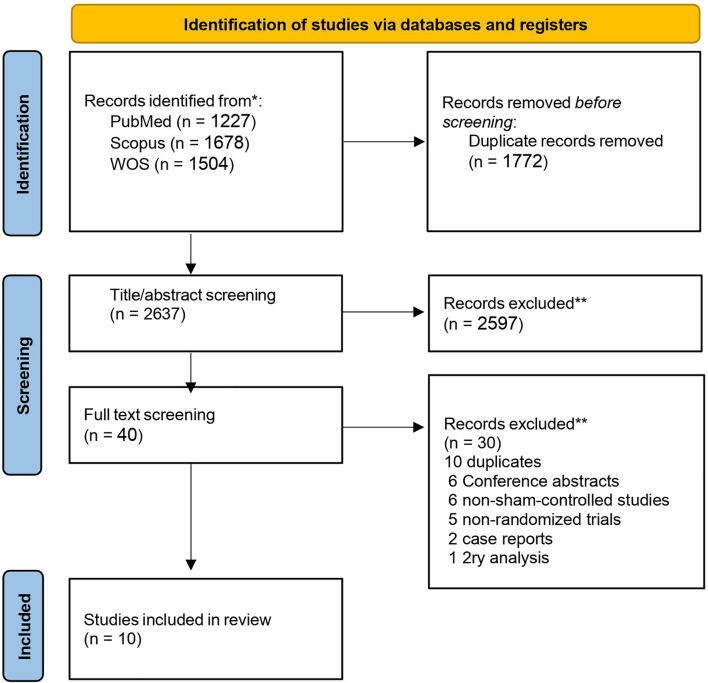
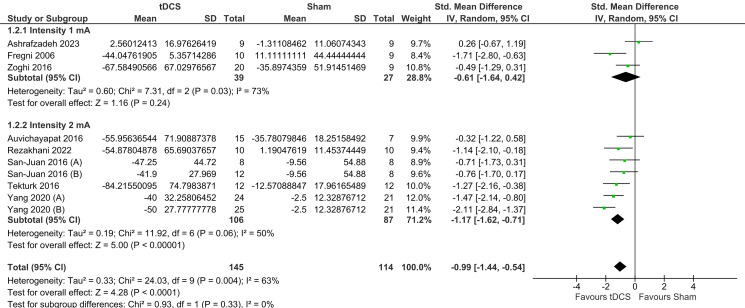
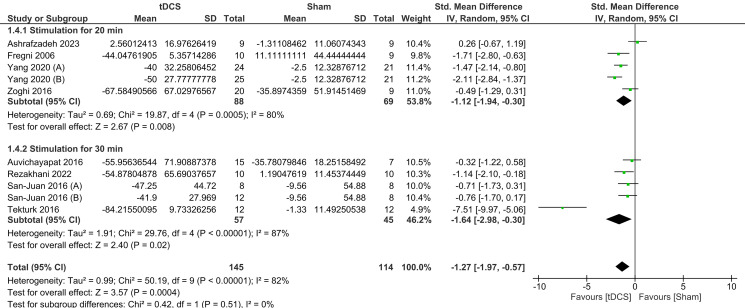
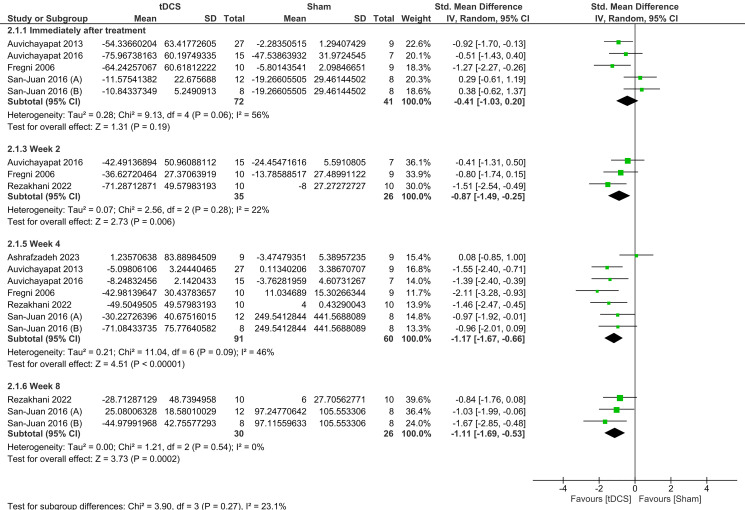
Drug-resistant epilepsy is a challenging condition that affects around 30% of all patients with epilepsy. Evidence regarding treatment options is limited, especially for surgery and invasive techniques. However, non-invasive techniques constitute a promising alternative for these patients. This meta-analysis aims to evaluate the effectiveness of transcranial direct current stimulation on seizure frequency management in patients with drug-resistant epilepsy. We searched the literature in PubMed, Scopus, and Web of Science up to December 2023. We included randomized controlled trials that compared transcranial direct current stimulation with sham stimulation. Our main outcomes of interest were a percentage reduction in seizure frequency and epileptiform discharge frequency. A total of 10 studies with 269 patients were included. Monthly seizure frequency was significantly reduced by an average of -45.39%and -39.34% at week 4 and week 8, respectively. There was a significant reduction in IED in favor of tDCS at week 2 (SMD = -0.87, 95% CI = [- 1.49, - 0.25], P = 0.006), 4 weeks (SMD = -1.17, 95% CI = [- 1.67, - 0.66], P < 0.00001, Moderate quality of evidence) and 8 weeks (SMD = -1.11, 95% CI = [- 1.69, - 0.53], P = 0.0002) of follow-up. There were no serious adverse events associated with the stimulation. Transcranial direct current stimulation was associated with a reduction in both seizure frequency and epileptiform discharges with minimal side effects. Further studies with larger sample sizes and consensus protocol guidelines are needed to verify its long-term safety and effectiveness.
Keywords: Drug-resistant epilepsy; Non-invasive neurostimulation; Seizure frequency; Transcranial direct current stimulation; tDCS.
© 2025. The Author(s).
Conflict of interest statement
Declarations. Ethical approval: This article is based on previously conducted studies and does not contain any current intervention with human participants. Consent to participate: Not applicable. Consent for publication: Not applicable. Competing interests: The authors declare no competing interests.
Figures


References
Publication types
MeSH terms
LinkOut - more resources
Full Text Sources
Medical
