


The effect of ginseng on sexual function in postmenopausal women with major depression: a triple-blind randomized controlled trial
- PMID: 40533832
- PMCID: PMC12175432
- DOI: 10.1186/s40780-025-00461-2
The effect of ginseng on sexual function in postmenopausal women with major depression: a triple-blind randomized controlled trial
Abstract
Background: Women often experience a decline in sexual desire as they age, particularly during menopause. An increase in sexual dysfunction is associated with the worsening of genitourinary symptoms that occur with menopause. Anxiety, fear, and depression in postmenopausal women may further deteriorate sexual dysfunction. Utilizing modern and effective methods to enhance sexual desire in these women is a priority in midwifery care. Given previous studies, ginseng is a herbal medicine that may be suitable in this regard. This study aimed to determine the effect of ginseng on sexual function (primary outcome), menopause symptoms, depression symptoms and side events (secondary outcomes) in postmenopausal women with major depression.
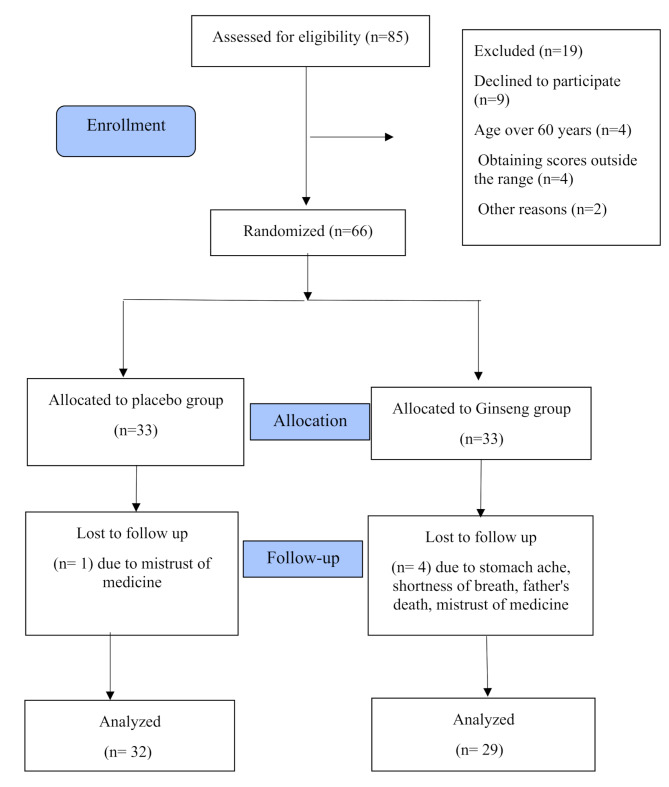
Methods: This triple-blind randomized controlled trial was conducted on postmenopausal women with major depression in Tabriz, Iran between December 2022 and March 2024. A total of 66 postmenopausal women aged 45 to 60 with major depressive disorder were randomly assigned to intervention and control groups using block randomization. The intervention group received a 250-mg ginseng capsule twice daily after meals for eight weeks, while the control group received two gelatin placebo capsules (containing liquid edible paraffin) daily, similar in appearance to the ginseng capsules. Data collection was performed using the Female Sexual Function Index (FSFI), the Beck Depression Inventory (BDI), and the Greene Climactric Scale (GCS). The independent t-test and ANCOVA were used for data analysis.
Results: The two groups did not show statistically significant differences in terms of demographic and baseline outcome measures. After the intervention, the mean overall sexual function score in the ginseng group was significantly higher than in the control group (adjusted mean difference (AMD): 2.17; 95% confidence interval (95%CI): 1.32 to 3.03, P = 0.001). The mean overall menopause symptoms score (AMD: -3.61; 95% CI: -5.47 to -1.74, P < 0.001) and depression score (AMD: -3.96; 95% CI: -5.76 to -2.20, P < 0.001) were significantly lower in the ginseng group compared to the placebo group.
Conclusion: Ginseng is effective in improving sexual function and reducing menopause symptoms and depression in women with major depression. However, further research is needed to draw definitive conclusions.
Trial registration: Iranian Registry of Clinical Trials (IRCT): IRCT20120718010324N74. Date of registration: 10/12/2022; URL: https://irct.behdasht.gov.ir/user/trial/65711/view ; Date of first registration: 20/12/2022.
Keywords: Ginseng; Major depression; Postmenopausal women; Sexual function.
© 2025. The Author(s).
Conflict of interest statement
Declarations. Ethics approval and consent to participate: This study has been approved by the ethics committee of Tabriz University of Medical Sciences (ethics code: IR.TBZMED.REC.1401.810). Verbal informed consent was given by all participants after the prepared informed consent form was read to them. All participants signed an informed consent form before the study following the Declaration of Helsinki. All methods were carried out following relevant guidelines and regulations. Consent for publication: Not applicable. Competing interests: The authors declare no competing interests.
References
-
- Berek JS. Berek & novak’s gynecology essentials. Lippincott Williams & Wilkins; 2020.
-
- Hoga L, Rodolpho J, Gonçalves B, Quirino B. Women’s experience of menopause: a systematic review of qualitative evidence. JBI Evid Synthesis. 2015;13(8):250–337. - PubMed
LinkOut - more resources
Full Text Sources
