. 2025 Jun 4:13:1573599.
doi: 10.3389/fpubh.2025.1573599. eCollection 2025.

Global, regional, and national burden of IHD attributable to PM pollution aged 70 and above: an age-period-cohort modeling and frontiers analysis study

Affiliations

Global, regional, and national burden of IHD attributable to PM pollution aged 70 and above: an age-period-cohort modeling and frontiers analysis study

Ke-Jie He et al. Front Public Health. .

Abstract

Background: Particulate matter (PM) pollution is a significant risk factor for ischemic heart disease (IHD). This study evaluates the global, regional, and national burden of IHD attributable to PM pollution from 1990 to 2021, quantifies key contributing factors, and projects trends to 2044, with a focus on regional disparities and population aging.

Methods: Using data from the Global Burden of Disease (GBD) 2021 study, we analyzed trends in IHD-related disability-adjusted life years (DALYs) and mortality attributable to PM pollution. Joinpoint regression assessed long-term trends, Age-Period-Cohort modeling evaluated demographic drivers, and decomposition analysis identified the contributions of population growth, aging, and epidemiological changes. Frontier analysis compared observed DALY rates with the lowest achievable rates based on socio-demographic index (SDI). Future trends were projected using the Nordpred model.

Results: From 1990 to 2021, global age-standardized DALY rates for IHD attributable to PM pollution decreased by -1.51% annually, but absolute DALYs increased due to population aging and growth. High SDI regions saw significant declines in DALY rates (-4.75% annually), while Low SDI regions experienced negligible change (0.01%). Population growth contributed to a 183.57% increase in global DALYs, but epidemiological improvements reduced the burden by 89.29%. Frontier analysis revealed substantial unrealized potential for reducing the IHD burden, particularly in Middle SDI regions. Projections to 2044 indicate that while DALY rates will decline, total DALYs will increase among individuals aged over 70, especially in Low and Low-middle SDI regions.

Conclusions: This study highlights substantial progress in reducing the IHD burden attributable to PM pollution, particularly in High SDI regions. However, disparities remain, especially in Low and Low-middle SDI regions, where the aging population and insufficient healthcare infrastructure exacerbate the burden. The rising IHD burden among the older adult underscores the need for targeted interventions, including stricter air quality regulations, enhanced healthcare access, and policies that specifically address vulnerable populations. Strengthening healthcare systems and air pollution controls in these regions is critical to mitigating the growing IHD burden in the coming decades.

Keywords: age-period-cohort; disability adjusted life years (DALYs); global burden of disease; ischemic heart disease; particulate matter pollution; socio-demographic index.


Conflict of interest statement

The authors declare that the research was conducted in the absence of any commercial or financial relationships that could be construed as a potential conflict of interest.

Figures
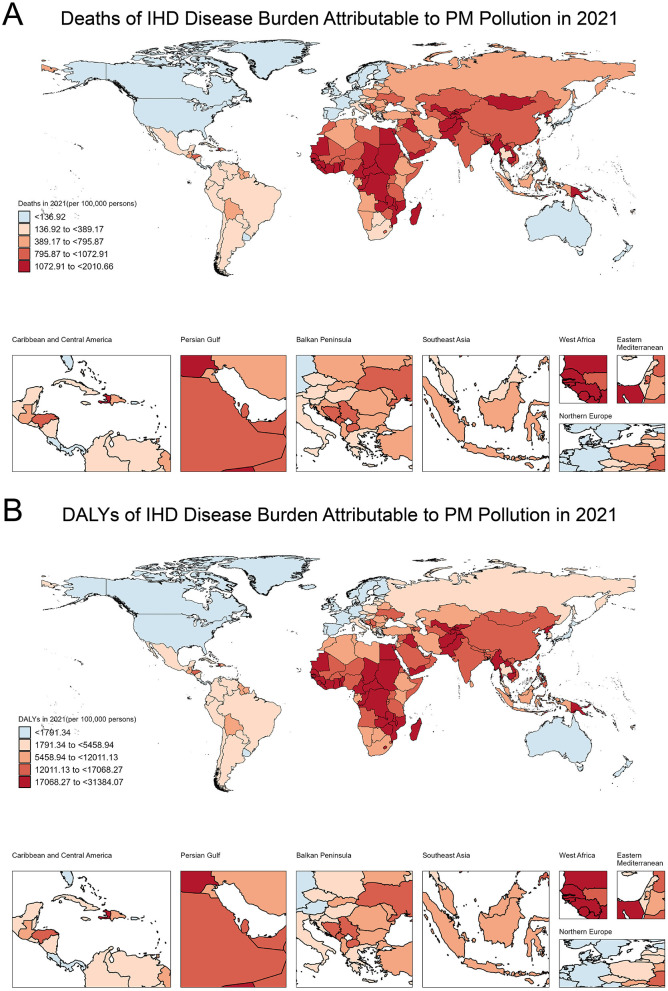
Figure 1
Figure 1
Global distribution of deaths and DALYs due to IHD attributable to PM pollution in 2021. (A) Deaths of IHD disease burden attributable to PM pollution in 2021 (per 100,000 persons). (B) DALYs of IHD disease burden attributable to PM pollution in 2021 (per 100,000 persons).
Figure 2
Figure 2
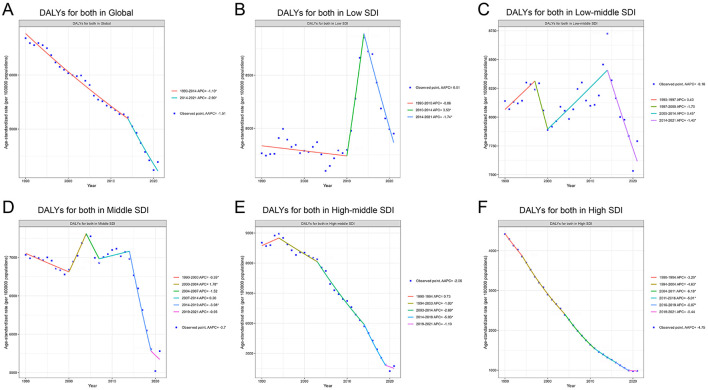
Trends in DALYs for IHD attributable to PM pollution from 1990 to 2021 across different SDI levels. (A) DALYs for both in Global. (B) DALYs for both in Low SDI. (C) DALYs for both in Low-middle SDI. (D) DALYs for both in Middle SDI. (E) DALYs for both in High-middle SDI. (F) DALYs for both in High SDI.
Figure 3
Figure 3
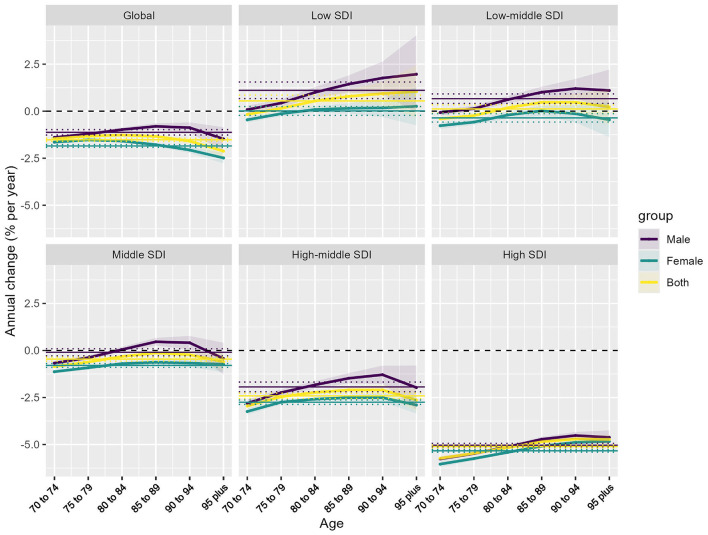
Net drift of IHD attributable to PM pollution by SDI regions and age groups. Net annual percentage change (% per year) in IHD attributable to PM pollution across different SDI regions and age groups, stratified by sex (male, female, and both combined).
Figure 4
Figure 4
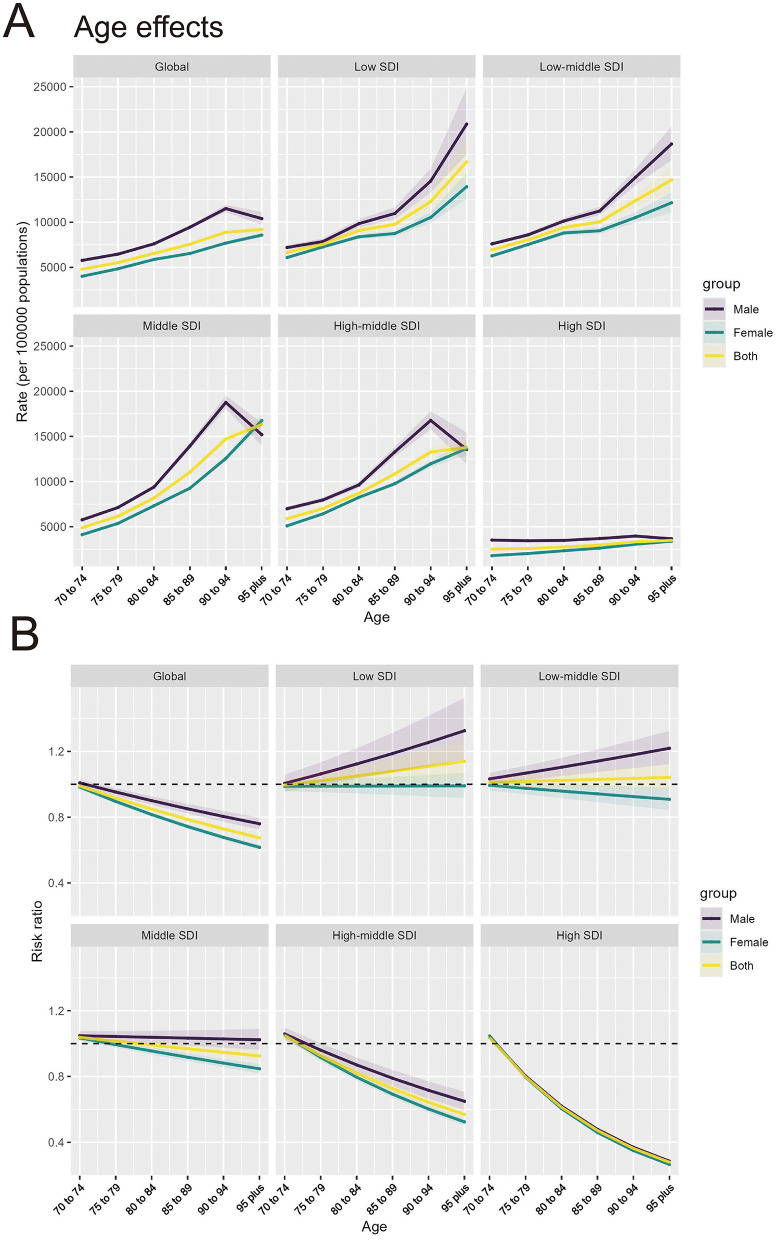
Age effects of IHD attributable to PM pollution by SDI regions and age groups. (A) Age effects of IHD attributable to PM pollution (rate per 100,000 population) across SDI regions. (B) Risk ratio of IHD attributable to PM pollution across SDI regions by age groups.
Figure 5
Figure 5
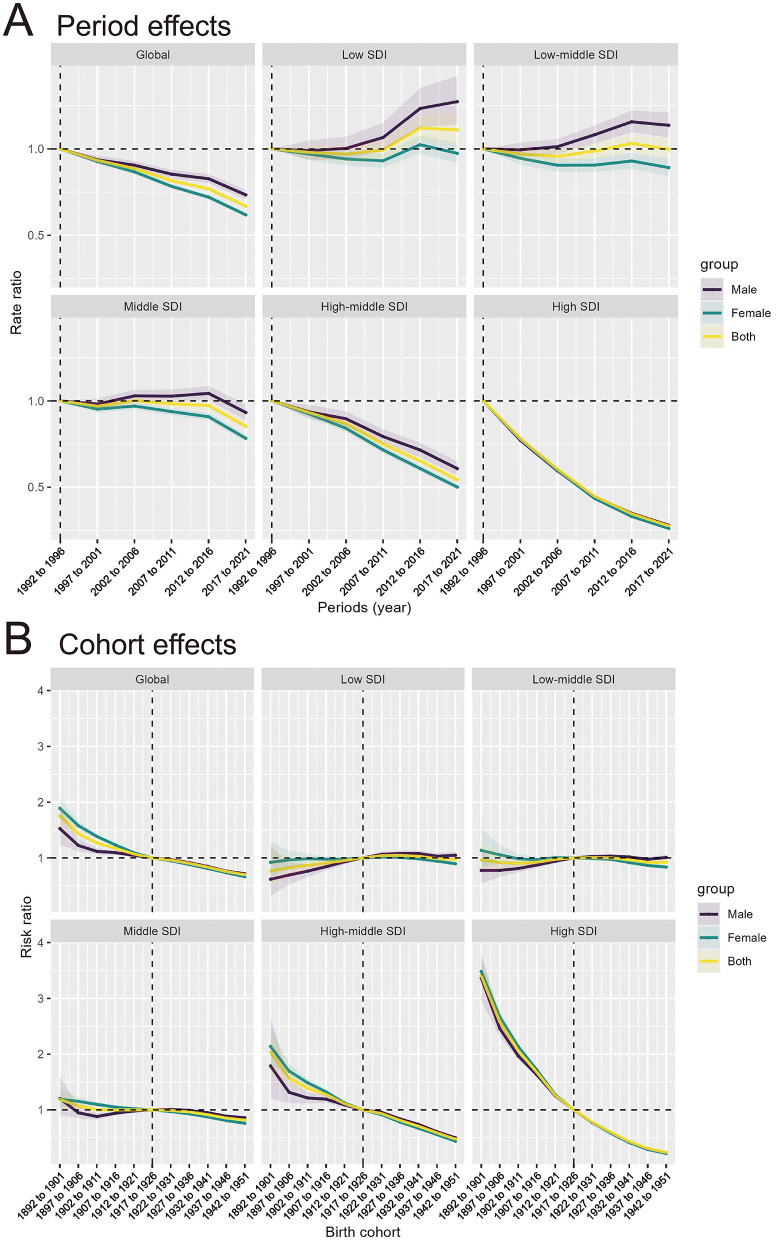
Period and cohort effects of IHD attributable to PM pollution by SDI regions. (A) Period effects of IHD attributable to PM pollution across SDI regions by periods. (B) Cohort effects of IHD attributable to PM pollution across SDI regions by birth cohorts.
Figure 6
Figure 6
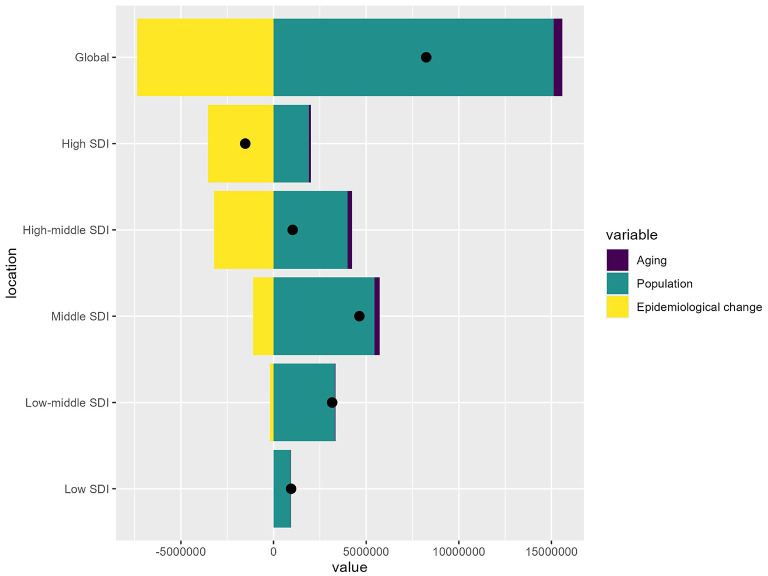
Drivers of IHD attributable to PM pollution by SDI regions. The bar chart shows the relative contributions of aging, population growth, and epidemiological change to the overall IHD burden globally and across different SDI levels.
Figure 7
Figure 7
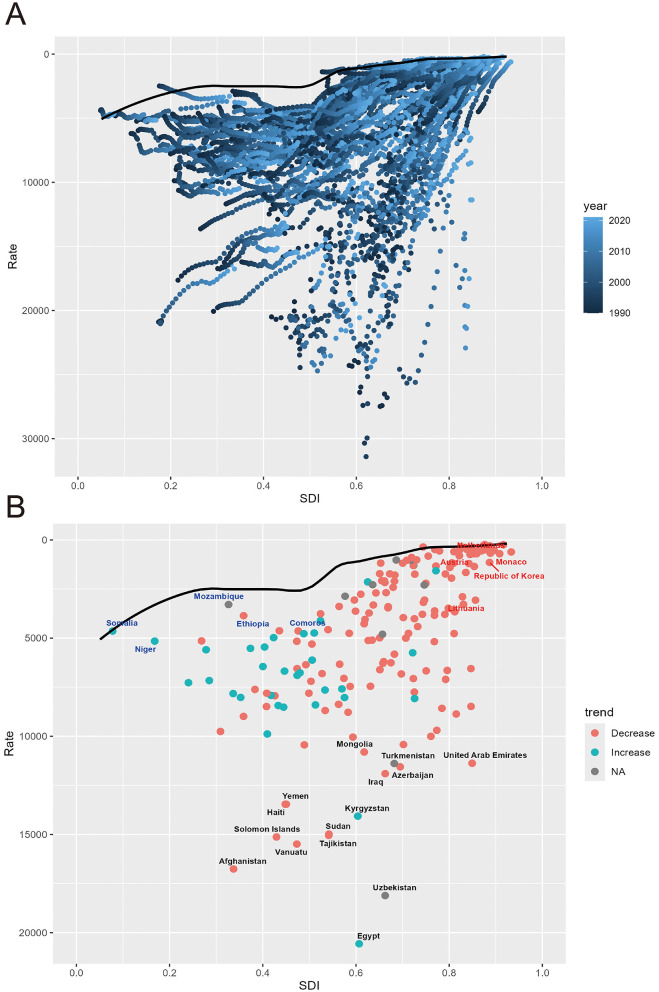
Frontier analysis based on SDI and IHD DALYs rate. (A) Frontier analysis based on SDI and IHD DALYs rate from 1990 to 2021. (B) Frontier analysis based on SDI and IHD DALYs rate in 2021.
Figure 8
Figure 8
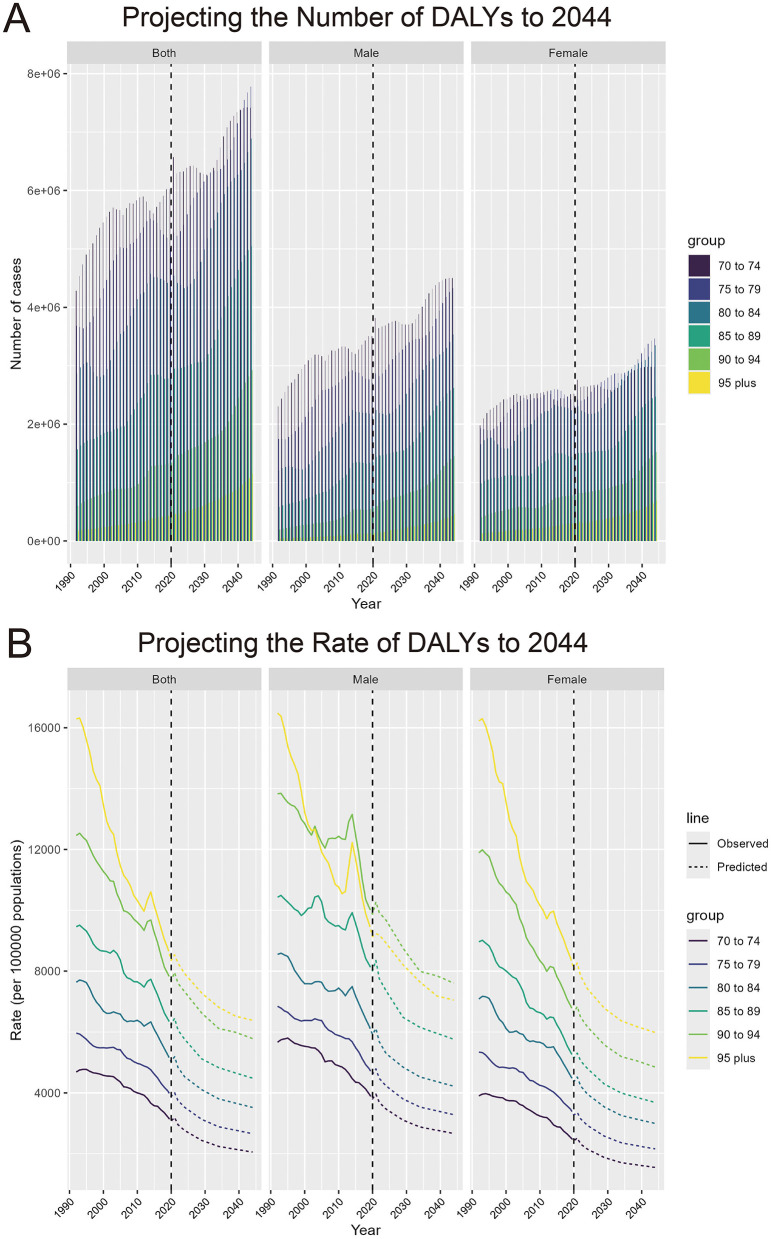
Projecting the number and rate of DALYs due to IHD attributable to PM pollution to 2044. (A) Projecting the number of DALYs to 2044, by sex and age groups. (B) Projecting the rate of DALYs to 2044 (per 100,000 population), by sex and age groups.

References

    1. Pastena P, Frye JT, Ho C, Goldschmidt ME, Kalogeropoulos AP. Ischemic cardiomyopathy: epidemiology, pathophysiology, outcomes, and therapeutic options. Heart Fail Rev. (2024) 29:287–99. 10.1007/s10741-023-10377-4 - DOI - PubMed
    1. Nowbar AN, Gitto M, Howard JP, Francis DP, Al-Lamee R. Mortality from ischemic heart disease. Circ Cardiovasc Qual Outcomes. (2019) 12:e005375. 10.1161/CIRCOUTCOMES.118.005375 - DOI - PMC - PubMed
    1. de Bont J, Jaganathan S, Dahlquist M, Persson Å, Stafoggia M, Ljungman P. Ambient air pollution and cardiovascular diseases: an umbrella review of systematic reviews and meta-analyses. J Intern Med. (2022) 291:779–800. 10.1111/joim.13467 - DOI - PMC - PubMed
    1. Xu R, Huang S, Shi C, Wang R, Liu T, Li Y, et al. Extreme temperature events, fine particulate matter, and myocardial infarction mortality. Circulation. (2023) 148:312–23. 10.1161/CIRCULATIONAHA.122.063504 - DOI - PubMed
    1. Montone RA, Rinaldi R, Bonanni A, Severino A, Pedicino D, Crea F, et al. Impact of air pollution on ischemic heart disease: evidence, mechanisms, clinical perspectives. Atherosclerosis. (2023) 366:22–31. 10.1016/j.atherosclerosis.2023.01.013 - DOI - PubMed

Substances

LinkOut - more resources