


Novel association between graft rejection and post-transplant malignancy in solid organ transplantation
- PMID: 40535498
- PMCID: PMC11886299
- DOI: 10.5500/wjt.v15.i2.102384
Novel association between graft rejection and post-transplant malignancy in solid organ transplantation
Abstract
Background: Advancements in immunosuppressive therapies have improved graft survival by enhancing graft tolerance and preventing organ rejection. However, the risk of malignancy associated with prolonged immunosuppression remains a concern, as it can adversely affect recipients' quality of life and survival. While the link between immunosuppression and increased cancer risk is well-documented, the specific interactions between graft rejection and post-transplant malignancy (PTM) remain poorly understood. Addressing this knowledge gap is crucial for devising immunosuppressive strategies that balance rejection prevention with cancer risk reduction.
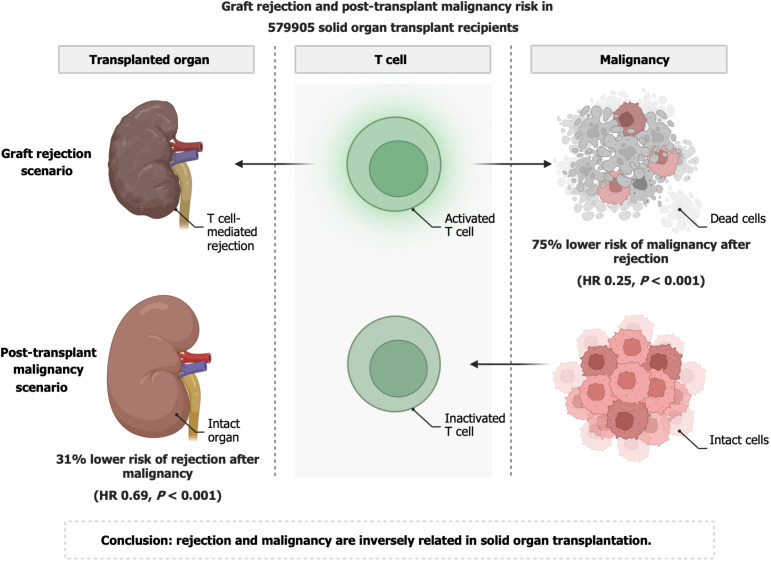
Aim: To investigate whether immunosuppression in PTM reduces rejection risk, while immune activation during rejection protects against malignancy.
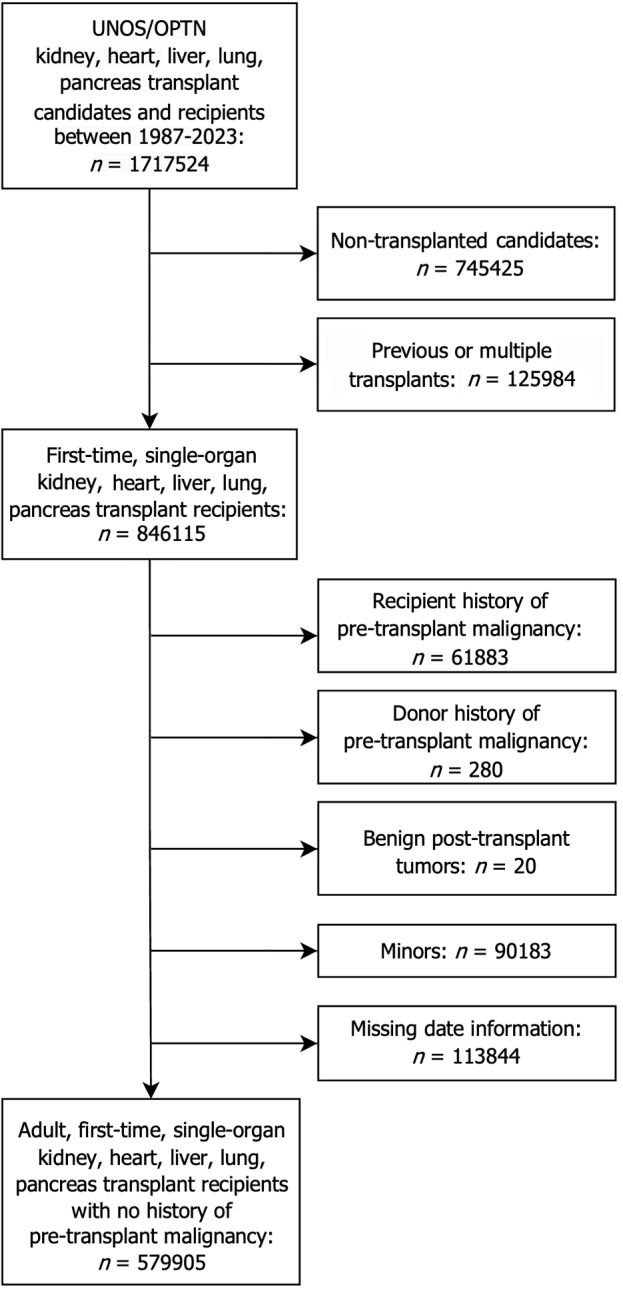
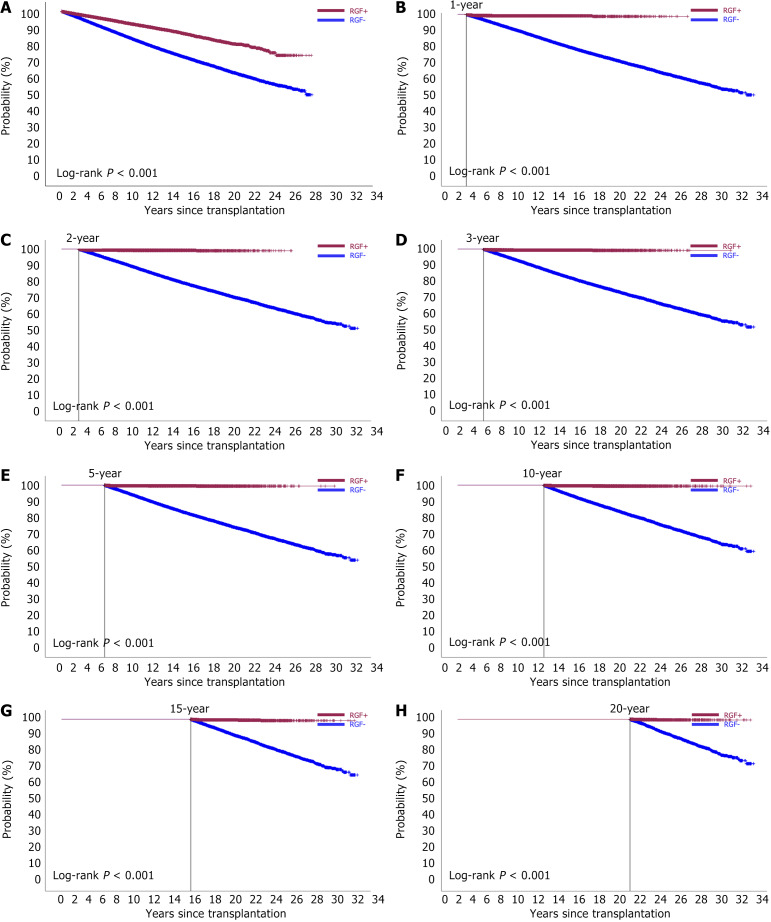
Methods: We analyzed data from the United Network for Organ Sharing's Organ Procurement and Transplantation Network database (1987-2023) on adult, first-time, single-organ transplant recipients with no prior history of malignancy (in donors or recipients). Landmark analyses at 1, 2, 3, 5, 10, 15, and 20 years post-transplant, Kaplan-Meier analyses, and time-dependent Cox proportional hazards regression models, each incorporating the temporal dimension of outcomes, assessed the association between rejection-induced graft failure (RGF) and PTM. Multivariate models were adjusted for clinical and immunological factors, including immunosuppression regimens.
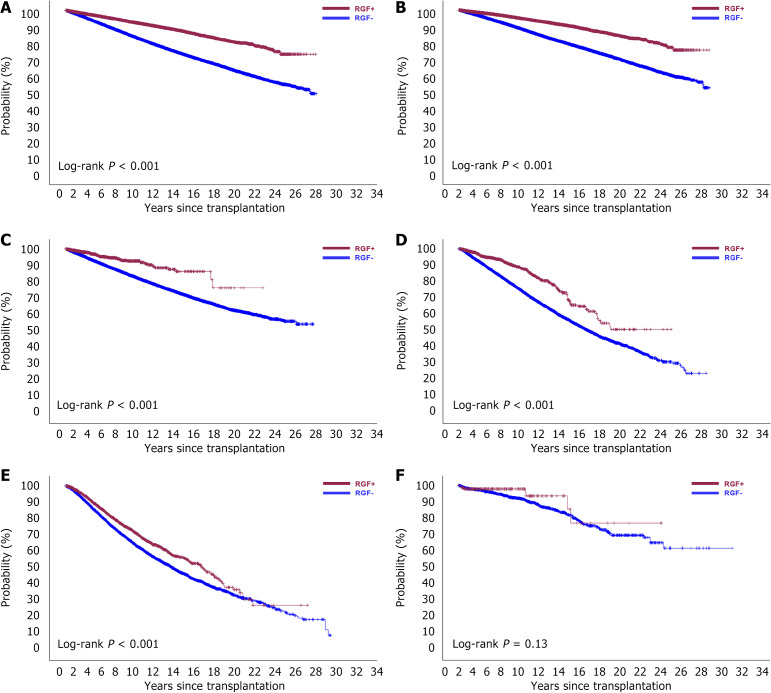
Results: The cohort included 579905 recipients (kidney: 386878; liver: 108390; heart: 45046; lung: 37643; pancreas: 1948) with a mean follow-up of 7.3 years and a median age of 50.6 ± 13.2 years. RGF was associated with a reduction in PTM risk across all time points [hazard ratio (HR) = 0.07-0.20, P < 0.001], even after excluding mortality cases. Kidney transplant recipients exhibited the most pronounced reduction (HR = 0.22, P < 0.001). Conversely, among recipients with PTM, RGF risk decreased across all time points up to 15 years after excluding mortality cases (HR = 0.49-0.80, P < 0.001). This risk reduction was observed in kidney, liver, heart, and lung transplants (HRs = 0.90, 0.21, 0.21, and 0.18, respectively; P < 0.001) but not in pancreas transplants.
Conclusion: RGF reduces PTM risk, particularly in kidney transplants, while PTM decreases RGF risk in kidney, liver, heart, and lung transplants.
Keywords: Graft rejection; Heart transplant; Immunosuppression; Kidney transplant; Liver transplant; Lung transplant; Pancreas transplant; Post-transplant malignancy; Transplant immunology; Transplantation.
©The Author(s) 2025. Published by Baishideng Publishing Group Inc. All rights reserved.
Conflict of interest statement
Conflict-of-interest statement: There are no conflicts of interest.
Figures
References
LinkOut - more resources
Full Text Sources
Miscellaneous
