


Radiation-induced injury and the gut microbiota: insights from a microbial perspective
- PMID: 40535532
- PMCID: PMC12174693
- DOI: 10.1177/17562848251347347
Radiation-induced injury and the gut microbiota: insights from a microbial perspective
Abstract
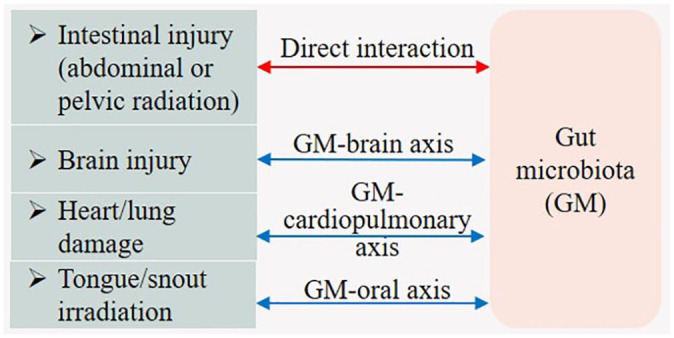
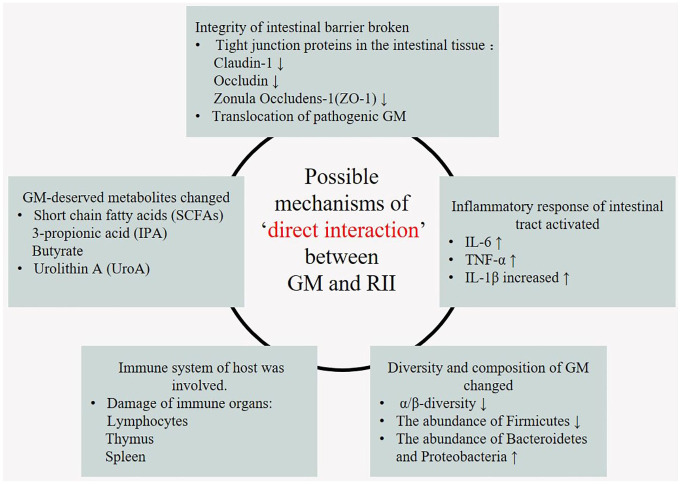
Although radiotherapy is the second most effective cancer treatment, radiation injuries limit its use. About 80% of abdominal-pelvic radiotherapy patients develop acute radiation enteritis, with 20% discontinuing radiotherapy. The lack of effective mitigation measures restricts its clinical application. Recent studies have proposed gut microbiota as a potential biomarker for radiation injuries. However, the interaction between gut microbiota and radiation injuries remains poorly understood. This review summarizes two forms of interaction between gut microbiota and radiation injuries based on the location of the radiation field. One type of interaction, referred to as "direct interaction," involves changes in the diversity and composition of gut microbiota, alterations in microbiota-derived metabolites, disruption of the intestinal barrier, activation of inflammatory responses within the intestine, and involvement of the host's immune system. The second form, called "indirect interaction," includes the influence of the gut microbiota on various body systems, such as gut microbiota-brain axis, gut microbiota-cardiopulmonary axis, and gut microbiota-oral axis. Additionally, we examine promising interventions aimed at reshaping the gut microbiota, including the use of probiotics, prebiotics, and fecal microbiota transplantation. The interaction between radiation injuries and gut microbiota is more complex than previously understood. Therefore, further clarification of the underlying mechanisms will facilitate the application of gut microbiota in preventing and alleviating radiation injuries.
Keywords: dysbiosis; gut microbiota; mechanism; radiation injuries.
Plain language summary
Exploring how gut bacteria may influence radiation damage Cancer is a major health threat worldwide, and many patients undergo radiation therapy to treat tumors. However, radiation can also harm healthy organs, limiting the radiation dose that doctors can safely use. Currently, there are no specific treatments to prevent this type of damage, known as radiation-induced injury (RII). Recent research suggests that gut bacteria, also called gut microbiota (GM), may play a role in how radiation affects the body, but we do not yet fully understand this relationship. In this review, we explore two ways in which gut bacteria might interact with radiation damage. The first, known as “direct interaction”, occurs when radiation directly affects the gut microbiota. This can lead to changes in the types of bacteria present, affect substances produced by these bacteria, damage the gut barrier, trigger inflammation in the intestines, and influence the body’s immune system. The second, known as “indirect interaction”, involves the communication between the gut microbiota and other parts of the body, such as the brain, heart, lungs, and mouth. We also discuss potential treatments to help restore a healthy balance of gut bacteria, including probiotics (helpful bacteria), prebiotics (substances that help good bacteria grow), and fecal microbiota transplantation (a method of transferring bacteria from a healthy person’s stool). Understanding how gut bacteria and radiation-induced injury interact is more complex than previously thought, and further research could lead to better ways to protect patients from radiation damage during cancer treatment.
© The Author(s), 2025.
Conflict of interest statement
The authors declare that there is no conflict of interest.
Figures
References
-
- Delaney G, Jacob S, Featherstone C, et al. The role of radiotherapy in cancer treatment. Cancer 2005; 104(6): 1129–1137. - PubMed
-
- Cooper JS, Pajak TF, Forastiere AA, et al. Postoperative concurrent radiotherapy and chemotherapy for high-risk squamous-cell carcinoma of the head and neck. N Engl J Med 2004; 350(19): 1937–1944. - PubMed
-
- Wang K, Tepper JE. Radiation therapy-associated toxicity: etiology, management, and prevention. CA Cancer J Clin 2021; 71(5): 437–454. - PubMed
-
- Cui Y, Wu H, Liu Z, et al. CXCL16 inhibits epithelial regeneration and promotes fibrosis during the progression of radiation enteritis. J Pathol 2023; 259(2): 180–193. - PubMed
Publication types
LinkOut - more resources
Full Text Sources
