


Analysis of serological risk factors for preeclampsia and the predictive role of high homocysteine levels
- PMID: 40535685
- PMCID: PMC12170426
- DOI: 10.62347/IKIP3300
Analysis of serological risk factors for preeclampsia and the predictive role of high homocysteine levels
Abstract
Objectives: To investigate the serological risk factors for preeclampsia, focusing on homocysteine level and its predictive role in the condition.
Methods: A retrospective analysis was conducted on 242 pregnant women (121 preeclampsia cases and 121 healthy controls) admitted from January 2022 to June 2023. Serological markers, including homocysteine, fasting blood glucose (FBG), triglycerides (TG), and inflammatory indicators, were compared between the two groups. Statistical analyses, including multivariate logistic regression and receiver operating characteristic (ROC) analysis, were performed to identify significant predictors.
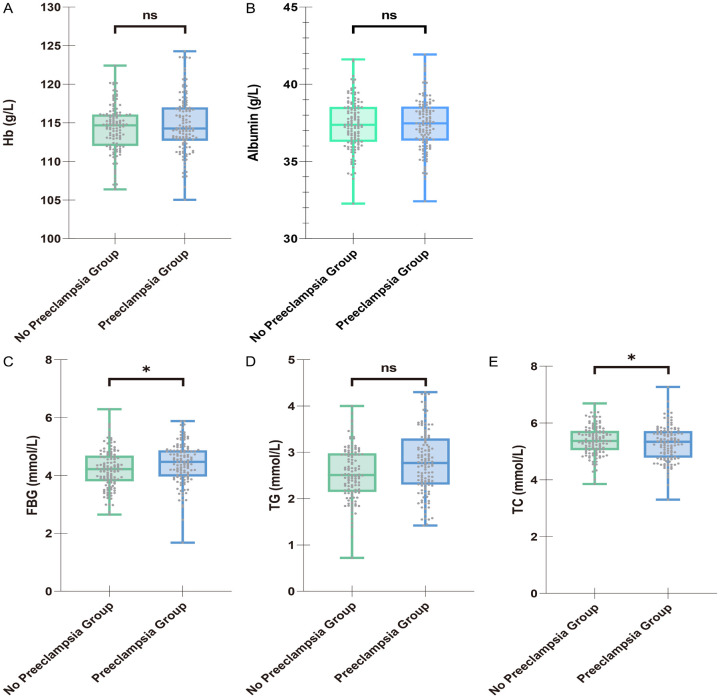
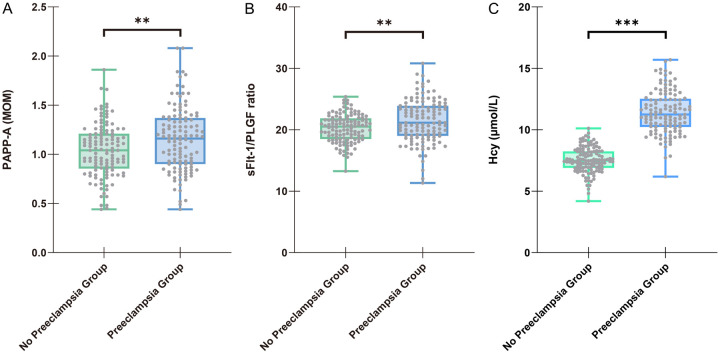
Results: Elevated homocysteine levels were strongly associated with preeclampsia, showing a high area under the curve (AUC) of 0.978 in ROC analysis, with a sensitivity of 93.4% and a specificity of 95.0% at a 9.230 μmol/L threshold. TG and FBG were also associated with increased preeclampsia risk, though the latter's significance diminished in multivariate analysis. In terms of inflammatory markers, Interleukin-6 (IL-6) levels were elevated, whereas C-reactive protein (CRP) levels were unexpectedly lower in preeclampsia cases. Lower Vitamin C level was correlated with the presence of preeclampsia.
Conclusion: Elevated homocysteine level was a significant predictor of preeclampsia, alongside dyslipidemia and altered inflammatory responses.
Keywords: Preeclampsia; biomarkers; homocysteine; hypertension; inflammation; pregnancy.
AJTR Copyright © 2025.
Conflict of interest statement
None.
Figures

References
-
- Stamilio DM, Beckham AJ, Boggess KA, Jelovsek JE, Venkatesh KK. Risk factors for postpartum readmission for preeclampsia or hypertension before delivery discharge among low-risk women: a case-control study. Am J Obstet Gynecol MFM. 2021;3:100317. - PubMed
-
- Latino JO, Udry S, Aranda F, Wingeyer SP, Romero DSF, Belizna C, Larrañaga G. Risk factors for early severe preeclampsia in obstetric antiphospholipid syndrome with conventional treatment. The impact of hydroxychloroquine. Lupus. 2020;29:1736–1742. - PubMed
-
- Weitzner O, Yagur Y, Weissbach T, Man El G, Biron-Shental T. Preeclampsia: risk factors and neonatal outcomes associated with early- versus late-onset diseases. J Matern Fetal Neonatal Med. 2020;33:780–784. - PubMed
LinkOut - more resources
Full Text Sources
Research Materials
Miscellaneous