


Triglyceride-glucose index and its related factors may be predictors for cardiovascular disease among Chinese postmenopausal women: a 12-year cohort study
- PMID: 40537739
- PMCID: PMC12180246
- DOI: 10.1186/s12944-025-02643-1
Triglyceride-glucose index and its related factors may be predictors for cardiovascular disease among Chinese postmenopausal women: a 12-year cohort study
Abstract
Background: This study investigated and compared the abilities of the triglyceride glucose index (TyG) and its correlated factors involving TyG-body mass index (TyG-BMI), TyG-waist-to-height ratio (TyG-WHtR), and TyG-waist circumference (TyG-WC) to predict cardiovascular disease (CVD) among Chinese postmenopausal women. This topic has not been adequately explored in the existing literature.
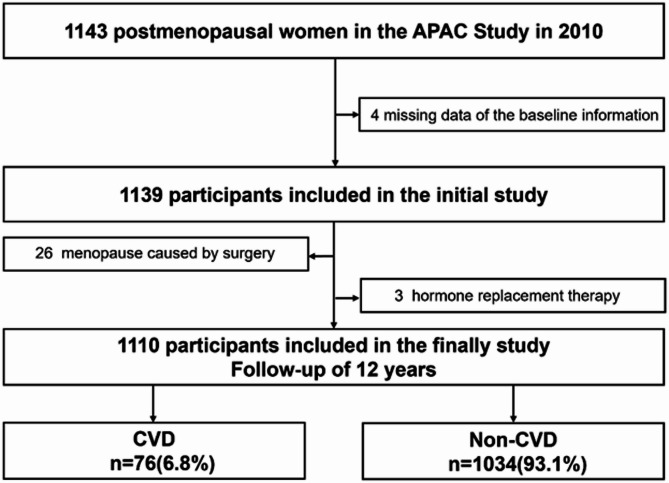
Methods: This prospective study included 1110 Chinese postmenopausal women, stratified into the CVD group and the non-CVD group. The TyG index and its correlated components (TyG, TyG-BMI, TyG-WHtR, and TyG-WC) were calculated. The primary endpoint was CVD.
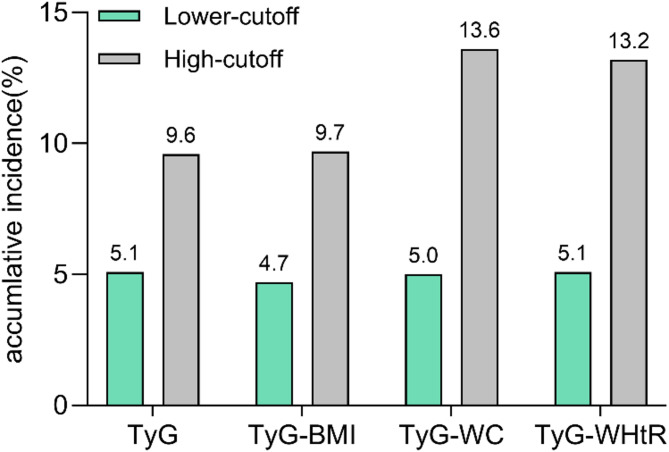
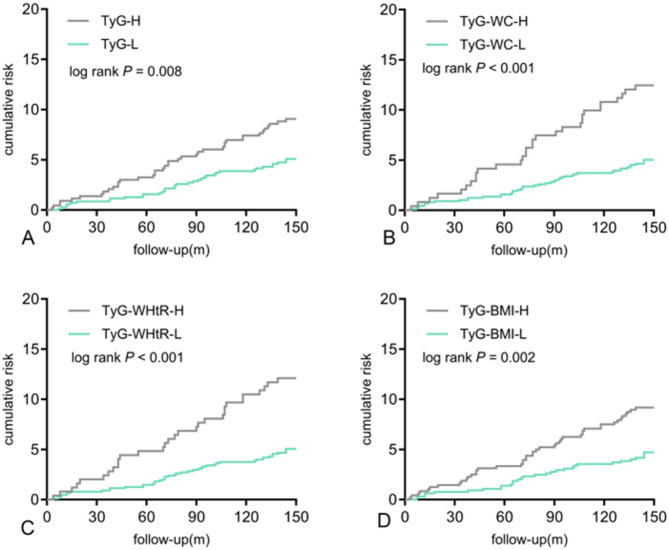
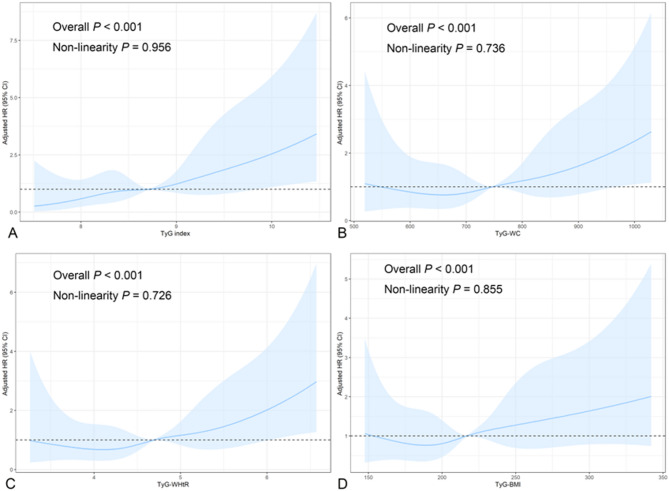
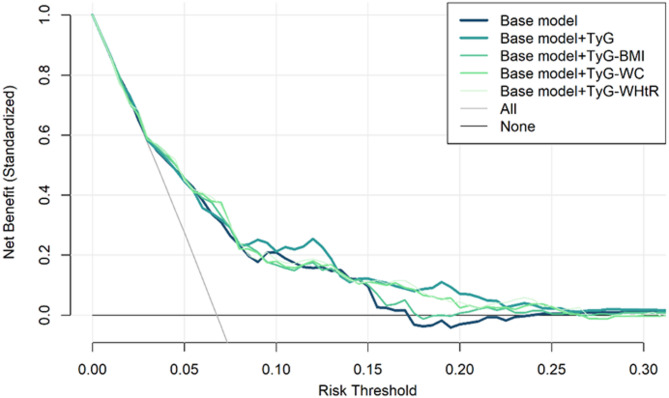
Results: Across a 12-year follow-up period, 76 (6.84%) CVDs were documented. The TyG index, in collaboration with various indicators of obesity, demonstrated a robust positive correlation with the risk of CVD. In comparison to other TyG indices, TyG-WC was the strongest predictor for CVD (HR: 2.61, 95%CI:1.64-4.14; P < 0.001), and the TyG-WHtR index exhibited the strongest diagnostic value in identifying CVD (AUC: 0.632, 95%CI: 0.603-0.660; P < 0.001). Incorporating TyG-WHtR into the base model significantly enhanced incremental risk stratification for CVD (NRI: 0.115, 95%CI: 0.040-0.190, P < 0.05; AIC: 996; BIC: 1041; Harrell's C-index: 0.73). Decision curve analysis (DCA) suggested that TyG, TyG-WHtR, and TyG-WC can provide significant clinical benefits for Chinese postmenopausal women. The sensitivity analyses have demonstrated the robustness of these results.
Conclusions: The TyG index and its correlated factors can effectively predict CVD in Chinese postmenopausal women. TyG-WHtR has the most potent ability to predict CVD among postmenopausal women.
Keywords: Cardiovascular disease; Postmenopausal women; Prospective study; The TyG WHtR index; The TyG index; The TyG-BMI index; The TyG-WC index.
© 2025. The Author(s).
Conflict of interest statement
Declarations. Ethical approval and consent to participate: The study was conducted following the principles of the Helsinki Declaration and received approval from the Ethics Committees of Kailuan General Hospital, Beijing Tongren Hospital, and Beijing Tiantan Hospital. This approval is to be renewed every five years. Written informed consent was secured from all participants involved in the study. Competing interests: The authors declare no competing interests.
Figures
References
MeSH terms
Substances
Supplementary concepts
Grants and funding
- U22A20364, 92049302/National Natural Science Foundation of China
- U22A20364, 92049302/National Natural Science Foundation of China
- U22A20364, 92049302/National Natural Science Foundation of China
- U22A20364, 92049302/National Natural Science Foundation of China
- 2021YFC2500500/National Key Research and Development Program of China
LinkOut - more resources
Full Text Sources
Medical
