


Case Report: Osimertinib-induced acute interstitial lung disease
- PMID: 40538542
- PMCID: PMC12176793
- DOI: 10.3389/fphar.2025.1608733
Case Report: Osimertinib-induced acute interstitial lung disease
Abstract
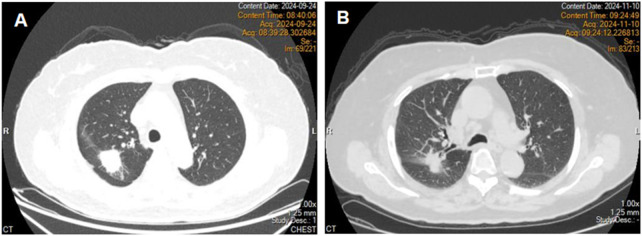
Osimertinib is a third-generation irreversible epidermal growth factor receptor tyrosine kinase inhibitor (EGFR-TKI) that selectively targets EGFR-TKI-sensitive mutations, thereby inhibiting tumor cell proliferation, migration, and invasion. Herein, we present a case of osimertinib-induced interstitial lung disease (ILD) in an 80-year-old woman with EGFR-mutated lung adenocarcinoma. The patient was treated with osimertinib as first-line therapy for metastatic non-small cell lung cancer (NSCLC). On day 45 of treatment, she experienced acute onset of severe dyspnea, which rapidly progressed to diffuse bilateral pulmonary consolidation and profound hypoxemia. Despite discontinuation of osimertinib and administration of aggressive supportive care, her clinical condition continued to deteriorate, ultimately resulting in a fatal outcome. This case underscores the importance of monitoring respiratory symptoms in patients receiving EGFR-TKIs, promptly diagnosing ILD, and implementing early intervention to mitigate adverse outcomes.
Keywords: EGFR-TKI; adverse drug reaction; interstitial lung disease; lung cancer; osimertinib.
Copyright © 2025 Lin, Wu, Yu, Jiang, Yang and Xiao.
Conflict of interest statement
The authors declare that the research was conducted in the absence of any commercial or financial relationships that could be construed as a potential conflict of interest.
Figures


References
Publication types
LinkOut - more resources
Full Text Sources
Research Materials
Miscellaneous
