


Validation of nutritional screening tools in patients undergoing cancer surgery in low- and middle-income countries
- PMID: 40538583
- PMCID: PMC12176562
- DOI: 10.3389/fnut.2025.1576916
Validation of nutritional screening tools in patients undergoing cancer surgery in low- and middle-income countries
Abstract
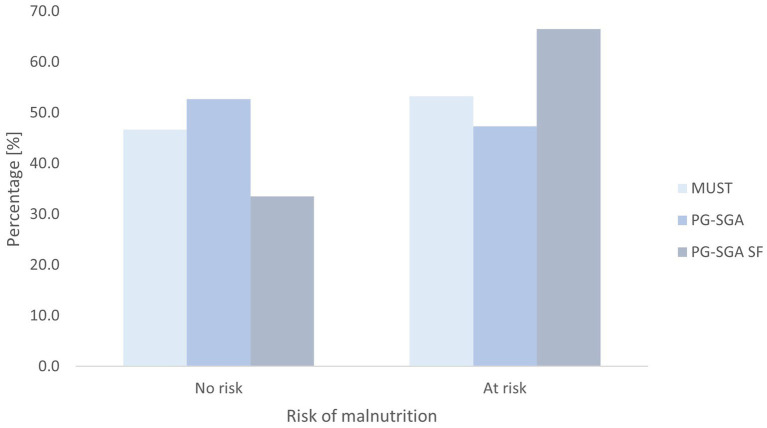
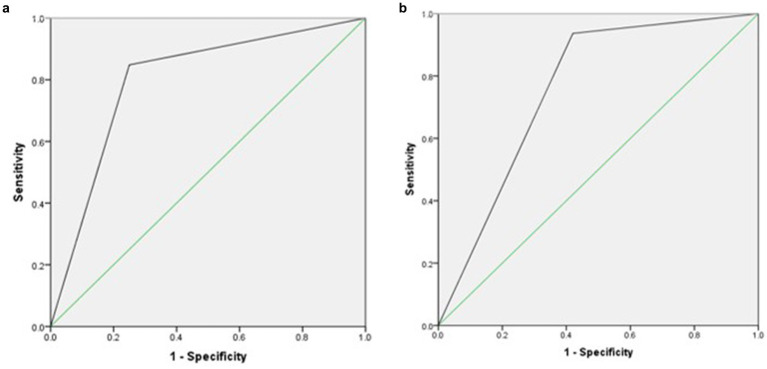
Approximately one-third of patients are severely malnourished prior to surgery in low- and middle-income countries (LMICs). Identifying the most appropriate tool for detecting malnutrition is a critical first step toward enabling effective treatment interventions. Therefore, this study aimed to assess the validity and reliability of nutritional screening tools in patients with cancer scheduled for surgery in LMICs. Participants included adults undergoing either curative elective or palliative surgeries in Ghana, India, and the Philippines. Nutritional status was assessed using anthropometric measurements, the Malnutrition Universal Screening Tool (MUST), and the Patient-Generated Subjective Global Assessment (PG-SGA). Data were analysed using Bland-Altman plots with confidence intervals (CIs) and intra-class correlation coefficients (ICCs) to assess inter-rater reliability. Sensitivity and specificity tests were conducted using the Area Under the Receiver Operating Characteristics Curve (AUROC). A total of 167 participants were recruited, with a mean age of 53.3 years (SD 14.7) and a mean body mass index (BMI) of 23.0 kg/m2 (SD 4.9). The proportion of participants identified as at risk of malnutrition was 53.3% using MUST, 47.3% using PG-SGA SF, and 66% using the full PG-SGA. When compared to the PG-SGA, MUST and PG-SGA SF had AUROCs of 0.78 (95% CI: 0.73-0.87) and 0.76 (95% CI: 0.68-0.83), respectively. MUST demonstrated a sensitivity of 85% and a specificity of 25%, while PG-SGA SF showed a sensitivity of 93% and a specificity of 42%. Excellent inter-rater agreement was observed for anthropometric measurements, with ICC values >0.9 across all assessments. Both MUST and PG-SGA SF demonstrated good sensitivity when compared to PG-SGA. However, PG-SGA SF demonstrated slightly greater specificity than MUST. Based on these findings, PG-SGA SF is recommended for preoperative nutritional screening in LMICs.
Keywords: MUST; Malnutrition Universal Screening Tool; Patient Generated Subjective Global Assessment; low and middle income countries; malnutrition; nutritional screening tools; surgical patients.
Copyright © 2025 Sremanakova, Knight, Lapitan, Yenli, Tabiri, Ghosh, Kingsley, Valparaiso, Harrison, Thomas, Haque, Veetil, Suroy, Choudhrie, Mittal, Kottayasamy Seenivasagam, Roy, Jones and Burden.
Conflict of interest statement
The authors declare that the research was conducted in the absence of any commercial or financial relationships that could be construed as a potential conflict of interest.
Figures
References
-
- United Nations Department of Global Communications . Sustainable development knowledge platform. (2025). Available online at: https://sustainabledevelopment.un.org/?menu=1300
-
- FAO, IFAD, UNICEF, WFP and WHO . (2018). The state of food security and nutrition in the world 2018: Building climate resilience for food security and nutrition (9251305714). Rome: FAO
-
- Jones D, Knight S, Sremanakova J, Lapitan MCM, Qureshi AU, Drake TM, et al. Malnutrition and nutritional screening in patients undergoing surgery in low and middle income countries: a systematic review. JCSM Clinic Rep. (2022) 7:79–92. doi: 10.1002/crt2.55 - DOI
LinkOut - more resources
Full Text Sources
