Structures of vertebrate R2 retrotransposon complexes during target-primed reverse transcription and after second-strand nicking
- PMID: 40540573
- PMCID: PMC12180492
- DOI: 10.1126/sciadv.adu5533
Structures of vertebrate R2 retrotransposon complexes during target-primed reverse transcription and after second-strand nicking
Abstract
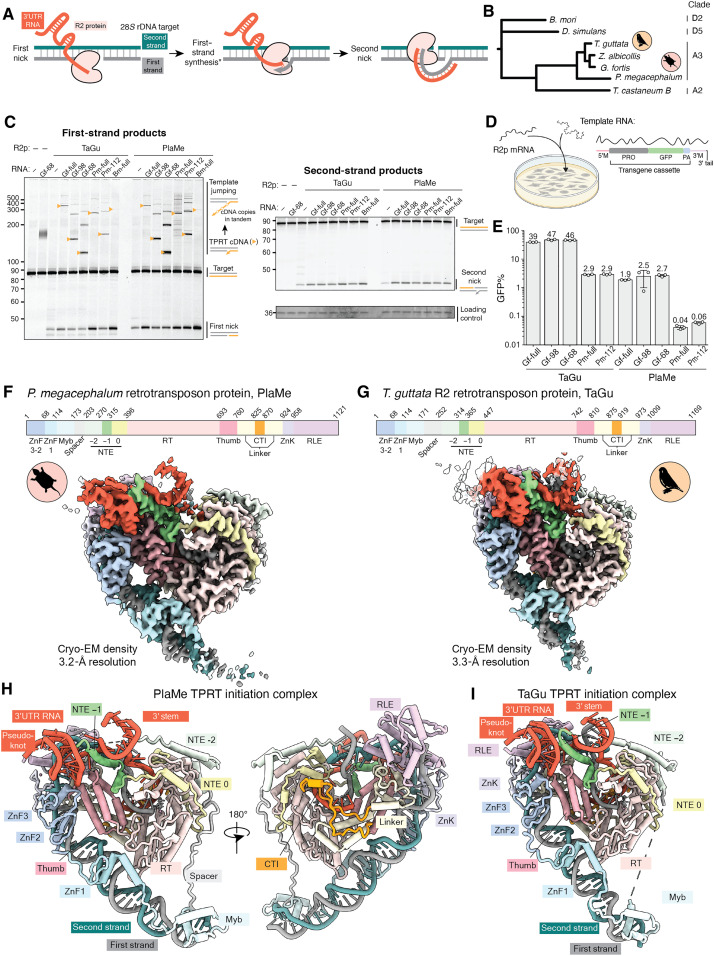
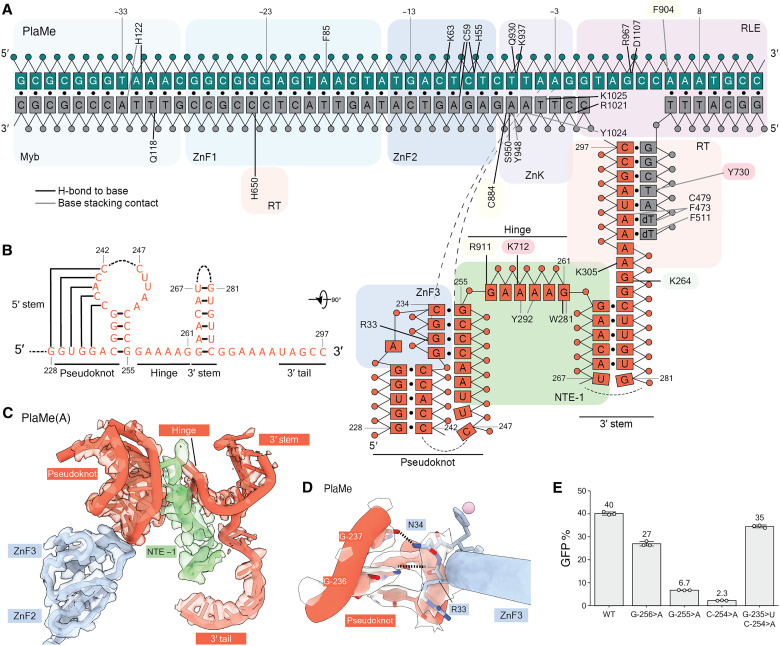
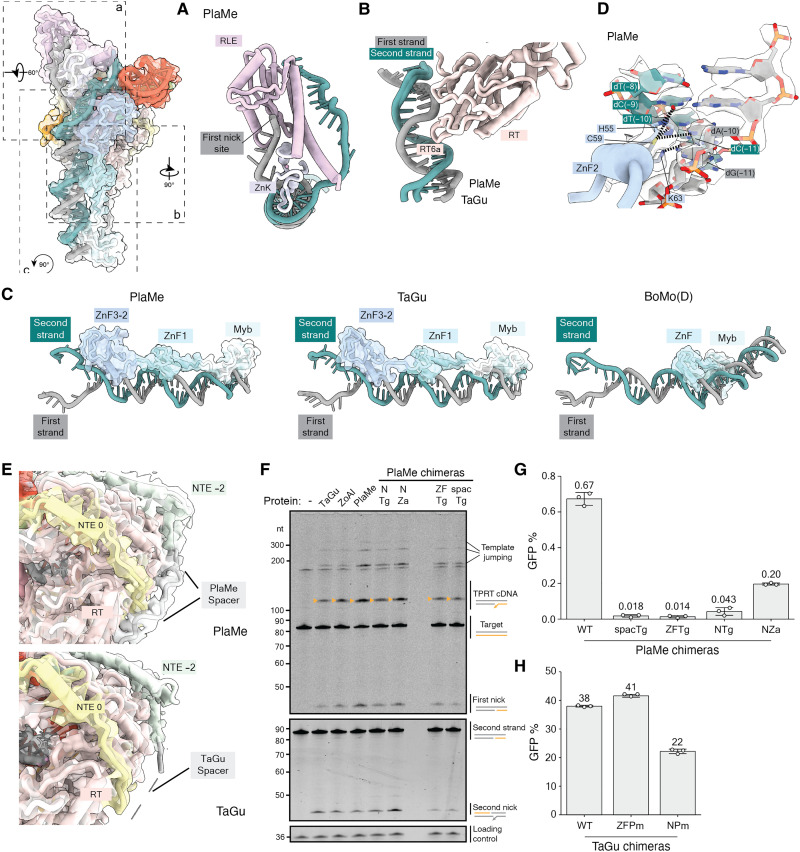
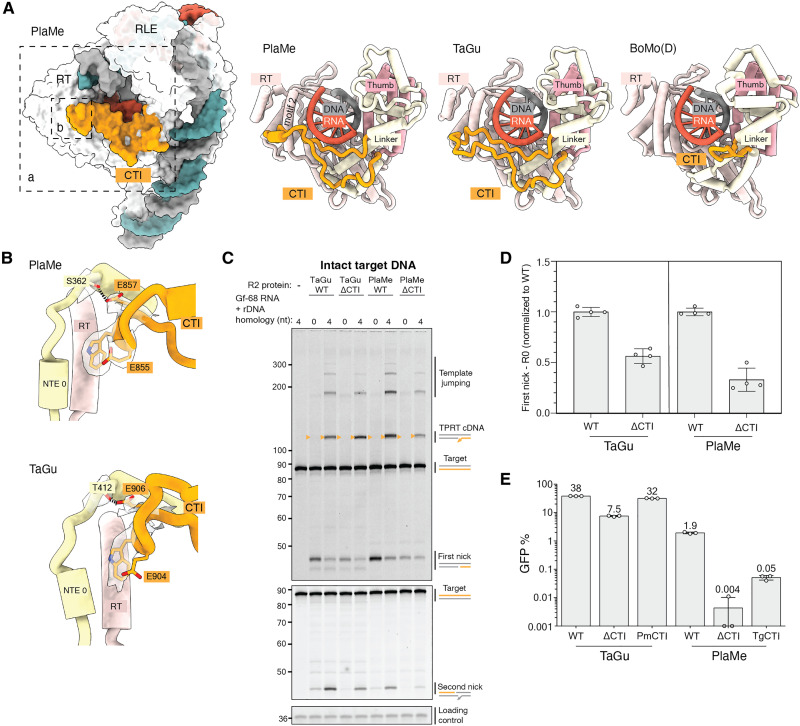
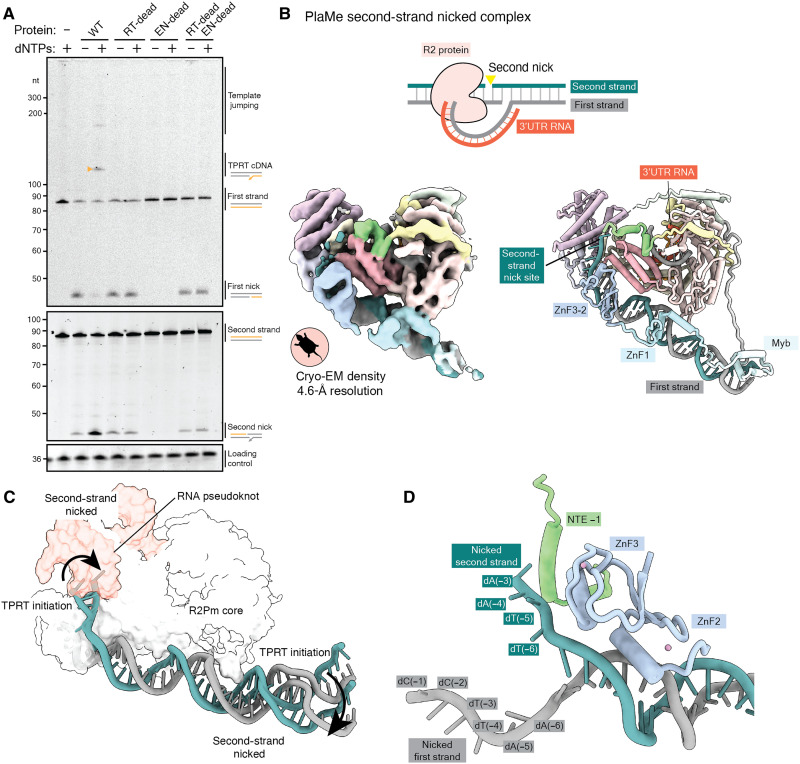
R2 retrotransposons are site-specific eukaryotic non-long terminal repeat retrotransposons that copy and paste into gene loci encoding ribosomal RNAs. Recently, we demonstrated that avian A-clade R2 proteins achieve efficient and precise insertion of transgenes into their native safe-harbor loci in human cells. The features of A-clade R2 proteins that support gene insertion are not well characterized. Here, we report high-resolution cryo-electron microscopy structures of two vertebrate A-clade R2 proteins at the initiation of target-primed reverse transcription and after cDNA synthesis and second-strand nicking. Using biochemical and cellular assays, we illuminate the basis for high selectivity of template use and unique roles for each of the three zinc-finger domains in nucleic acid recognition. Reverse transcriptase active site architecture is reinforced by an unanticipated insertion motif specific to vertebrate A-clade R2 proteins. Our work provides the first insights into A-clade R2 protein structure during gene insertion and may enable future improvement and adaptation of R2-based systems for precise transgene insertion.
Figures
Update of
-
Structures of vertebrate R2 retrotransposon complexes during target-primed reverse transcription and after second strand nicking.bioRxiv [Preprint]. 2024 Nov 20:2024.11.11.623112. doi: 10.1101/2024.11.11.623112. bioRxiv. 2024. Update in: Sci Adv. 2025 Jun 20;11(25):eadu5533. doi: 10.1126/sciadv.adu5533. PMID: 39605677 Free PMC article. Updated. Preprint.
References
MeSH terms
Substances
Grants and funding
LinkOut - more resources
Full Text Sources