


Bloodstream infection by Lactobacillus rhamnosus in a haematology patient: why metagenomics can make the difference
- PMID: 40544256
- PMCID: PMC12182651
- DOI: 10.1186/s13099-025-00722-3
Bloodstream infection by Lactobacillus rhamnosus in a haematology patient: why metagenomics can make the difference
Abstract
Background: Bloodstream infections (BSIs) pose a persistent threat to hospitalized patients, particularly those who are immunocompromised and susceptible to infections caused by anaerobic or facultative anaerobic bacteria. Alterations in gut microbiota composition can predispose individuals to intestinal domination by one or more pathobionts, increasing the risk of bacterial translocation into the bloodstream and subsequent bacteremia.
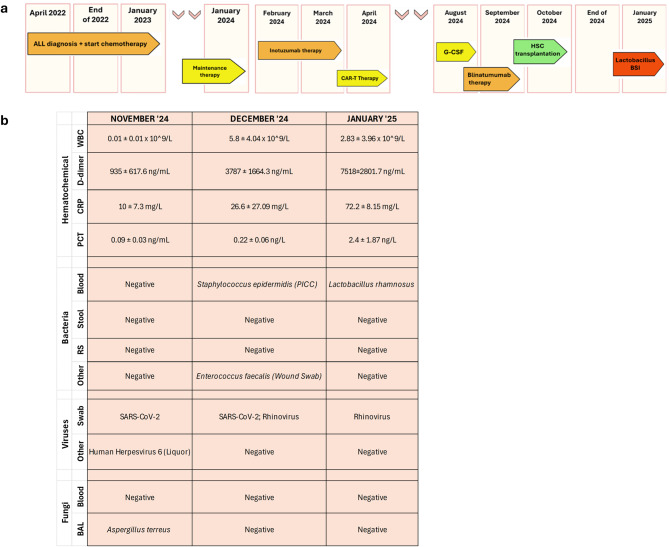
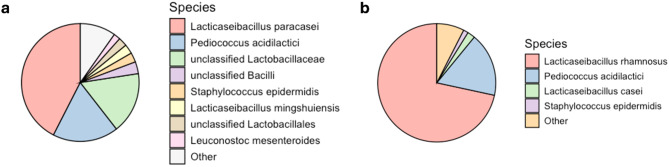
Case presentation: We report the case of a 20-year-old female with multiple relapsed/refractory Philadelphia-negative B-cell acute lymphoblastic leukemia, initially referred to our hematology center for CAR-T cell therapy. The patient ultimately underwent allogeneic hematopoietic stem cell transplantation, which was complicated by infections, moderate-to-severe graft-versus-host disease, hepatic sinusoidal obstruction syndrome, and transplant-associated thrombotic microangiopathy, all contributing to a fatal outcome. Blood cultures obtained in the final week before the patient succumbed to multi-organ toxicity grew Lactobacillus rhamnosus. A fecal sample collected concurrently for intestinal microbiota characterization revealed a marked predominance of Bacillota (98.5%), with Lacticaseibacillus dominating at 47.9%, followed by Pediococcus (18.59%) and Staphylococcus (3.5%) at the genus level. We performed genomic comparison between the L. rhamnosus isolated from blood cultures and the best-matched strain detected in the intestinal microbiota.
Conclusions: We report the isolation of L. rhamnosus from blood cultures in a patient post hematopoietic cell transplantation, with genomic similarity to a gut-dominant L. rhamnosus strain. This case highlights the potential link between intestinal domination and subsequent bloodstream infection, supporting the value of gut microbiota profiling as an adjunctive tool for monitoring high-risk patients, such as hematopoietic cell transplant recipients.
Supplementary Information: The online version contains supplementary material available at 10.1186/s13099-025-00722-3.
Keywords: Lacticaseibacillus rhamnosus; BSI in haematology patients; Intestinal domination; Metagenomics.
Conflict of interest statement
Declarations. Ethics approval and consent to participate: All procedures performed were in accordance with the ethical standards of the institutional and/or national research committee and with the 1964 Helsinki declaration and its later amendments or comparable ethical standards. Consent for publication: Written informed consent for publication of anonymized data for research and educational purposes was obtained from the patient. Competing interests: The authors declare no competing interests.
Figures

References
Grants and funding
LinkOut - more resources
Full Text Sources
