


Characterization of alterations in spontaneous behaviors in a rat model of neuropathic pain - new outcome measures for pain evaluation?
- PMID: 40546246
- PMCID: PMC12179769
- DOI: 10.3389/fnbeh.2025.1550476
Characterization of alterations in spontaneous behaviors in a rat model of neuropathic pain - new outcome measures for pain evaluation?
Abstract
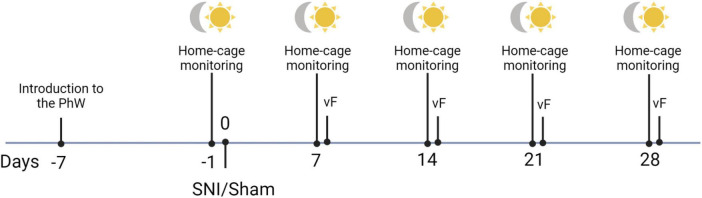
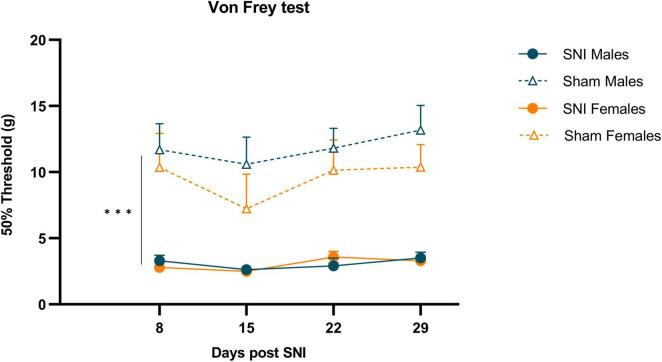
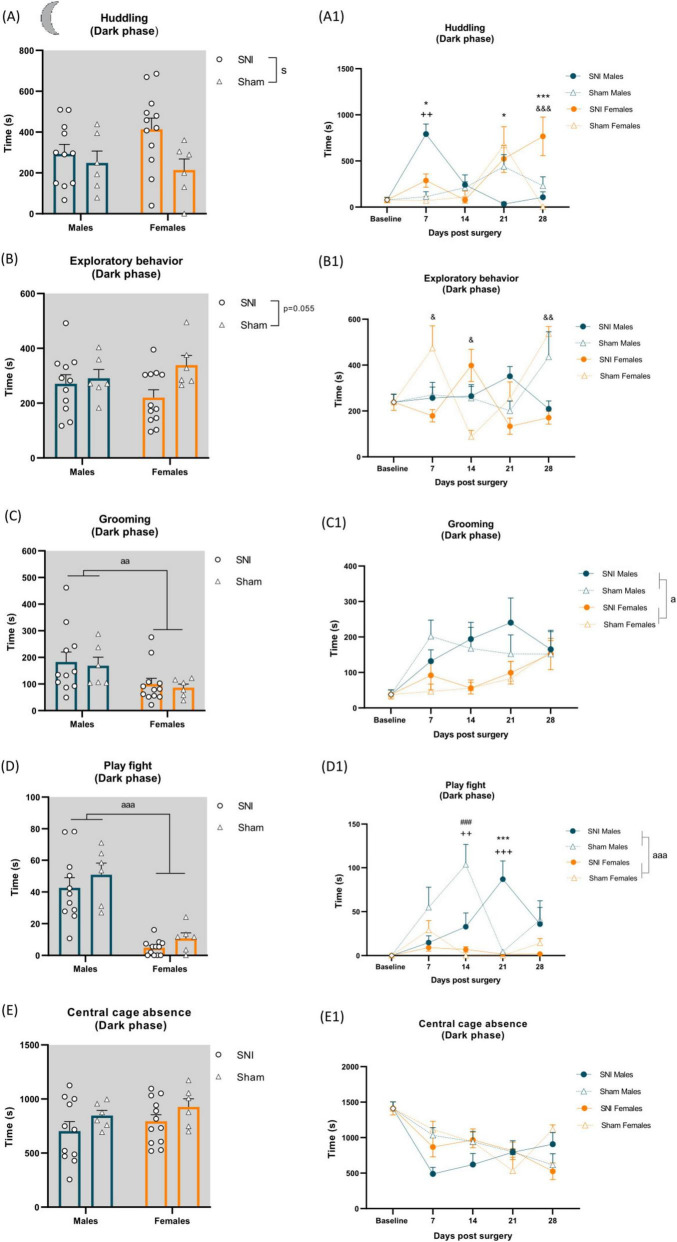
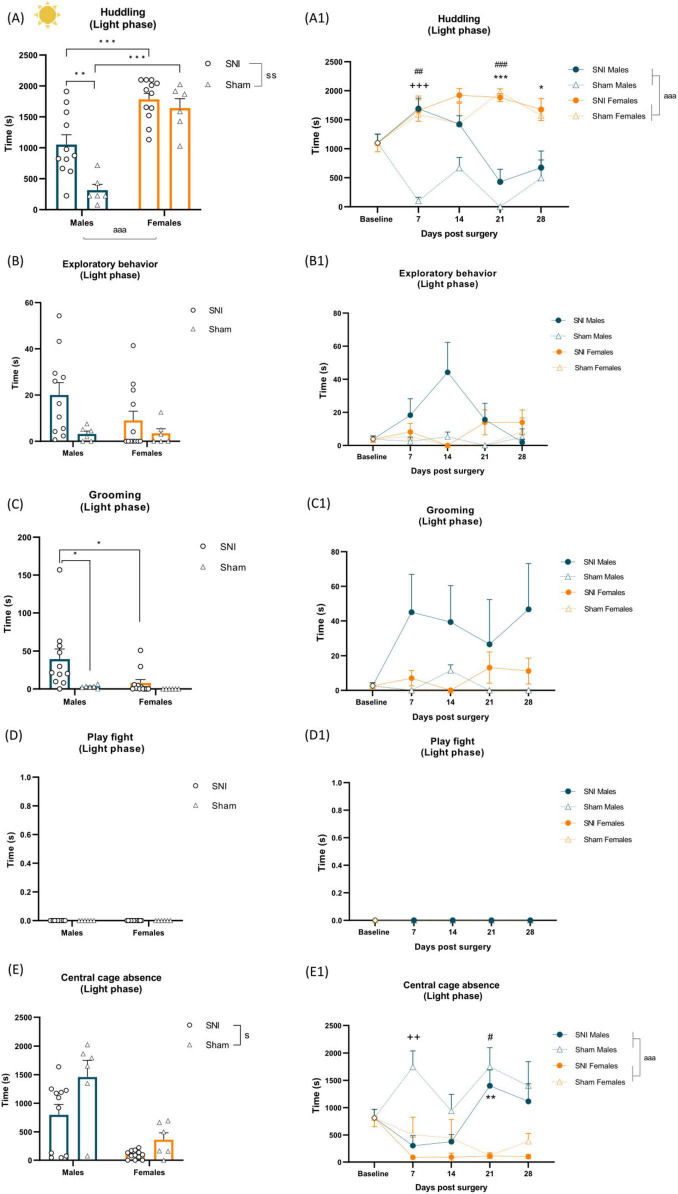
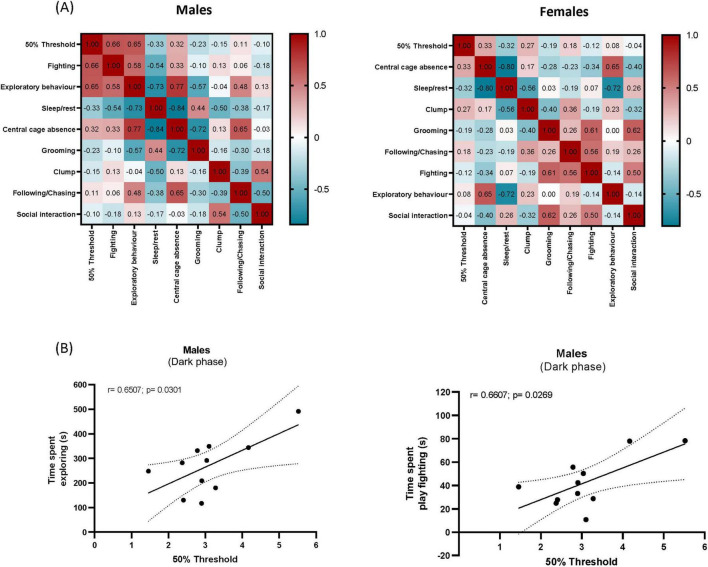
Chronic pain affects all life domains including social interaction and responding. The aim of this study was to track spontaneous behaviors in an experimental chronic pain model to uncover alternative pain indicators in a socially and physically enriched home-cage setting. The spared nerve injury (SNI) was used to model neuropathic pain in Wistar Han male and female rats housed in the PhenoWorld (PhW). Spontaneous behavior of animals was recorded in their home cages once a week following SNI during both the dark and light phases of the light-dark cycle using focal sampling in order to assess alterations induced by neuropathic pain. Males and females with SNI demonstrated significantly lower threshold to von Frey test (VF) in the ipsilateral hind paws compared to sham controls. SNI significantly increased huddling time in both males and females during light and dark phases. Males showed increased grooming and play fighting during the dark phase compared to females while during the light phase females huddled significantly more than males. No significant effects were observed on other behaviors analyzed. This study showed that peripheral nerve injury has an impact on spontaneous behavior, specifically on huddling. This finding provides new perspective into pain evaluation and suggests the possibility of considering spontaneous behavior as an additional method of assessing pain-related behavior in rodents. To bridge the current gap between basic research and development of novel analgesics, there is a need to develop non-evoked behavioral assays to investigate changes in animal wellbeing and spontaneous pain. Our findings raise the possibility of discovering new outcome measures, however, additional study to reverse these behaviors with analgesics should be conducted.
Keywords: PhenoWorld; chronic pain; ethology; home-cage behavior; light-dark cycle; sex differences; spontaneous behavior.
Copyright © 2025 Liptáková, Castelhano-Carlos, Fiúza-Fernandes, Sousa, Roche, Finn and Leite-Almeida.
Conflict of interest statement
The authors declare that the research was conducted in the absence of any commercial or financial relationships that could be construed as a potential conflict of interest. The author(s) declared that they were an editorial board member of Frontiers, at the time of submission. This had no impact on the peer review process and the final decision.
Figures
References
LinkOut - more resources
Full Text Sources
Miscellaneous
