


A Decade of Urology Residency Match Trends: Growth, Competition, and Diversity
- PMID: 40546535
- PMCID: PMC12182751
- DOI: 10.7759/cureus.84674
A Decade of Urology Residency Match Trends: Growth, Competition, and Diversity
Abstract
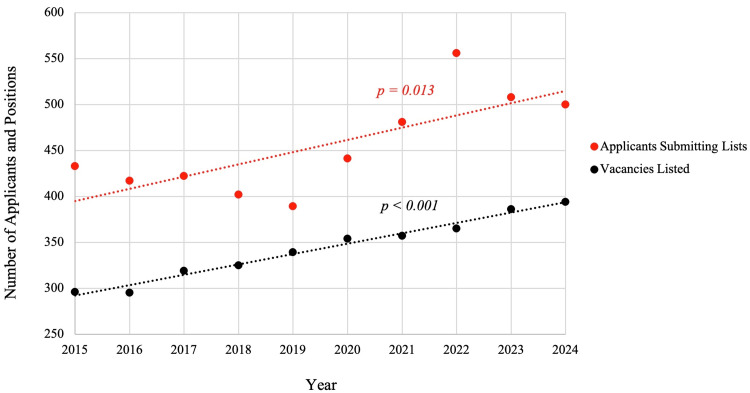
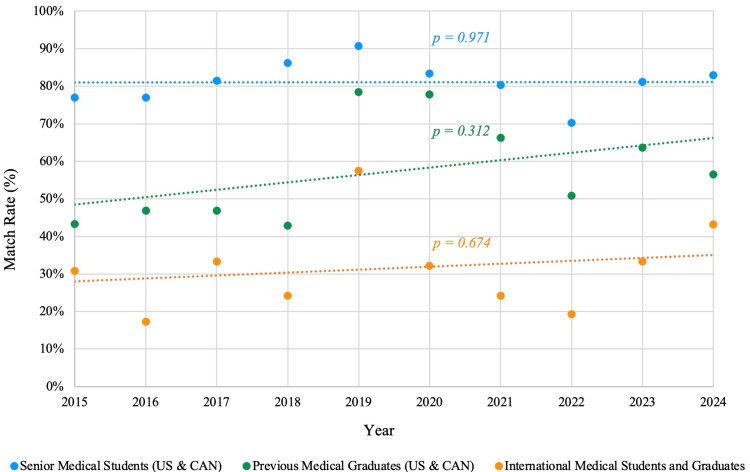
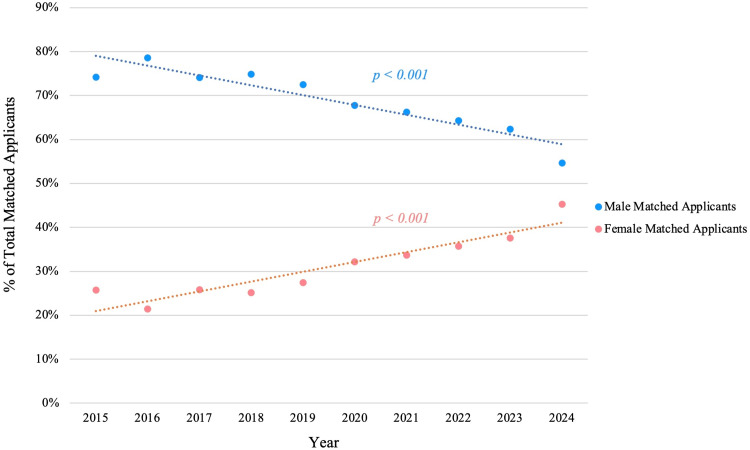
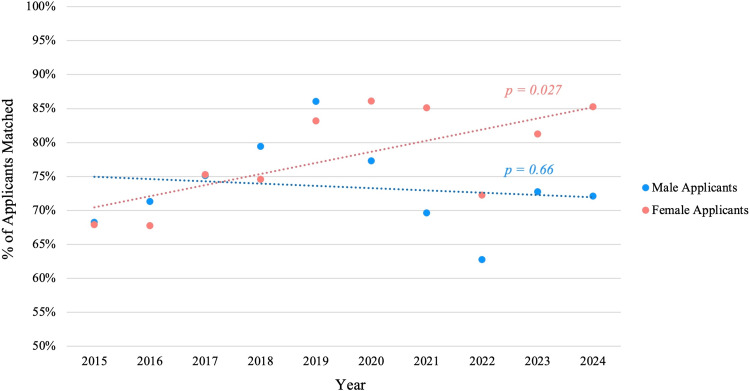
Introduction Urology residency positions in the United States are filled through an early, independent match process administered by the American Urological Association (AUA). As a highly competitive specialty, understanding long-term trends in matching outcomes and applicant demographics is essential for workforce planning and equity. This study analyzed trends in match rates, applicant characteristics, and training capacity from 2015 to 2024. Methods Publicly available AUA match data from 2015 to 2024 were analyzed. Variables included applicant counts, residency positions, match rates, medical training status, sex, and race/ethnicity for 2024. Statistical analyses included linear regression, correlation, Chi-square tests, and ANOVA to assess trends and subgroup differences. Results Residency positions increased by 33% over the study period (296 in 2015 to 394 in 2024, +11 per year, p<0.001), with applicants rising from 433 to 500 (+13 per year, p=0.01). The overall match rate averaged 75% (±5.7%) and remained stable over time. First-time medical seniors had significantly higher match rates (81%) than previous graduates (59%) and international graduates (33%) (p<0.001). The number of female applicants nearly doubled, comprising 40.6% of the 2024 pool, with match rates exceeding those of males in recent cycles. In 2024, Black and Hispanic applicants had lower match rates compared to their White and Asian peers. Conclusion The urology match has grown but remains highly competitive. While gender diversity has improved, racial and ethnic disparities have persisted. Continued expansion of residency positions and targeted diversity initiatives are essential to address workforce shortages and promote equity in urological training.
Keywords: applicant demographics; diversity in medicine; graduate medical education; urology match; urology residency.
Copyright © 2025, Majeed et al.
Conflict of interest statement
Human subjects: All authors have confirmed that this study did not involve human participants or tissue. Animal subjects: All authors have confirmed that this study did not involve animal subjects or tissue. Conflicts of interest: In compliance with the ICMJE uniform disclosure form, all authors declare the following: Payment/services info: All authors have declared that no financial support was received from any organization for the submitted work. Financial relationships: All authors have declared that they have no financial relationships at present or within the previous three years with any organizations that might have an interest in the submitted work. Other relationships: All authors have declared that there are no other relationships or activities that could appear to have influenced the submitted work.
Figures
References
-
- Urology match trends 2006-2022. [ Mar; 2025 ];https://www.auanews.net/issues/articles/2022/december-2022/urology-match... 2022 2022:2006–2022.
-
- Urology match trends: examining the urology match from 2006-2021. Jiang J, Deibert CM. J Urol. 2021;206:425.
-
- Urology residency match: trends and costs. Guckien Z, Singh NP, Boyd CJ, Rais-Bahrami S. J Urol. 2022;208:767–770. - PubMed
-
- Workforce issues in urology. Dornbier R, Gonzalez CM. Urol Clin North Am. 2021;48:161–171. - PubMed
-
- AUA census results. [ Mar; 2025 ]. 2022. https://www.auanet.org/research-and-data/aua-census/census-results https://www.auanet.org/research-and-data/aua-census/census-results
LinkOut - more resources
Full Text Sources
Research Materials