


Characterization of volatile profiles in cherry fruits: Integration of E-nose and HS-SPME-GC-MS
- PMID: 40547006
- PMCID: PMC12180960
- DOI: 10.1016/j.fochx.2025.102632
Characterization of volatile profiles in cherry fruits: Integration of E-nose and HS-SPME-GC-MS
Abstract
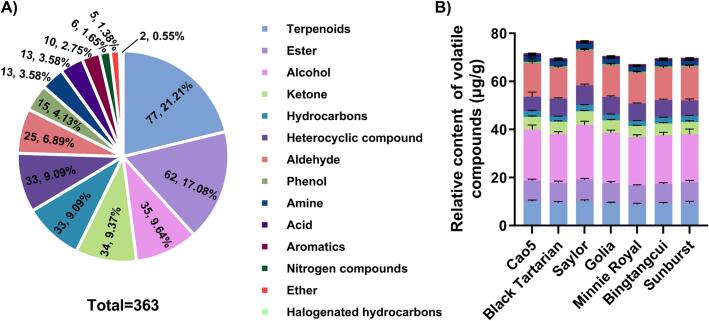
Aroma plays a crucial role in assessing the flavor quality of cherry fruits. This study compared the odor and volatile profiles of 37 cherry germplasm fruits using an electronic nose (E-nose) combined with headspace solid-phase microextraction-gas chromatography-mass spectrometry (HS-SPME-GC-MS). Notably, Cao5 exhibited a distinct odor compared to the other 36 sweet cherry cultivars. A total of 363 volatiles were identified and categorized into 14 classes. In terms of quantity, the top three categories of volatiles were terpenoids, esters, and alcohols. Among the samples, Saylor displayed the highest total volatile content at 76.98 μg∙g-1, whereas Minnie Royal had the lowest at 67.27 μg∙g-1. A total of 51 volatiles, including 1-nonen-3-one, 2-nonenal, (E)-, 2-nonenal, 2,4-nonadienal, and 2-hexenal, (E)-, were identified as the primary contributors to the aroma. In conclusion, this study aims to establish a foundation for rapidly and accurately evaluating cherry fruit flavor and developing new cultivars.
Keywords: Cherry; E-nose; HS-SPME-GC–MS; Relative odor activity value; Volatile compounds.
© 2025 The Authors. Published by Elsevier Ltd.
Conflict of interest statement
The authors declare that they have no known competing financial interests or personal relationships that could have appeared to influence the work reported in this paper.
Figures



References
LinkOut - more resources
Full Text Sources
Miscellaneous
