


Genomic features of Salmonella Bovismorbificans isolated from calves in British Columbia, Canada
- PMID: 40548250
- PMCID: PMC12179427
- DOI: 10.3389/fvets.2025.1590149
Genomic features of Salmonella Bovismorbificans isolated from calves in British Columbia, Canada
Abstract
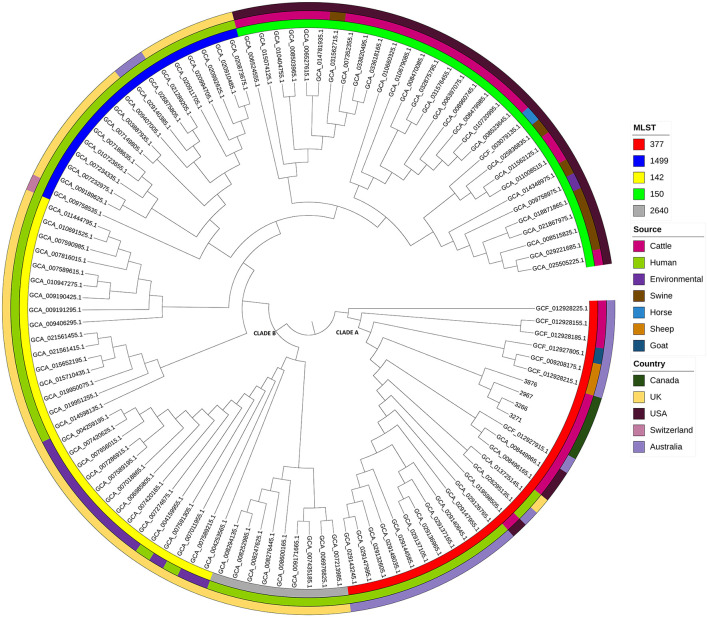
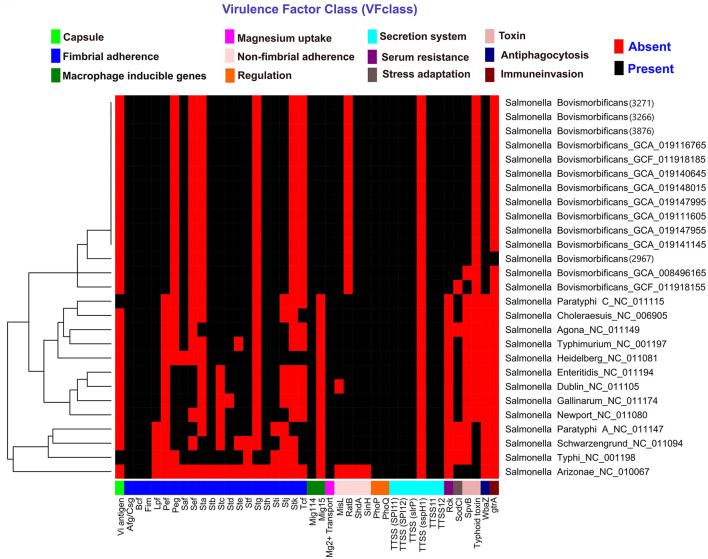
Salmonella enterica serovar Bovismorbificans has been linked to outbreaks of foodborne human illnesses in the United States and Europe. In mid-2023, Salmonella Bovismorbificans was isolated from 4 calves from the Fraser Valley, British Columbia (BC). To our knowledge, this is the first isolation of this pathogen in cattle in BC. The lack of epidemiologic, clinical, and pathologic data concerning Salmonella Bovismobificans in British Columbia dairy herds, along with its public health implications, prompted a retrospective review of Salmonella isolates recovered at the Animal Health Centre, Abbotsford, BC. We analyzed all Salmonella serotypes isolated from cattle between 2008 and 2023. Salmonella Dublin and Salmonella Typhimurium were the two most frequently isolated serotypes with no isolates of Salmonella Bovismorbificans identified between 2008 and mid-2023, and 4 Salmonella Bovismorbificans isolations between August and October 2023. These 4 Salmonella Bovismorbificans strains (2967, 3266, 3271, and 3876) were subjected to whole genome sequencing. Based on in-silico multi-locus sequence typing, the strains were identified as sequence type ST377. Our strains clustered closely with strains recovered from other domestic animals, including cattle, sheep, and goats, from diverse geographical locations, including the USA and Australia. PlasmidFinder software identified the presence of IncFIB and IncFII plasmids in all four strains. A total of 10 SPIs [SPI-1-5, 9, 13-14, centisome 63 (C63PI) and centisome 54 (CS54 island)] were detected in 4 strains except SPI-4 was not observed in strain 2967. A total of 158 virulence genes were predicted across the four strains while one strain (2967) had an additional virulence gene glycosyltransferase operons (gtrA) related to immunoinvasion. All four strains carried resistance genes for aminoglycosides, quinolones, peptides, nitroimidazoles, and multi-drug efflux pumps, but no resistance genes were detected for β-lactams, folate pathway antagonists, macrolides, or tetracyclines. Although Salmonella Bovismorbificans is not a common serotype in BC dairy herds, the genomic characteristics of the strains highlight the importance of thorough surveillance to monitor potential spread among susceptible herds and animal environments.
Keywords: British Columbia; Canada; Salmonella Bovismorbificans; calf; cattle; genomic feature; whole genome sequencing.
Copyright © 2025 Ghosh, Leon, McGregor, Arya and Raverty.
Conflict of interest statement
The authors declare that the research was carried out without any commercial or financial relationships that could be seen as a potential conflict of interest. The author(s) declared that they were an editorial board member of Frontiers, at the time of submission. This had no impact on the peer review process and the final decision.
Figures
References
-
- Government of Canada . Yearly Food-Borne Illness Estimates for Canada. (2015). Available online at: https://www.canada.ca/en/public-health/services/food-borne-illness-canad... (accessed March 4, 2025).
-
- CDC . Salmonella Infection. Salmonella Infection (Salmonellosis). (2024). Available online at: https://www.cdc.gov/salmonella/index.html (accessed March 4, 2025).
LinkOut - more resources
Full Text Sources
Miscellaneous
