


Buddha image meditation is a potent predictor for mental health outcomes: A cross-sectional study among Thai high-school students
- PMID: 40549818
- PMCID: PMC12184913
- DOI: 10.1371/journal.pone.0326432
Buddha image meditation is a potent predictor for mental health outcomes: A cross-sectional study among Thai high-school students
Abstract
Purpose: Meditation has been demonstrated to benefit adolescent mental health. This research examined various meditation styles practiced in northern Thailand to determine which were associated with positive and negative mental health outcomes in adolescents.
Population and methods: High school students who were 15-18 years old and who were enrolled in grades 10-12 in either secular or Buddhist Thai boarding schools were recruited following their school's willingness to participate. They provided information about meditation styles and their practice frequency during the last month (i.e., breathing, kasina (color), Buddha image visualization, Manomayiddhi, mindfulness, recollections, and vipassanā). The Rosenberg Self-Esteem Scale (RSES), Resilience Inventory (RI-9), Outcome Inventory-21 (OI-21), and Perceived Stress Scale (PSS-10) were completed. Multiple linear regression model analysis was used to identify the effects of meditation styles on mental health outcomes.
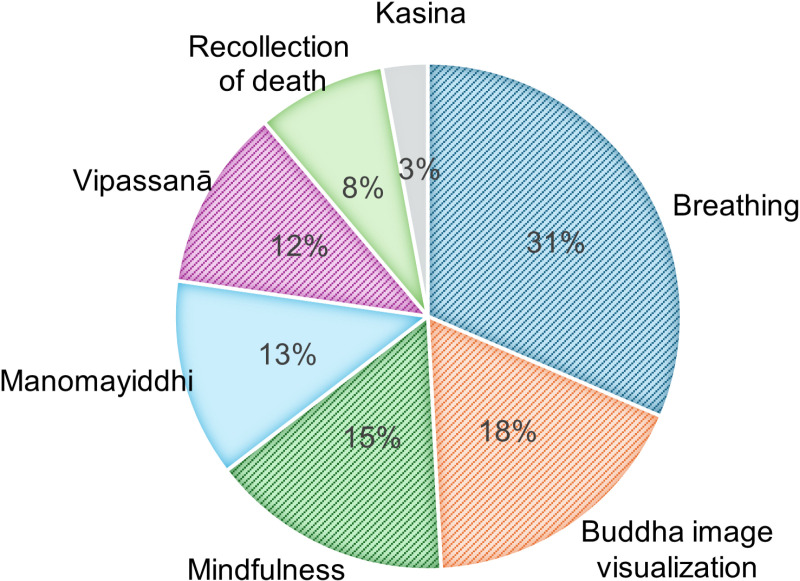
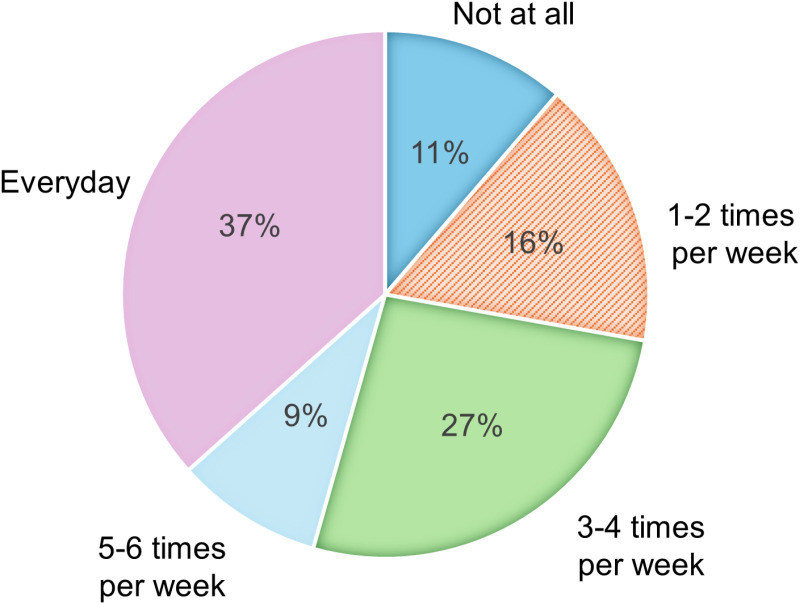
Results: Among 443 participants, 390 were females (87.9%). The mean age was 16.35 ± 0.96 years. The three most common meditation styles practiced were breathing, Buddha image visualization, and mindfulness (46.5%, 26.2%, and 22.8%, respectively). Buddha image visualization was a significant predictor of RSES (B = 1.69, 95%CI = 0.77, 2.61), RI-9 (B = 2.95, 95%CI = 0.68, 2.95), OI-Anxiety (B = -2.38, 95%CI = -3.34, -1.41), OI-Depression (B = -1.94, 95%CI = -2.64, -1.24), and PSS-10 (B = -2.47, 95%CI = -3.65, -1.28), whereas Manomayiddhi was a predictor of RI-9 (B = 2.47, 95%CI = 0.74, 2.47), OI-Anxiety (B = -2.32, 95%CI = -3.41, -1.23), OI-Depression (B = -1.53, 95%CI = -2.32, -0.74), and PSS-10 (B = -2.14, 95%CI = -3.46, -0.81). Breathing meditation predicted OI-Depression (B = -0.87, 95%CI = -1.45, -0.29). Daily meditation frequency was associated with the best mental health scores (p < 0.001).
Conclusion: Buddha image visualization, Manomayiddhi, and breathing meditation were predictive of adolescents' mental health. A higher practice frequency is associated with positive mental health outcomes.
Copyright: © 2025 DeMaranville et al. This is an open access article distributed under the terms of the Creative Commons Attribution License, which permits unrestricted use, distribution, and reproduction in any medium, provided the original author and source are credited.
Conflict of interest statement
The authors have declared that no competing interests exist.
Figures
References
-
- Green J, Huberty J, Puzia M, Stecher C. The Effect of Meditation and Physical Activity on the Mental Health Impact of COVID-19-Related Stress and Attention to News Among Mobile App Users in the United States: Cross-sectional Survey. JMIR Ment Health. 2021;8(4):e28479. doi: 10.2196/28479 - DOI - PMC - PubMed
-
- Basso JC, McHale A, Ende V, Oberlin DJ, Suzuki WA. Brief, daily meditation enhances attention, memory, mood, and emotional regulation in non-experienced meditators. Behav Brain Res. 2019;356:208–20. - PubMed
MeSH terms
LinkOut - more resources
Full Text Sources
Medical
