


Evidence from Mendelian randomization analysis combined with meta-analysis for the causal validation of the relationship between 35 blood and urine metabolites and lumbar disc herniation
- PMID: 40550047
- PMCID: PMC12187337
- DOI: 10.1097/MD.0000000000042749
Evidence from Mendelian randomization analysis combined with meta-analysis for the causal validation of the relationship between 35 blood and urine metabolites and lumbar disc herniation
Abstract
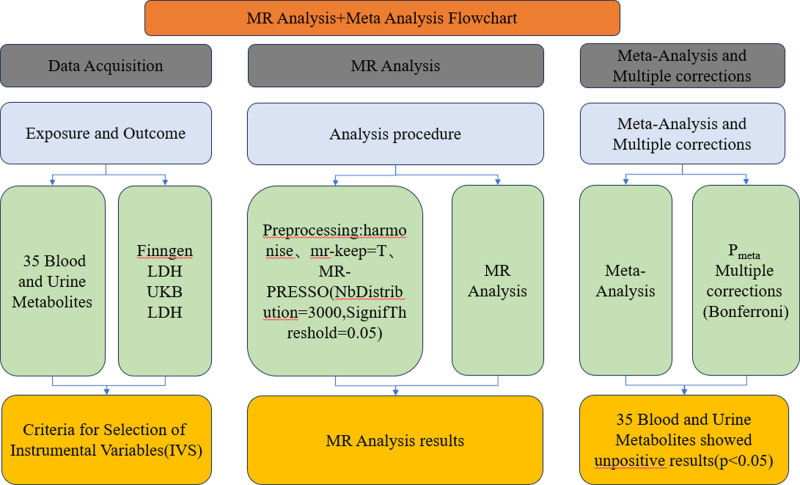
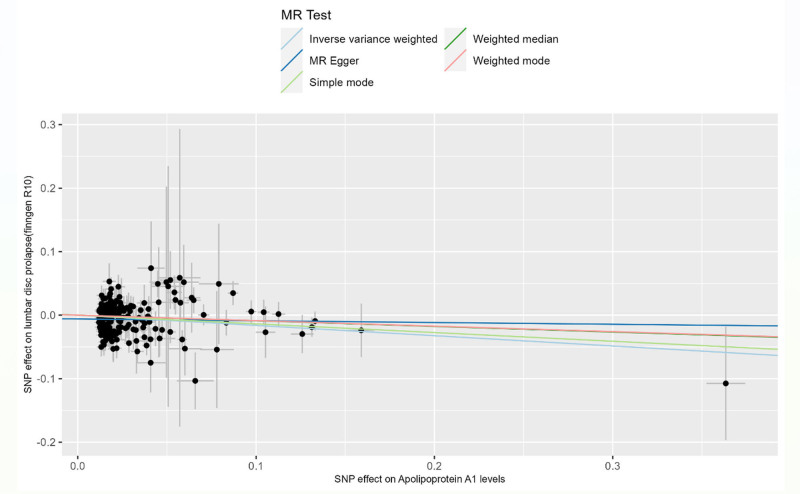
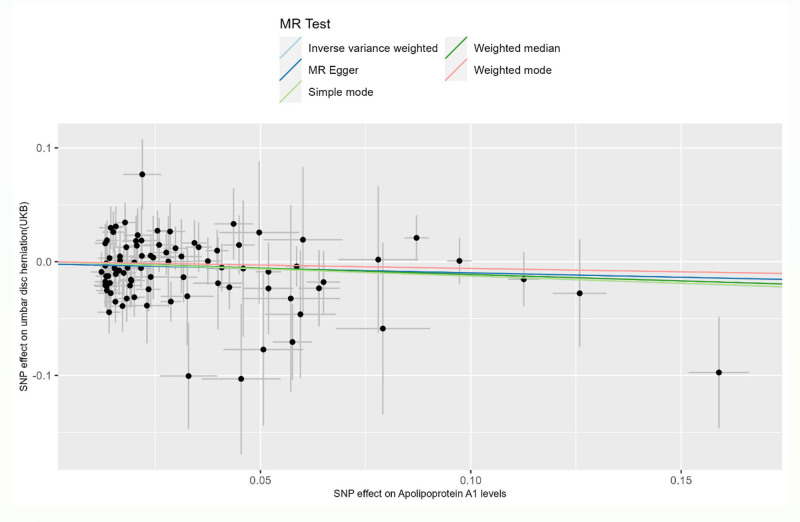
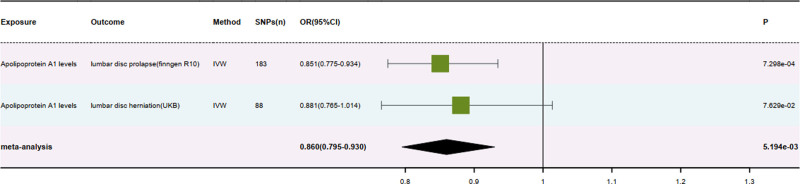
Lumbar disc herniation (LDH) is a prevalent condition affecting the spine. In recent years, a growing body of observational research has explored the influence of metabolites found in blood and urine on the development of LDH. By applying Mendelian randomization techniques to these metabolic markers, it becomes possible to uncover potential causal links with LDH, offering novel perspectives for its prevention and therapeutic intervention. This research employed a two-sample Mendelian randomization (MR) approach to explore the association between 35 metabolites found in blood and urine and the occurrence of LDH, utilizing datasets from 2 independent sources. The most notable findings from the MR analysis, particularly those obtained through the inverse variance weighted method, were further evaluated via meta-analysis. To enhance result reliability, multiple correction methods were applied to adjust the significance thresholds. Lastly, a reverse MR analysis was carried out to confirm the directional causal influence of the selected metabolites on LDH. MR analysis was performed to investigate the relationship between 35 blood and urine metabolites and LDH using data from the Finngen R10 and UK Biobank databases. The most significant results from both sets of MR analyses, derived using the inverse variance weighted method, were then subjected to a meta-analysis. Multiple corrections were applied to the significance thresholds in the meta-analysis, resulting in an odds ratio of 0.860 (95% confidence interval: 0.795-0.930, P = .0052). Additionally, the identified positive metabolites did not exhibit reverse causality with LDH in either dataset. Apolipoprotein acts as a protective factor against LDH, potentially reducing the risk of developing the condition and slowing its progression.
Keywords: Mendelian randomization analysis; authenticate reverse; blood and urine metabolites; lumbar disc herniation; meta-analysis; multiple corrections.
Copyright © 2025 the Author(s). Published by Wolters Kluwer Health, Inc.
Conflict of interest statement
The authors have no funding and conflicts of interest to disclose.
Figures
References
-
- Hoffeld K, Lenz M, Egenolf P, et al. Patient-related risk factors and lifestyle factors for lumbar degenerative disc disease: a systematic review. Neurochirurgie. 2023;69:101482. - PubMed
-
- Global Burden of Disease Study 2013 Collaborators. Global, regional, and national incidence, prevalence, and years lived with disability for 301 acute and chronic diseases and injuries in 188 countries, 1990–2013: a systematic analysis for the Global Burden of Disease Study 2013. Lancet. 2015;386:743–800. - PMC - PubMed
Publication types
MeSH terms
Substances
Supplementary concepts
LinkOut - more resources
Full Text Sources
Medical
