


Gut microbiota has the potential to improve health of menopausal women by regulating estrogen
- PMID: 40551890
- PMCID: PMC12183514
- DOI: 10.3389/fendo.2025.1562332
Gut microbiota has the potential to improve health of menopausal women by regulating estrogen
Abstract
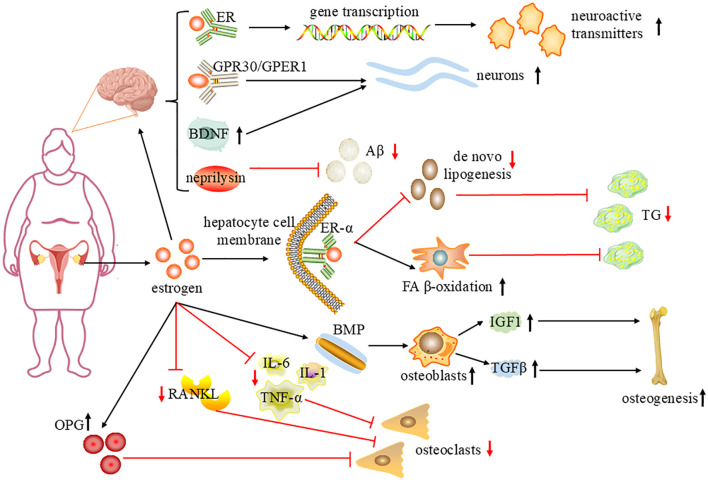
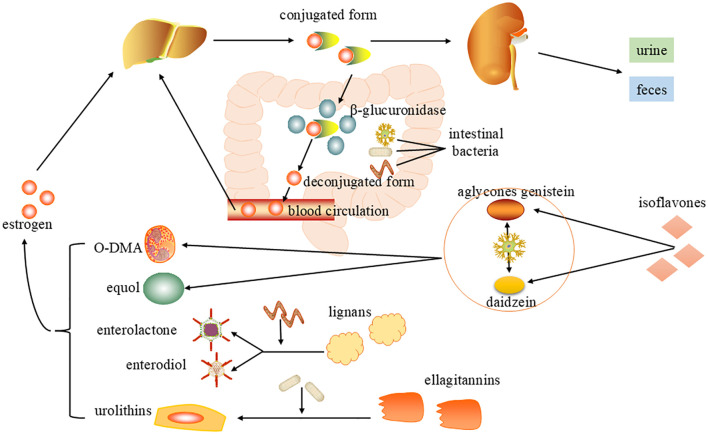
Menopause is an age-related loss of ovarian function. As a woman enters menopause, the estrogen produced by her ovaries decreases, which will adversely affect women's health. The symptoms related to menopause are related to the imbalance of gut microbiota. Studies have shown that the diversity of gut microbiota after menopause is lower than that before menopause, and the weakening of microbial decomposition will lead to the decrease of circulating estrogen, gradually resulting in disorders of lipid metabolism, cognitive decline, osteoporosis and other diseases. Gut microbiota play a key role in regulating estrogen levels. By secreting β-glucuronidase, it increases the reabsorption of estrogen in the enterohepatic circulation and mediates phytoestrogen metabolism, regulates estrogen homeostasis in the host and affects disease development and prognosis. Therefore, the gut microbiota is an overall regulator of women's estrogen status during menopause and an untapped new area for improving women's postmenopausal health. Changing the gut microbiota through specific prebiotics, probiotics, etc., and then affecting estrogen levels provides exciting opportunities for future therapeutic applications.
Keywords: clinical application; cognition impairment; estrogen; gut microbiota; lipid metabolism disorder; menopause.
Copyright © 2025 Wang, Shi, Zheng, Zhou, Mi, Wu and Feng.
Conflict of interest statement
The authors declare that the research was conducted in the absence of any commercial or financial relationships that could be construed as a potential conflict of interest.
Figures
References
Publication types
MeSH terms
Substances
LinkOut - more resources
Full Text Sources
Medical
Research Materials
