


Multi-Omics Analysis Reveals Causal Relationships and Potential Mediators Between Dietary Preferences and Risk of NAFLD
- PMID: 40552337
- PMCID: PMC12183393
- DOI: 10.1002/fsn3.70446
Multi-Omics Analysis Reveals Causal Relationships and Potential Mediators Between Dietary Preferences and Risk of NAFLD
Abstract
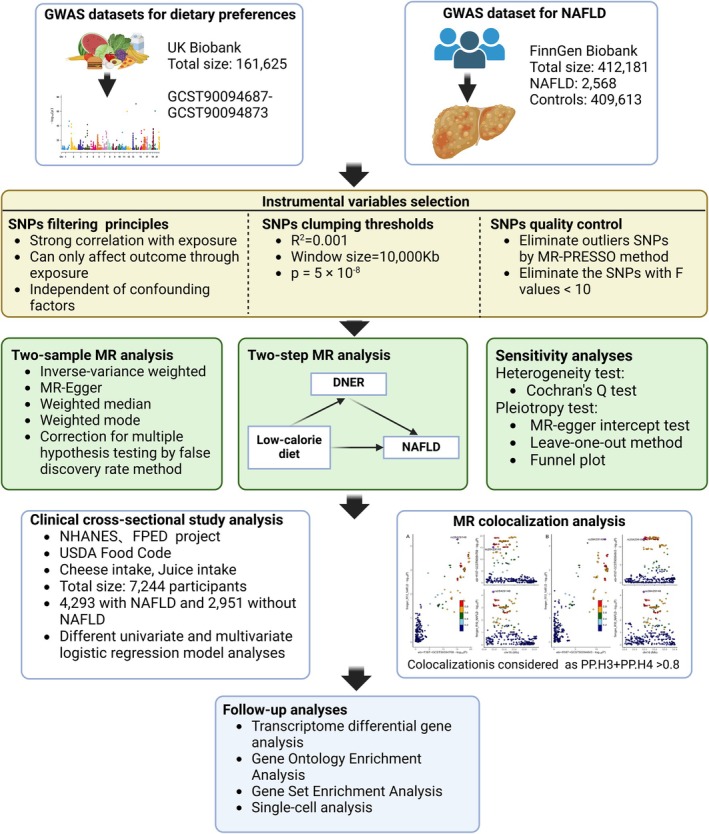
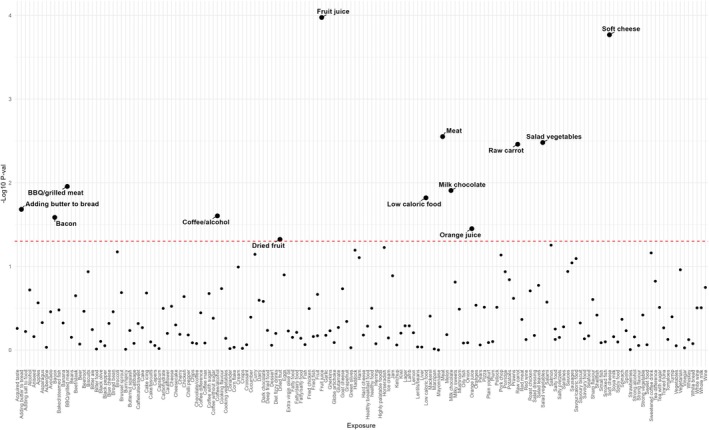
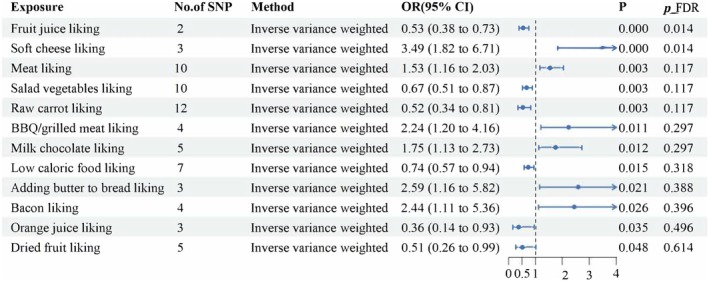
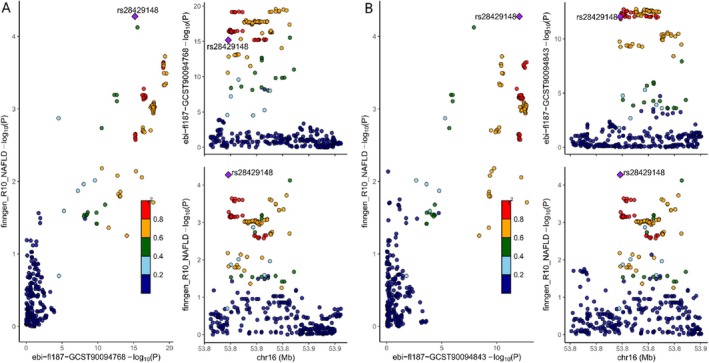
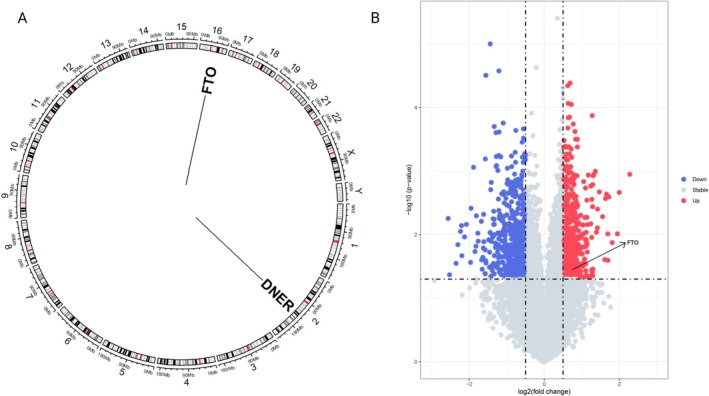
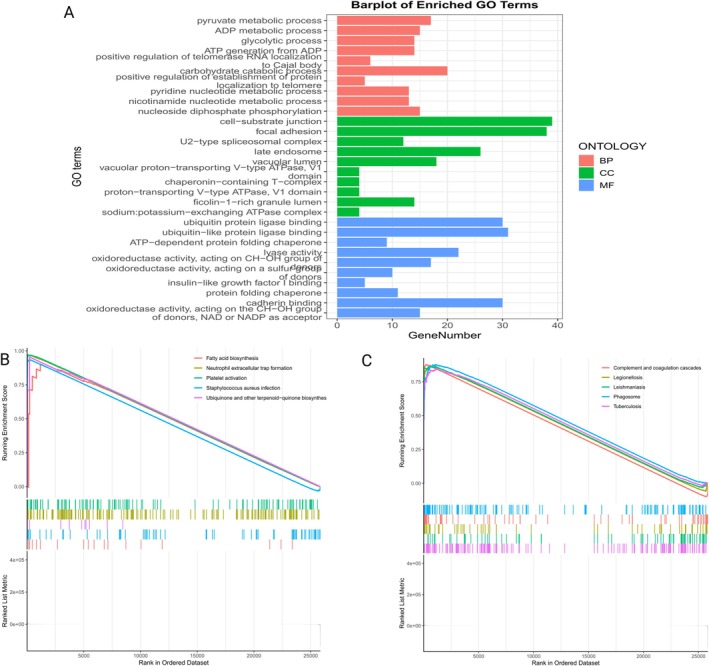
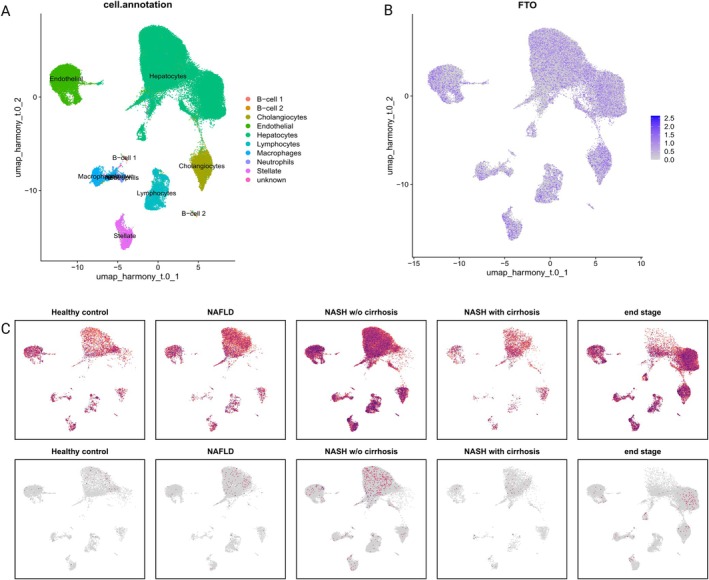
Non-alcoholic fatty liver disease (NAFLD) is a prevalent condition closely associated with obesity and metabolic syndrome, with its global incidence on the rise. This study aims to explore the causal relationship between dietary preferences and NAFLD risk using multi-omics analysis, and to comprehensively explore possible mediating factors and their underlying mechanisms. We analyzed data from genome-wide association studies (GWAS) to assess the potential genetic links between various dietary preferences and NAFLD. A two-step Mendelian randomization (MR) analysis was conducted to evaluate whether dietary preferences affect NAFLD risk by regulating inflammatory factors. Further, co-localization analysis was used to identify gene loci driving the causal relationships between dietary preferences and NAFLD risk. Finally, clinical cross-sectional data from the National Health and Nutrition Examination Survey (NHANES) and bioinformatics analysis were used to validate the findings.MR analysis revealed that a preference for a low-calorie diet significantly reduces NAFLD risk by modulating DNER. Co-localization analysis identified the FTO gene variant rs28429148 as a key driver of the causal relationship between soft cheese and fruit juice preferences, with soft cheese increasing and fruit juice reducing NAFLD risk. These findings were further validated by clinical cross-sectional and bioinformatics analysis. This study, for the first time, comprehensively elucidates the causal relationship between dietary preferences and NAFLD risk from a multi-omics perspective and identifies FTO and DNER as potential therapeutic targets. These findings provide new insights into the importance of personalized dietary interventions in the prevention of NAFLD and informs clinical treatment.
Keywords: FTO gene; Mendelian randomization; dietary preferences; inflammatory factors; non‐alcoholic fatty liver disease.
© 2025 The Author(s). Food Science & Nutrition published by Wiley Periodicals LLC.
Conflict of interest statement
The authors declare no conflicts of interest.
Figures
References
LinkOut - more resources
Full Text Sources
