HCV Ab titer and ALT level indicate occult hepatitis C virus infection in treatment-naive HCV Ab-positive and HCV Ab-negative patients: a 3-year prospective cohort study
- PMID: 40552800
- PMCID: PMC12323646
- DOI: 10.1128/spectrum.02922-24
HCV Ab titer and ALT level indicate occult hepatitis C virus infection in treatment-naive HCV Ab-positive and HCV Ab-negative patients: a 3-year prospective cohort study
Abstract
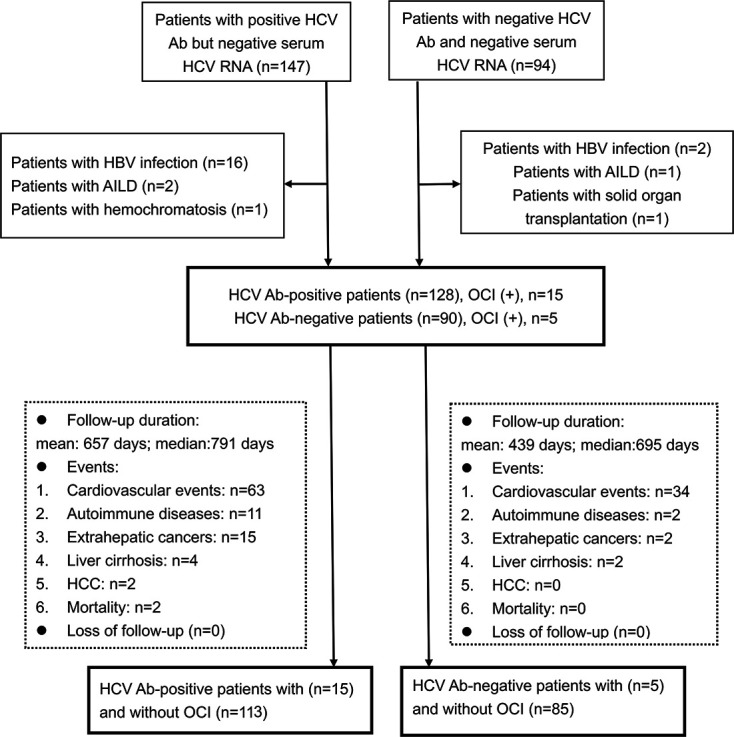
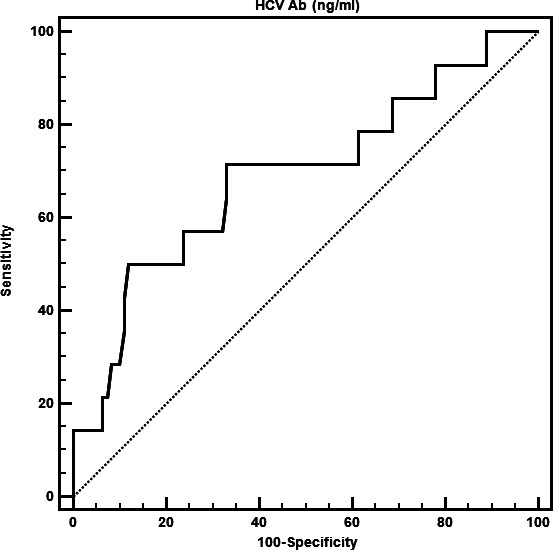
The phenotype of occult hepatitis C virus (HCV) infection (OCI) in anti-HCV treatment-naive patients remains elusive. A prospective 3-year cohort study of 218 anti-HCV treatment-naive patients was conducted. OCI was defined as positive HCV RNA in peripheral blood mononuclear cells (PBMCs) of patients with negative serum HCV RNA. Among the 128 HCV antibody (Ab)-positive patients, 15 (11.7%) had OCI; higher HCV Ab titers were noted in patients with OCI than in those without OCI (84.25 ± 64.76 vs 46.60 ± 46.07 ng/mL, P = 0.006), and the HCV Ab titer was a marker of OCI (cutoff: >53.2 ng/mL). The 3-year cumulative incidence (CI) of cardiovascular events was greater in patients with OCI than in those without OCI (84% vs 46.4%, P = 0.043). Among the 90 HCV Ab-negative patients, 5 (5.6%) had OCI; the alanine aminotransferase (ALT) levels were greater in patients with OCI than in those without OCI (114.4 ± 71.6 vs 67.2 ± 87.4 U/L, P = 0.035). A greater CI of autoimmune disease was noted in patients with OCI than in those without OCI (20% vs 1.2%, P = 0.006). Among anti-HCV treatment-naive patients, the prevalence rates of OCI were 11.7% in HCV Ab-positive patients and 5.6% in HCV Ab-negative patients. High HCV Ab titers in HCV Ab-positive patients require caution regarding OCI and cardiovascular events, and cryptogenic hepatitis warrants suspicion of OCI and autoimmune diseases.IMPORTANCEAmong anti-HCV treatment-naive patients, the prevalence rates of OCI were 11.7% in HCV Ab-positive patients and 5.6% in HCV Ab-negative patients. High HCV Ab titers (cutoff: >53.2 ng/mL) in HCV Ab-positive patients require caution regarding OCI and cardiovascular events, and cryptogenic hepatitis warrants suspicion of OCI and autoimmune diseases.
Keywords: HCV Ab; OCI; cardiovascular; cryptogenic hepatitis; treatment-naive.
Conflict of interest statement
The authors declare no conflict of interest.
Figures
References
-
- Chang M-L, Cheng J-S, Chen W-T, Shen Y-J, Kuo C-J, Chien R-N. 2025. Mixed cryoglobulinemia decelerates hepatocellular carcinoma development in hepatitis C patients with SVR by downregulating regulatory B cells: a 12-year prospective cohort study. Oncoimmunology 14:2470128. doi: 10.1080/2162402X.2025.2470128 - DOI - PMC - PubMed
MeSH terms
Substances
Grants and funding
LinkOut - more resources
Full Text Sources
Medical