


Housing matters: Experimental variables shaping metabolism in obese mice
- PMID: 40554092
- PMCID: PMC12269455
- DOI: 10.1016/j.molmet.2025.102190
Housing matters: Experimental variables shaping metabolism in obese mice
Abstract
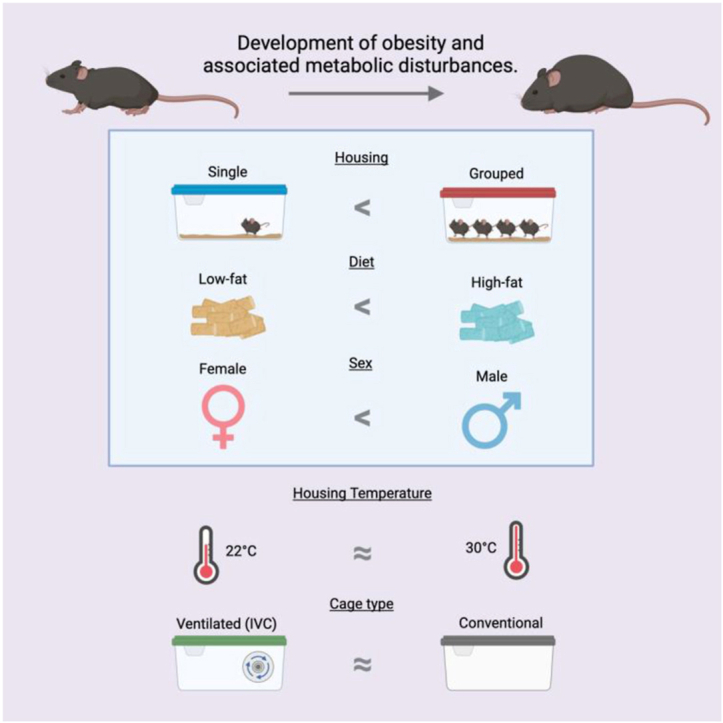
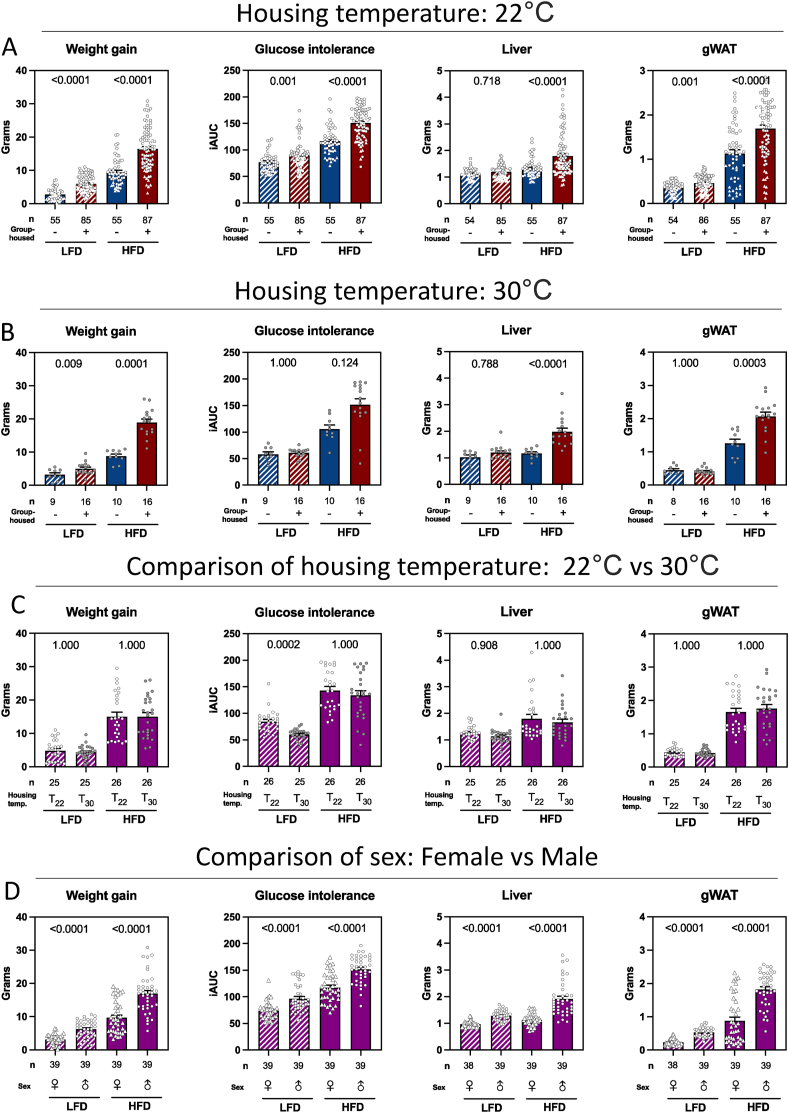
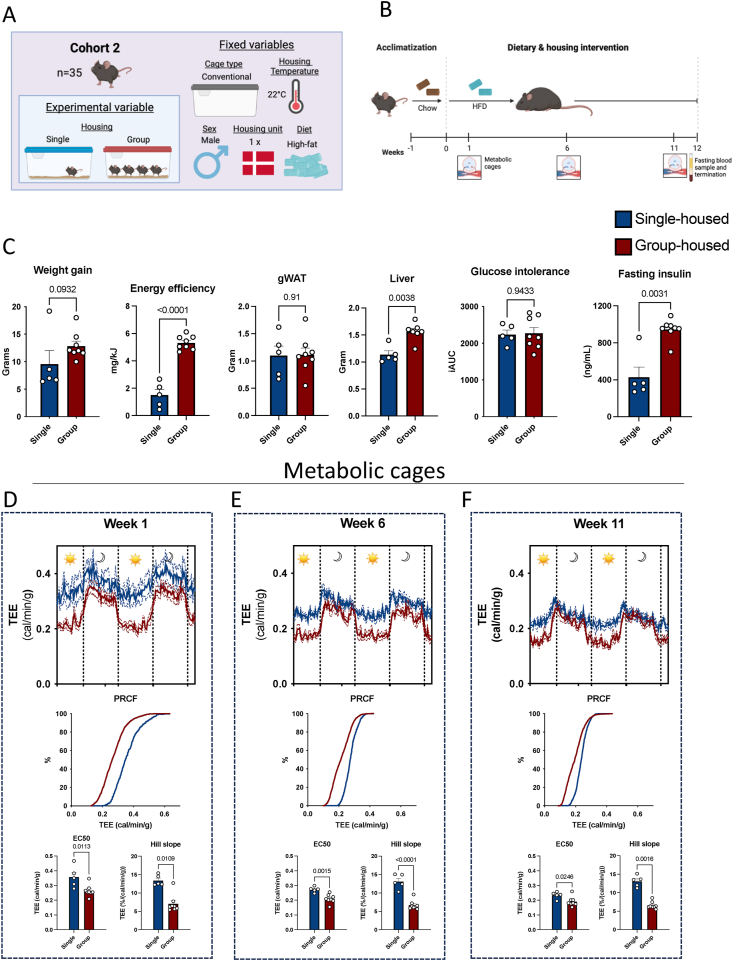
Diet-induced obesity in mice is an important model for investigating host-diet interactions as well as dietary and pharmacological treatments of metabolic diseases. Experimental reproducibility is, however, a recurrent challenge. To determine key controllable experimental drivers of mouse metabolism, we distributed 338C57BL/6JBomTac mice (males and females) into six research units across two countries, divided them into a variety of housing conditions (i.e., diets, cage types, temperatures, group-housing vs. single-housing) and kept 26 reference mice at the vendor. We applied linear mixed models to rank the influence of each variable on metabolic phenotype (i.e., body weight gain, glucose intolerance, liver, and visceral adipose tissue weight). Group-housing was the most potent driver of metabolic dysfunction apart from sex and diet. Accordingly, single-housed mice exhibited reduced weight gain (∼50%), increased energy expenditure, and diminished respiratory exchange ratio concomitant with improved glucose tolerance (∼20%) compared to their group-housed counterparts. Our results may aid in clarifying the impact of experimental design and promote rational, transparent reporting to increase reproducibility.
Keywords: Animal models; High-fat diet; Housing conditions; Reproducibility; Sex differences; Thermoneutrality.
Copyright © 2025 The Author(s). Published by Elsevier GmbH.. All rights reserved.
Conflict of interest statement
Declaration of competing interest The authors of this manuscript declare no conflicts of interest.
Figures


References
MeSH terms
LinkOut - more resources
Full Text Sources
Medical
