


Transcriptome and gene co-expression network analysis revealed a putative regulatory mechanism of low nitrogen response in rice seedlings
- PMID: 40556686
- PMCID: PMC12185425
- DOI: 10.3389/fpls.2025.1547897
Transcriptome and gene co-expression network analysis revealed a putative regulatory mechanism of low nitrogen response in rice seedlings
Abstract
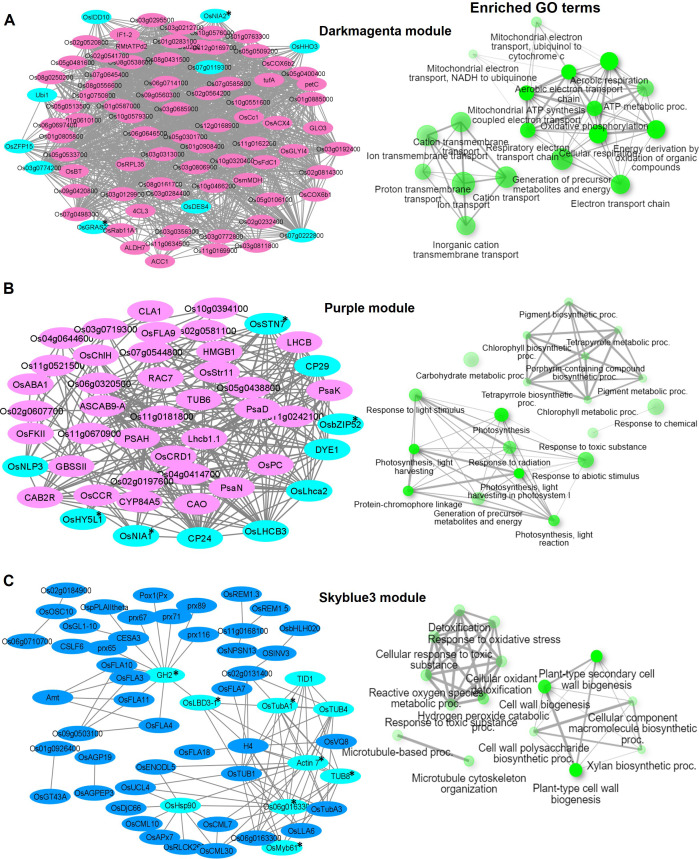
In rice, nitrate (NO3 -) and ammonium (NH4 +) are the main sources of inorganic nitrogen (N) for growth, which also serve as signaling molecules. Depending on the N status, plants modulate their physiological traits such as root system architecture (RSA) and transcriptome makeup, including N uptake and assimilation genes, to adapt to the amount of N available in the growth medium. In this study, time-course hydroponic experiment under low N (0.4 mM NH4 +) and sufficient N (1.6 mM NH4 +) was performed using low N tolerant introgression lines, KRIL8 and KRIL37, which carry a small region of the wild rice Oryza rufipogon genome in the Oryza sativa L. cv Koshihikari background. RNA-Seq analysis was used to profile changes in gene expression related to N and carbon metabolism which varied significantly and identified the accumulation of transcripts involved in secondary metabolite synthesis at the peak of low N stress. Weighted gene co-expression network analysis (WGCNA) identified several gene modules and their hub genes, including ion transport related modules consisting of genes that negatively regulate N uptake including OsHHO3, OsBT, and OsACTPK1 in all the lines. The repression of these genes under low N could be a basic mechanism to facilitate N acquisition in rice roots. The network analysis also identified cell activity and cell wall modification modules in the introgression lines which could be coordinated by OsLBD3-1, a paralogue of the Crown rootless1 gene for the promotion of root development to enhance N acquisition under low N conditions. The present analysis revealed the involvement of major pathways for low nitrogen tolerance of the selected lines.
Keywords: cell wall biogenesis; gene coexpression; ion transport; low nitrogen tolerance; transcriptome; wild rice introgression lines.
Copyright © 2025 Adu, Ohmori, Nagano and Fujiwara.
Conflict of interest statement
The authors declare that the research was conducted in the absence of any commercial or financial relationships that could be construed as a potential conflict of interest.
Figures




References
-
- Adu B. G., Argete A. Y. S., Egawa S., Nagano A. J., Shimizu A., Ohmori Y., et al. (2022). A Koshihikari X Oryza rufipogon Introgression Line with a High Capacity to Take up Nitrogen to Maintain Growth and Panicle Development under Low Nitrogen Conditions. Plant Cell Physiol. 63, 1215–1229. doi: 10.1093/pcp/pcac097 - DOI - PubMed
LinkOut - more resources
Full Text Sources
