


Antibiotic Resistance in Aquaculture: Challenges, Trends Analysis, and Alternative Approaches
- PMID: 40558188
- PMCID: PMC12189707
- DOI: 10.3390/antibiotics14060598
Antibiotic Resistance in Aquaculture: Challenges, Trends Analysis, and Alternative Approaches
Abstract
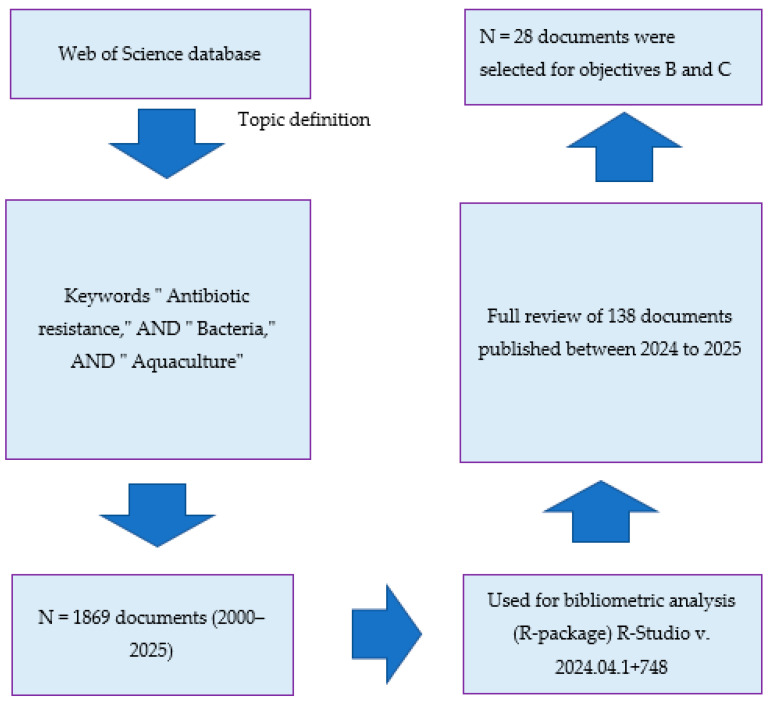
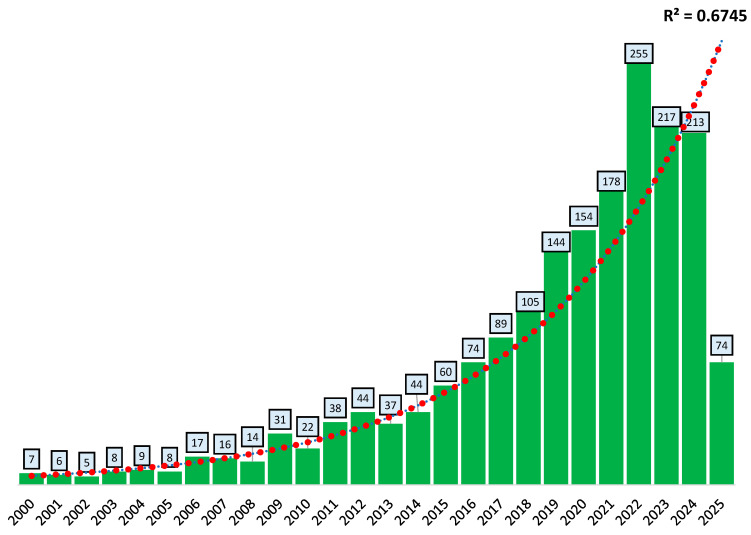
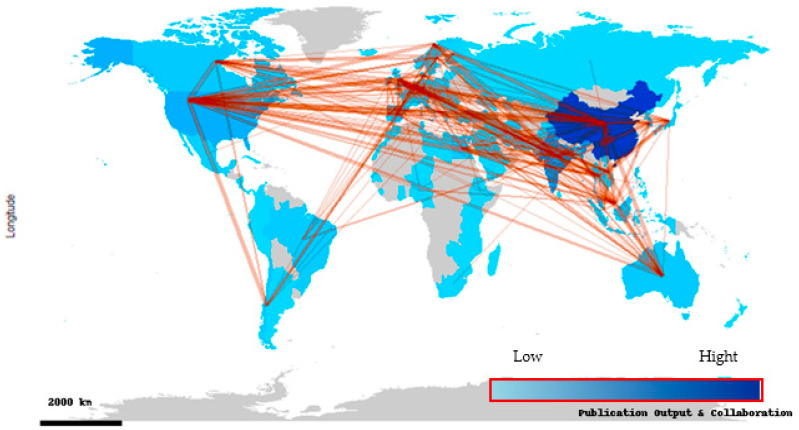
Antibiotic resistance in aquaculture has emerged as a global crisis, representing a serious threat to the health of aquatic animals, environment, and human. The extensive use of antibiotics in aquaculture has led to rapid development of resistant bacterial strains, resulting in environmental contamination and the dissemination of resistant genes. Understanding of the research trends, key contributors, and thematic evolution of this field is essential for guiding future studies and policy interventions. The study aimed to conduct a bibliometric analysis of research on antibiotic resistance development in aquaculture, identifying key areas of research, leading contributors, emerging challenges, and alternative solutions. Data were extracted from the Web of Science (WoS) database covering the period from 2000 to 2025. A systematic search strategy was employed, utilizing terms including "antibiotic resistance" AND "bacteria," AND "aquaculture". Relevant publications were extracted from the WoS using these keywords. R-tool was then used to analyze the obtained metadata including keywords, citation patterns, and co-authored country. The analysis revealed a remarkable increase in publications over the past 25 years, with key contributions from China, India, and the USA. The most significant articles focused on the presence of multidrug resistant bacteria in the aquatic environments and, antibiotic-resistant genes, and horizontal gene transfer. Probiotics are the alternative solution to overcome the antibiotic resistance and enhance aquaculture sustainability. Future research should focus on the interdisciplinary collaboration, novel antimicrobial alternatives, and global monitoring approaches.
Keywords: R software; antibiotic resistance; antibiotic resistance genes (ARGs); aquaculture; bibliometric analysis; research trends.
Conflict of interest statement
All authors declare that the research was conducted in the absence of any commercial or financial relationships that could be construed as a potential conflict of interest.
Figures
References
-
- FAO . The State of World Fisheries and Aquaculture 2024: Blue Transformation in Action. FAO; Rome, Italy: 2024.
-
- FAO The State of World Fisheries and Aquaculture. Int. J. Fish. Aquac. 2018;10:1–7.
-
- Lewbart G.A. Bacteria and Ornamental Fish. Semin. Avian Exot. Pet Med. 2001;10:48–56. doi: 10.1053/saep.2001.19543. - DOI
Publication types
LinkOut - more resources
Full Text Sources
Miscellaneous
