


Comprehensive Stiffness Modeling and Evaluation of an Orthopedic Surgical Robot for Enhanced Cutting Operation Performance
- PMID: 40558352
- PMCID: PMC12190793
- DOI: 10.3390/biomimetics10060383
Comprehensive Stiffness Modeling and Evaluation of an Orthopedic Surgical Robot for Enhanced Cutting Operation Performance
Abstract
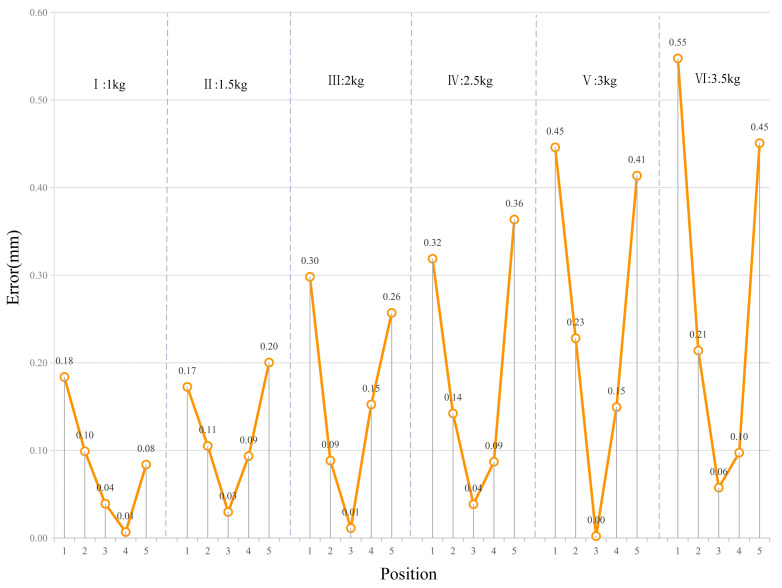
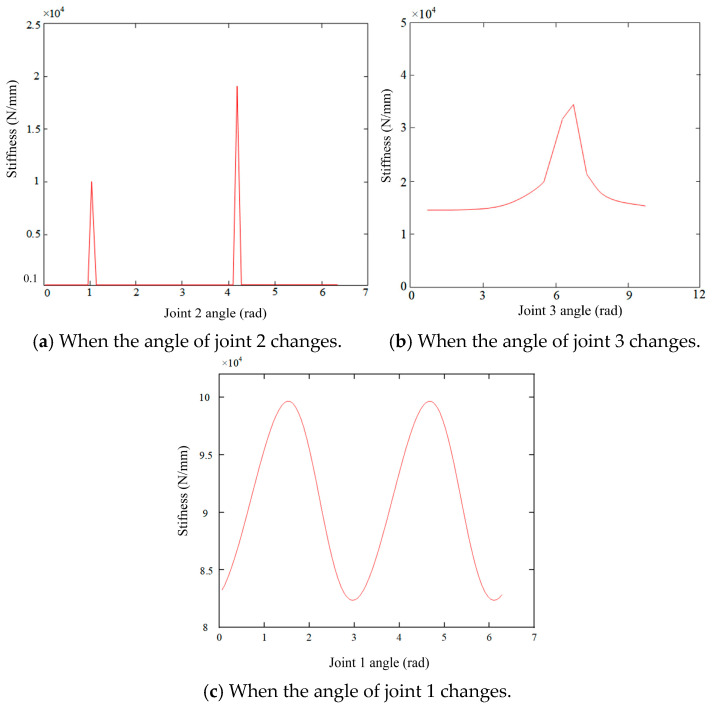
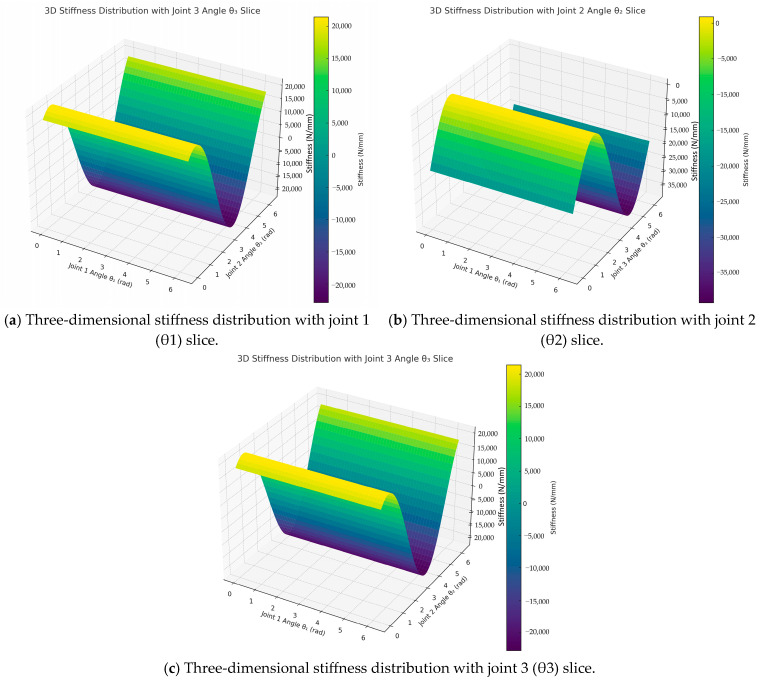
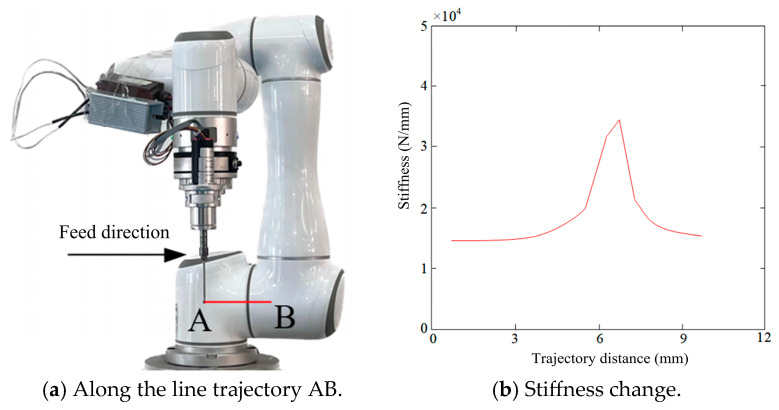
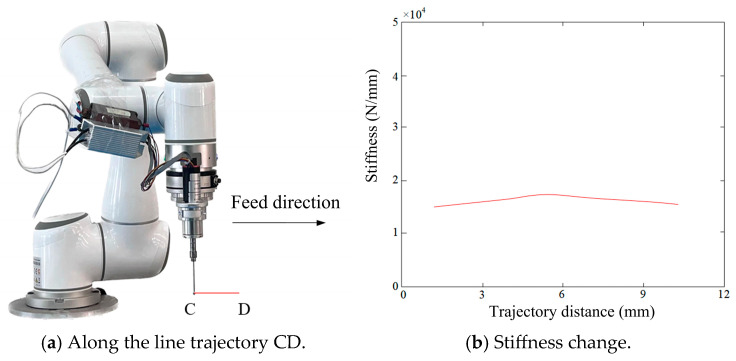
This study presents an integrated stiffness modeling and evaluation framework for an orthopedic surgical robot, aiming to enhance cutting accuracy and operational stability. A comprehensive stiffness model is developed, incorporating the stiffness of the end-effector, cutting tool, and force sensor. End-effector stiffness is computed using the virtual joint method based on the Jacobian matrix, enabling accurate analysis of stiffness distribution within the robot's workspace. Joint stiffness is experimentally identified through laser tracker-based displacement measurements under controlled loads and calculated using a least-squares method. The results show displacement errors below 0.3 mm and joint stiffness estimation errors under 1.5%, with values more consistent and stable than those reported for typical surgical robots. Simulation studies reveal spatial variations in operational stiffness, identifying zones of low stiffness and excessive stiffness. Compared to prior studies where stiffness varied over 50%, the proposed model exhibits superior uniformity. Experimental validation confirms model fidelity, with prediction errors generally below 5%. Cutting experiments on porcine femurs demonstrate real-world applicability, achieving average stiffness prediction errors below 3%, and under 1% in key directions. The model supports stiffness-aware trajectory planning and control, reducing cutting deviation by up to 10% and improving workspace stiffness stability by 30%. This research offers a validated, high-accuracy approach to stiffness modeling for surgical robots, bridging the gap between simulation and clinical application, and providing a foundation for safer, more precise robotic orthopedic procedures.
Keywords: joint stiffness identification; orthopedic surgical robot; stiffness distribution; stiffness modeling; virtual joint method.
Conflict of interest statement
The authors declare no conflicts of interest.
Figures
References
-
- Bahadori S., Williams J.M., Collard S., Swain I. Can a purposeful walk intervention with a distance goal using an activity monitor improve individuals’ daily activity and function post total hip replacement surgery. A randomized pilot trial. Cyborg Bionic Syst. 2023;4:0069. doi: 10.34133/cbsystems.0069. - DOI - PMC - PubMed
-
- Wang L., Liu Y., Yu Y., He F. Research on reliability of mode coupling chatter of orthopedic surgery robot. Proc. Inst. Mech. Eng. Part C J. Mech. Eng. Sci. 2022;236:8609–8620. doi: 10.1177/09544062221085089. - DOI
-
- Wang W., Guo Q., Yang Z., Jiang Y., Xu J. A state-of-the-art review on robotic milling of complex parts with high efficiency and precision. Robot. Comput.-Integr. Manuf. 2023;79:102436. doi: 10.1016/j.rcim.2022.102436. - DOI
Grants and funding
LinkOut - more resources
Full Text Sources
Miscellaneous
