


Electrochemical Microneedles for Real-Time Monitoring in Interstitial Fluid: Emerging Technologies and Future Directions
- PMID: 40558462
- PMCID: PMC12190300
- DOI: 10.3390/bios15060380
Electrochemical Microneedles for Real-Time Monitoring in Interstitial Fluid: Emerging Technologies and Future Directions
Abstract
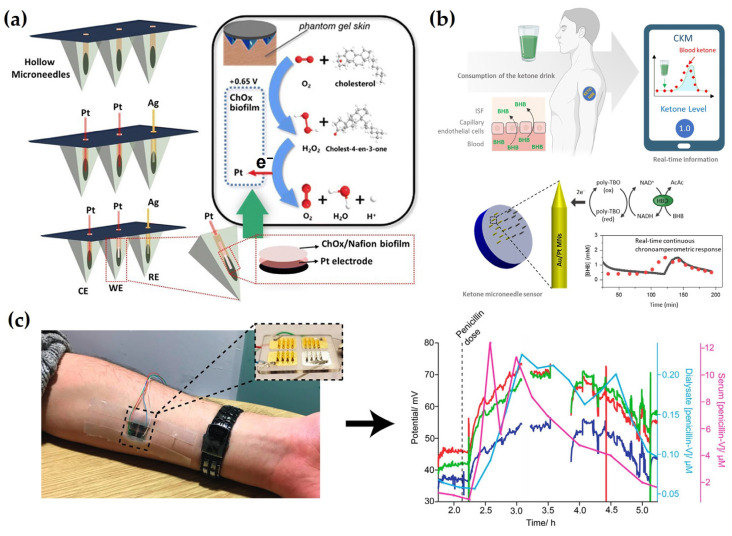
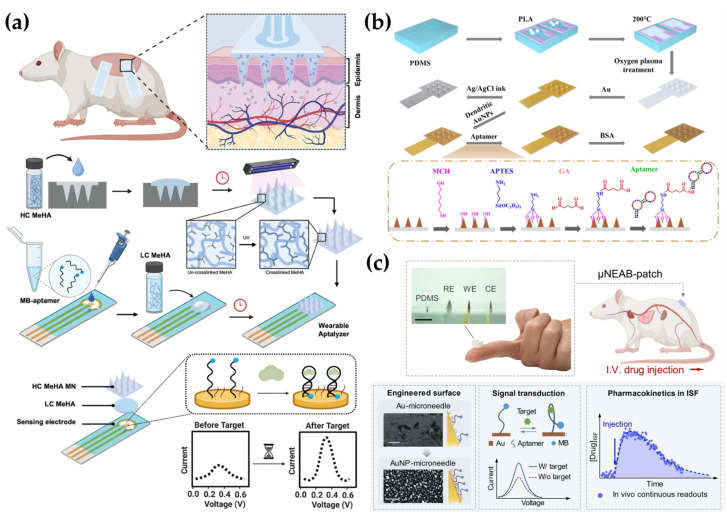
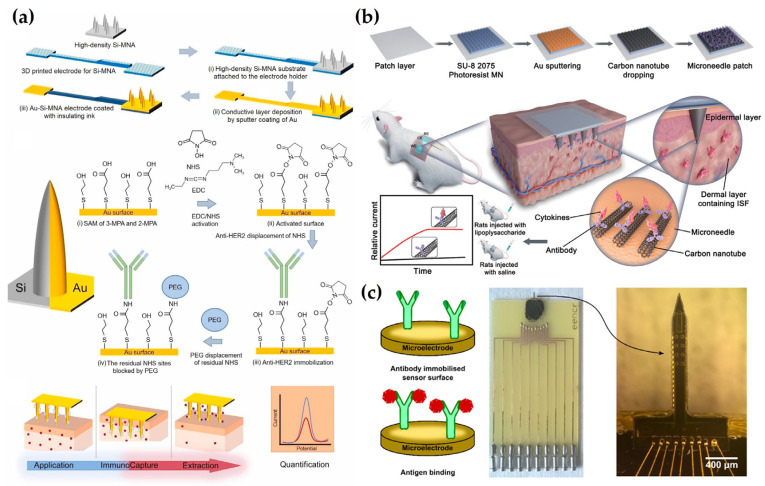
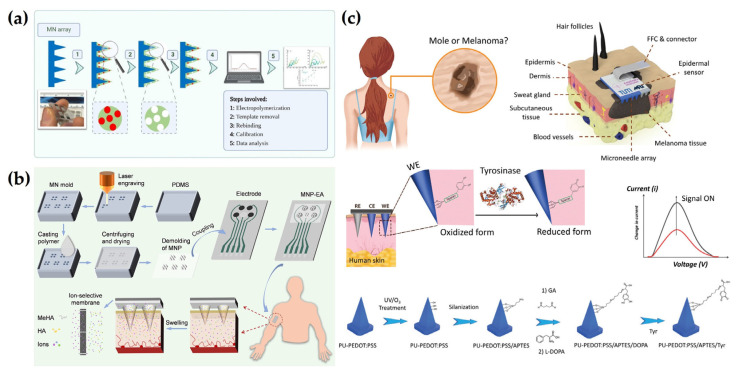
Conventional blood-based detection methods for biomarkers and analytes face significant limitations, including complex processing, variability in blood components, and the inability to provide continuous monitoring. These challenges hinder the early diagnosis and effective management of various health conditions. Electrochemical microneedles (MNs) have emerged as a minimally invasive and highly efficient platform to overcome these barriers, enabling continuous molecular monitoring by directly accessing the interstitial fluid. Electrochemical MNs offer several advantages, including reduced patient discomfort, real-time data acquisition, enhanced specificity, and potential applications in wearable, long-term monitoring. In this review, we first analyze material selection and fabrication techniques to optimize sensor performance, stability, and biocompatibility. We then examine diverse detection strategies utilized in electrochemical MNs, including enzyme-based, aptamer-based, and antibody-based sensing mechanisms, each offering unique benefits in sensitivity and selectivity. Finally, we highlight the integration of electrochemical MN technology with multi-target detection, AI-driven analytics, and theragnostic capabilities. This convergence offers strong potential for smart healthcare and precision medicine. Through these technological innovations, electrochemical MNs are expected to play an important role in advancing continuous, noninvasive health monitoring and personalized medical care.
Keywords: electrochemical detection; electrochemical microneedle (MN); interstitial fluid (ISF); real-time monitoring; wearable sensor.
Conflict of interest statement
The authors declare no conflict of interest.
Figures
References
Publication types
MeSH terms
Grants and funding
LinkOut - more resources
Full Text Sources
