


Stress Distribution on Endodontically Treated Anterior Teeth Restored via Different Ceramic Materials with Varying Post Lengths Versus Endocrown-A 3D Finite Element Analysis
- PMID: 40558907
- PMCID: PMC12194378
- DOI: 10.3390/jfb16060221
Stress Distribution on Endodontically Treated Anterior Teeth Restored via Different Ceramic Materials with Varying Post Lengths Versus Endocrown-A 3D Finite Element Analysis
Abstract
Objective: This study aims to evaluate the stress distribution on endodontically treated anterior teeth restored using different restorative materials and different post lengths versus endocrowns employing finite element analysis (FEA).
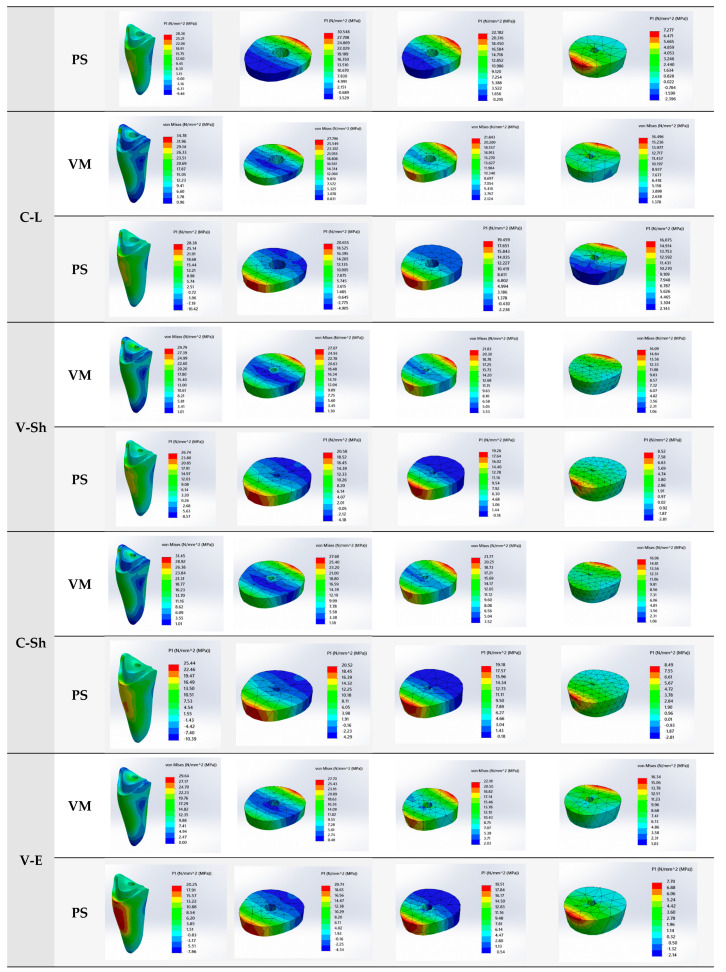
Methods: An extracted human central incisor tooth with a fully formed apex was scanned using high-resolution cone beam computed tomography (CBCT) to generate 3D finite element models. Six models of restorations of badly destructed central incisor were grouped according to the type of ceramic material and post length versus endocrown restorations. Group V-L: Vita Enamic, long post (10 mm intra-radicular), Group C-L: Celtra Duo, long post (10 mm intra-radicular), Group V-Sh: Vita Enamic, short post (3 mm intra-radicular), Group C-Sh: Celtra Duo, short post (3 mm intra-radicular), Group V-E: Vita Enamic endocrown (3 mm intra-radicular), and Group C-E: Celtra Duo endocrown (3 mm intra-radicular). A static load of 200 N was applied to the palatal surface at a 45 degree angle to the tooth's long axis. The maximum equivalent von Mises stress and maximum principal stress were analyzed at four locations: the finish line, coronal third of the root (12 mm from the apex), middle third of the root (8 mm from the apex), and apical third of the root (4 mm from the apex).
Results: Group C-L exhibited the highest maximum VM stress and PS at the finish line, in addition to the highest maximum VM stress and PS at the root apical third, while group C-Sh reported the least maximum VM stress at the root apical third among the groups. All Celtra Duo groups reported higher maximum VM stress than the corresponding groups of Vita Enamic at the finish line and root coronal thirds. However, at the root middle and apical thirds, both materials recorded similar stresses.
Conclusions: Short posts and Vita Enamic endocrowns showed minimal stress, especially at the finish line, while long posts increased stress and fracture risk. The findings support conservative restorations without posts, although clinical validation is needed to confirm their long-term effectiveness and safety.
Keywords: Celtra Duo; FEA; Vita Enamic; endocrown; fiber post; post length; stress distribution.
Conflict of interest statement
The authors declare no conflicts of interest.
Figures

 crown,
  composite core,
  fiber post,
  gutta-percha,
  tooth structure.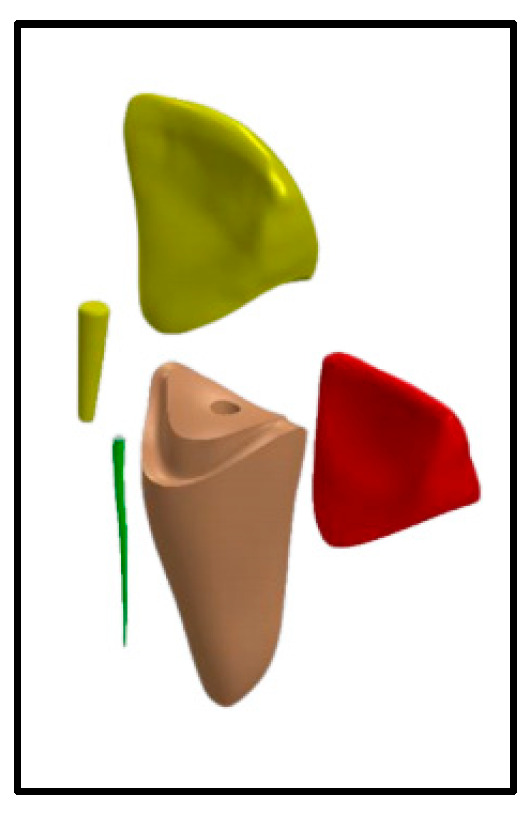
 crown,
  composite core,
  fiber post,
  gutta-percha,
  tooth structure.
 Endocrown,
  gutta-percha,
  tooth structure.
 Boundary conditions and
  load application.



References
Grants and funding
LinkOut - more resources
Full Text Sources
Miscellaneous
