


Improvement of Fatigue and Body Composition in Women with Long COVID After Non-Aerobic Therapeutic Exercise Program
- PMID: 40559080
- PMCID: PMC12194598
- DOI: 10.3390/jpm15060217
Improvement of Fatigue and Body Composition in Women with Long COVID After Non-Aerobic Therapeutic Exercise Program
Abstract
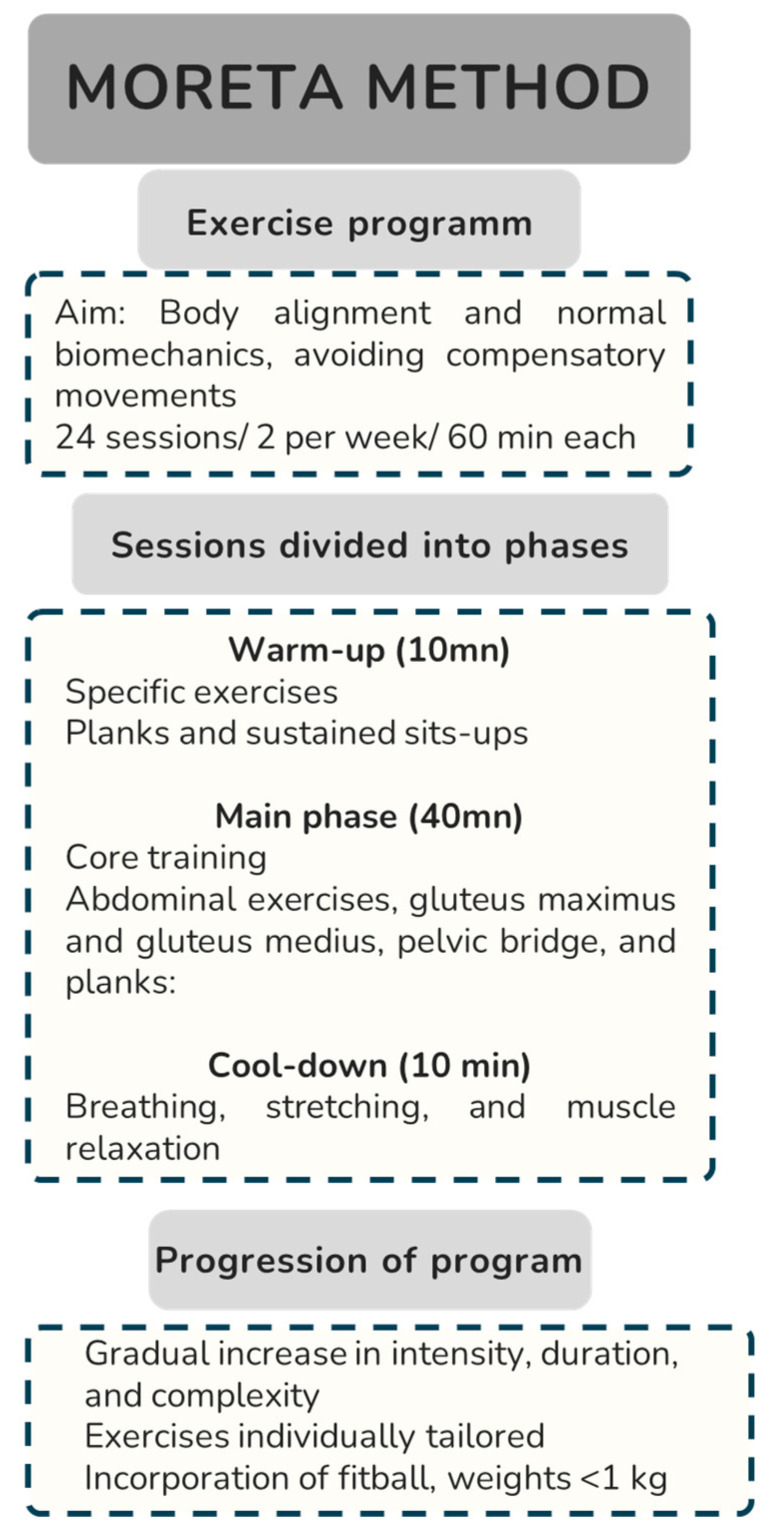
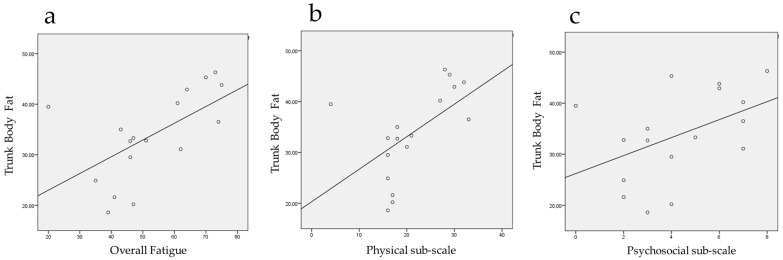
Background/Objective: Fatigue is one of the most recurrent and most disabling symptoms of long COVID (LC) and is associated with a worse quality of life. Reducing body fat in these patients could be important to mitigate fatigue and post-exertional worsening. Aerobic exercise may not be indicated in LC patients who have orthostatic tachycardia and post-exertional worsening. The aim of this study was to evaluate the effects of a personalized supine therapeutic motor control exercise program on fatigue and fat tissue in women with LC. Methods: A single-arm exploratory case study, with a pre-post format, was conducted on 17 women with LC to test the effects of a plank-based strengthening exercise program on fatigue, which was evaluated by the Modified Fatigue Impact Scale and fat tissue assessed by bioimpedance. The twelve-week program included two weekly sessions. The exercise program was personalized, considering the symptoms and characteristics of the patients. Results: Participants with overweight or obesity (n = 12) comprised 70% of the entire sample. After completing the exercise program this value decreased by 5.9 percentage points. Significant differences were found in the total [(MD = -1.72, 95% CI -2.57 to -0.86), r = 0.73], trunk, upper and inner limbs body fat percentages (p < 0.05). The overall fatigue decreased at 12 weeks [(MD = -14.00, 95% CI -21.69 to -6.31), r = 0.69] as well as the physical and psychosocial fatigue sub-scale (p < 0.001); no differences were observed in the cognitive sub-scale. Conclusions: The plank-based personalized strengthening exercise program showed rapid improvements in fatigue and fat percentages. It could be an effective strategy to achieve improvements for LC patients.
Keywords: body fat distribution; exercise therapy; fatigue; post-acute COVID-19 syndrome.
Conflict of interest statement
The author have no conflicts of interest relevant to this article.
Figures
References
-
- Fernández-de-Las-Peñas C., Torres-Macho J., Elvira-Martínez C.M., Molina-Trigueros L.J., Sebastián-Viana T., Hernández-Barrera V. Obesity Is Associated with a Greater Number of Long-Term Post-COVID Symptoms and Poor Sleep Quality: A Multicentre Case-Control Study. Int. J. Clin. Pract. 2021;75:e14917. doi: 10.1111/ijcp.14917. - DOI - PMC - PubMed
Grants and funding
LinkOut - more resources
Full Text Sources
