


Diagnostic accuracy of triglyceride to glucose index and triglyceride/high-density lipoprotein index for insulin resistance among children and adolescents: A systematic review
- PMID: 40560922
- PMCID: PMC12192287
- DOI: 10.1371/journal.pone.0326179
Diagnostic accuracy of triglyceride to glucose index and triglyceride/high-density lipoprotein index for insulin resistance among children and adolescents: A systematic review
Abstract
Introduction: Insulin resistance (IR) is a common metabolic disorder associated with obesity, type 2 diabetes, and cardiovascular diseases. There is a need for simpler and more cost-effective indices to diagnose IR in pediatric populations. While the hyperinsulinemic-euglycemic clamp is the gold standard for diagnosing IR, it is costly and complex. Consequently, simpler indices like the triglyceride-to-glucose (TyG) and triglyceride/high-density lipoprotein (Tg/HDL) indices have been explored as alternative diagnostic tools for IR.
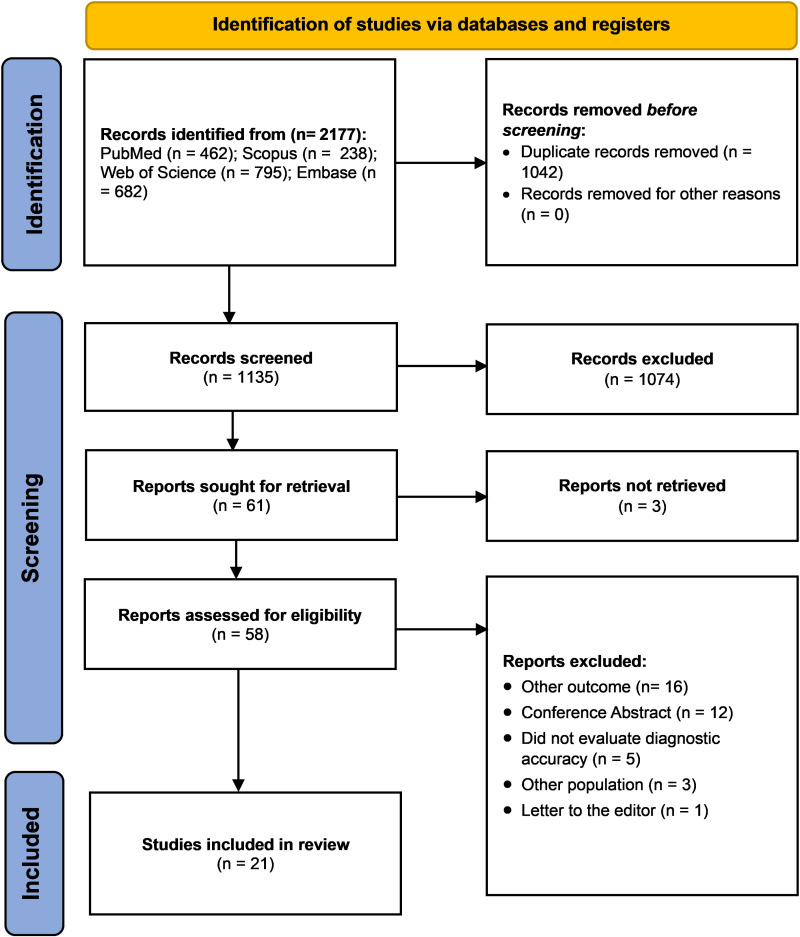
Methods: This systematic review adhered to PRISMA-DTA guidelines. Analytical studies evaluating the diagnostic accuracy of TyG and Tg/HDL indices for IR in children and adolescents were included. Eligibility criteria required studies to report sensitivity, specificity, or area under the curve (AUC) values compared against reference standards for IR. Excluded studies were those without reported diagnostic accuracy measures. Data were extracted from PubMed, Scopus, Web of Science, Embase, and SciELO Citation Index up to April 2024. Due to high heterogeneity, a narrative synthesis was performed.
Results: Twenty-one studies involving 28,768 participants were included. The TyG index showed sensitivities ranging from 60-92% and specificities of 54-100%, with AUCs between 0.610 and 0.960. For the Tg/HDL index, sensitivities varied from 14.8-85.7%, specificities from 60.9-97.6%, and AUCs from 0.687 to 0.809. These results suggest that the TyG index generally demonstrates higher diagnostic precision than the Tg/HDL index, but both exhibit moderate accuracy with considerable heterogeneity.
Conclusion: The TyG and Tg/HDL indices are promising tools for diagnosing IR in children and adolescents, but further studies with rigorous methodology are needed. Future research should focus on standardizing cut-off points and exploring their predictive value in diverse populations.
Copyright: © 2025 Cabanillas-Lazo et al. This is an open access article distributed under the terms of the Creative Commons Attribution License, which permits unrestricted use, distribution, and reproduction in any medium, provided the original author and source are credited.
Conflict of interest statement
The authors have declared that no competing interests exist.
Figures
References
Publication types
MeSH terms
Substances
LinkOut - more resources
Full Text Sources
Medical
Miscellaneous
