


The influence of hydrogel stiffness on axonal regeneration after spinal cord injury
- PMID: 40560940
- PMCID: PMC12192028
- DOI: 10.1371/journal.pone.0325798
The influence of hydrogel stiffness on axonal regeneration after spinal cord injury
Abstract
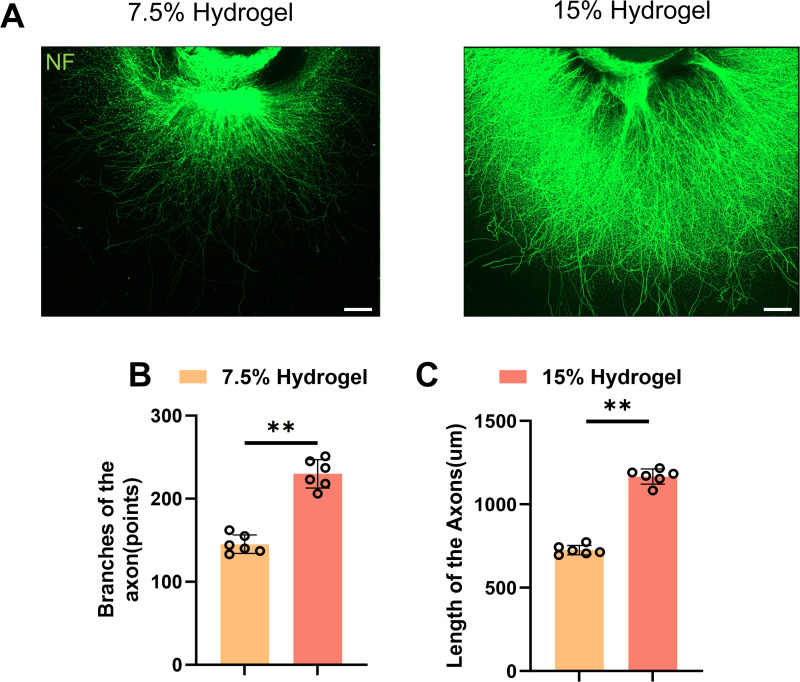
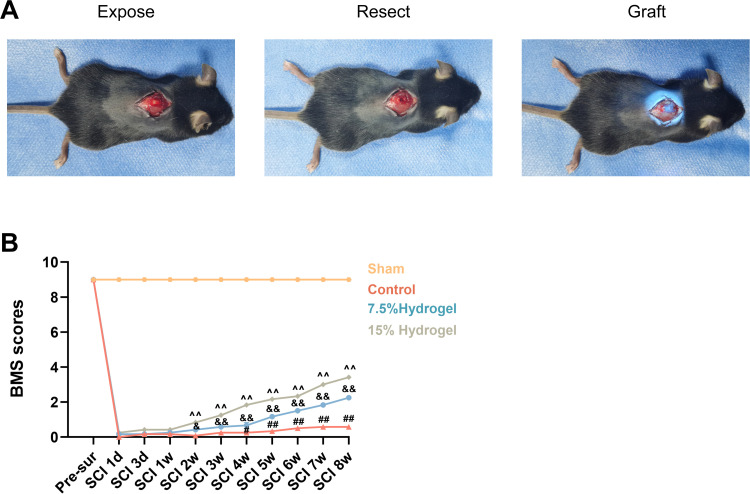
The core challenge in spinal cord injury(SCI) treatment is promoting axonal regeneration and forming new neural connections in damaged areas. However, mature CNS neurons have limited regenerative capacity, causing long-term dysfunction. Axonal regeneration involves elongating axons guided by growth cones, which sense and respond to external mechanical signals, integrating them into cytoskeleton reconstruction. After injury, growth cones experience altered mechanical forces due to changes in ECM stiffness. However, systematic studies on matrix stiffness's impact on axonal regeneration post-SCI remain insufficient. This study investigates the influence of hydrogel stiffness on axonal regeneration following SCI. Using gelatin methacryloyl (GelMA) hydrogels with varying stiffness levels, we cultured dorsal root ganglia (DRG) neurons in vitro and applied the hydrogels to a complete transection SCI mouse model. Results demonstrated that higher stiffness GelMA (15% w/v) significantly enhanced axonal extension and sensory functional recovery compared to lower stiffness (7.5% w/v). The study highlights the critical role of ECM stiffness in regulating axonal regeneration and suggests that optimizing hydrogel stiffness can promote neural regeneration and functional recovery after SCI. These findings provide valuable insights for developing therapeutic strategies in SCI treatment.
Copyright: © 2025 Deng et al. This is an open access article distributed under the terms of the Creative Commons Attribution License, which permits unrestricted use, distribution, and reproduction in any medium, provided the original author and source are credited.
Conflict of interest statement
The authors have declared that no competing interests exist.
Figures

References
-
- Choo AM, Liu J, Lam CK, Dvorak M, Tetzlaff W, Oxland TR. Contusion, dislocation, and distraction: primary hemorrhage and membrane permeability in distinct mechanisms of spinal cord injury. J Neurosurg Spine. 2007;6(3):255–66. - PubMed
MeSH terms
Substances
LinkOut - more resources
Full Text Sources
Medical
