


CD133 and CD166 Stem Cells Markers Expression, Clinicopathological Parameters, and Fragmentation Response Patterns of ypT3 Rectal Cancer Following Neoadjuvant Chemoradiotherapy
- PMID: 40564019
- PMCID: PMC12189333
- DOI: 10.3390/biomedicines13061300
CD133 and CD166 Stem Cells Markers Expression, Clinicopathological Parameters, and Fragmentation Response Patterns of ypT3 Rectal Cancer Following Neoadjuvant Chemoradiotherapy
Abstract
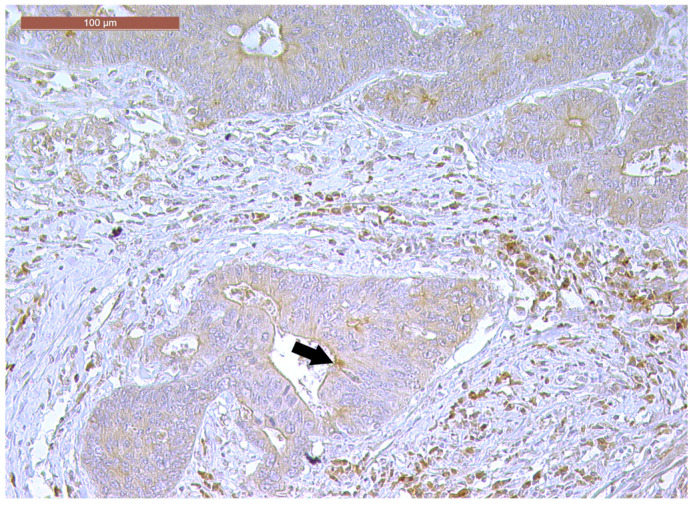
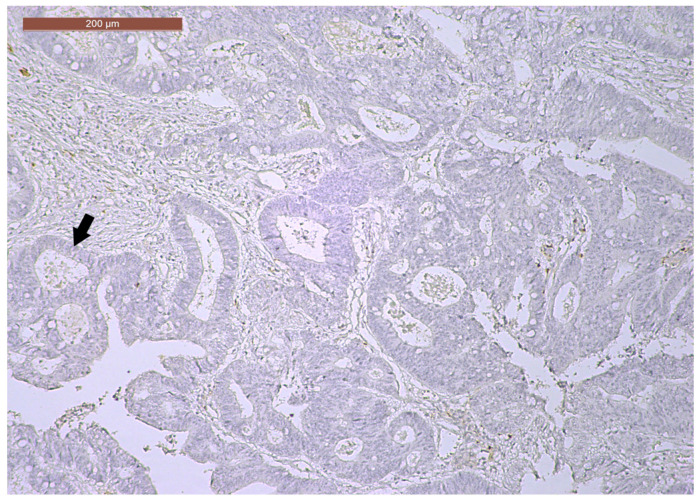
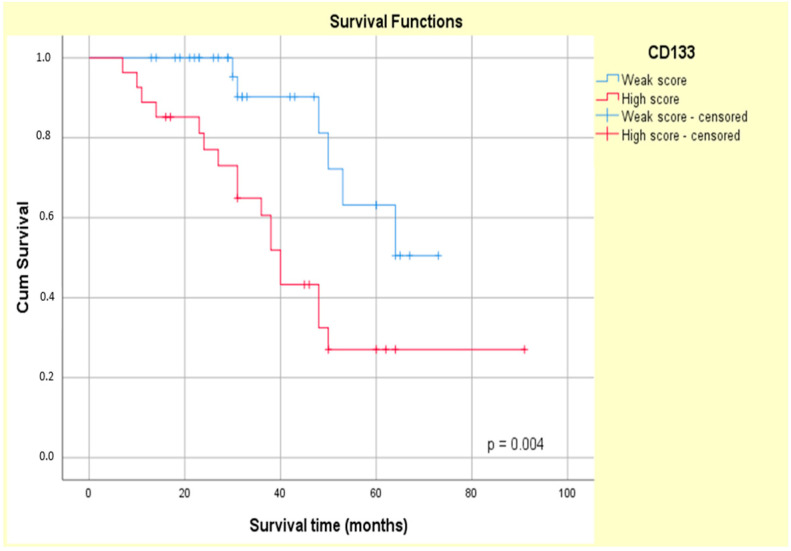
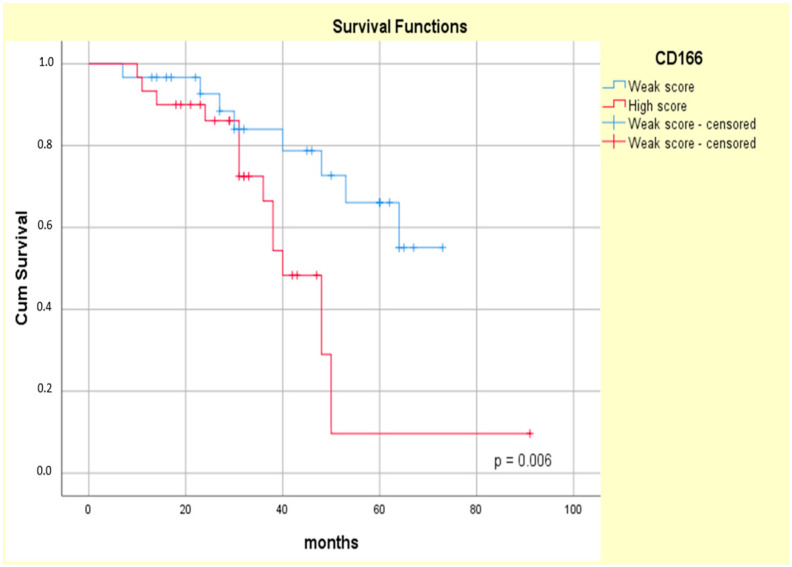
Background: The effectiveness of neoadjuvant chemoradiotherapy (nCRT) is variable in locally advanced rectal cancer (LARC) patients, the ypT3 stage having a minimal or moderate response. The aim of our study was the evaluation of the association between CD133 (Prominin1) and CD166 (ALCAM) expression, survival parameters, and clinicopathological characteristics of a subgroup of LARC patients who achieved ypT3, showing post-nCRT and TME tumor fragmentation response and the assessment of these CSCs biomarkers value as indicators of the nCRT tumor response. Methods: Our study group comprised 60 LARC patients who achieved ypT3 status and exhibited a tumor fragmentation pattern following nCRT. Clinicopathological parameter and survival evaluations, along with CD133 and CD166 immunohistochemistry and scoring, were performed and the associations between different parameters were tested. Results: High CD133 expression was significantly associated with ypN category (p = 0.018), lymphovascular invasion (LVI) (p = 0.009), perineural invasion (PnI) (p = 0.006), and tumor grading (p = 0.047), while high CD166 expression was significantly associated with LVI (p = 0.020) and PnI (p = 0.028). Tumors with high CD133 and CD166 expressions were associated with decreased overall survival (OS) (p = 0.004 and p = 0.006). Cox regression analysis identified high CD133 and CD166 expression as independent factors associated with reduced survival (HR = 3.237, p = 0.014 and HR = 2.866, p = 0.020). Conclusions: Our results support the hypothesis that CD133 and CD166 are putative CSC biomarkers associated with aggressive behavior and a poor prognosis in LARC, offering opportunities for personalized targeted therapies.
Keywords: CD133; CD166; LARC; fragmentation pattern; immunohistochemistry; neoadjuvant chemoradiotherapy; rectal cancer; ypT3 stage.
Conflict of interest statement
The authors declare that they have no conflicts of interest.
Figures
References
-
- Puglisi C., Giuffrida R., Borzì G., Di Mattia P., Costa A., Colarossi C., Deiana E., Picardo M.C., Colarossi L., Mare M., et al. Radiosensitivity of cancer stem cells has potential predictive value for individual responses to radiotherapy in locally advanced rectal cancer. Cancers. 2020;12:3672. doi: 10.3390/cancers12123672. - DOI - PMC - PubMed
LinkOut - more resources
Full Text Sources
Research Materials
Miscellaneous
