. 2025 Jun 14;15(12):1758.
doi: 10.3390/ani15121758.

Effects of Different Rearing Methods on the Intestinal Morphology, Intestinal Metabolites, and Gut Microbiota of Lueyang Black-Bone Chickens

Affiliations

Effects of Different Rearing Methods on the Intestinal Morphology, Intestinal Metabolites, and Gut Microbiota of Lueyang Black-Bone Chickens

Shuang Zeng et al. Animals (Basel). .

Abstract

The Lueyang black-bone chicken represents a distinct indigenous avian breed native to China and it is a slow-growing broiler breed. The gut, whose primary function is to digest food and absorb nutrients, is also home to a large and diverse microbial community. The intestinal morphology, intestinal metabolites, and gut microbiota are critical determinants of nutrient utilization efficiency and immune health in poultry. This study investigates the impact of two distinct rearing modalities-cage-raised (CR) and cage-free (CF)-on the intestinal morphology, intestinal metabolites, and gut microbiota of the duodenum and cecum in Lueyang black-bone chickens. Additionally, we have integrated metabolomics and microbiome analyses. Morphological assessments revealed that, in comparison to the CR group, the CF group exhibited a significant increase in duodenal villi height (VH) and crypt depth (CD) (p < 0.01). Furthermore, there was a notable increase in the number of intestinal inflammatory cells within the CF group. Non-targeted metabolomics indicated an upregulation of omega-3 series polyunsaturated fatty acids and bile acid metabolites in the CR group. Conversely, the CF group demonstrated significantly elevated levels of lysophosphatidylcholine (LPC) and phosphatidylcholine (PE) in the intestine. Microbiome analysis revealed that in the duodenum, beneficial bacteria (e.g., Lactobacillus) were the dominant genera in the CF group, while the Bacteroides predominate in the CR group. Correlation analyses indicated a positive association between LPC levels and the presence of eight bacterial genera, including Ureaplasma. The omega-3 series polyunsaturated fatty acids were positively correlated with three bacterial genera, such as Flavobacterium. Notably, bile acid metabolites exhibited a significant positive correlation with Rikenellaceae_RC9_gut_group. In conclusion, this study provides novel insights into how rearing methods influence intestinal morphology, intestinal metabolites, and gut microbiota, offering a new perspective for the scientific management of poultry with the premise of ensuring animal health and welfare.

Keywords: Lueyang black-bone chicken; gut microbiota; intestinal metabolites; intestinal morphology; rearing method.


Conflict of interest statement

The authors declare that there are no conflicts of interest.

Figures
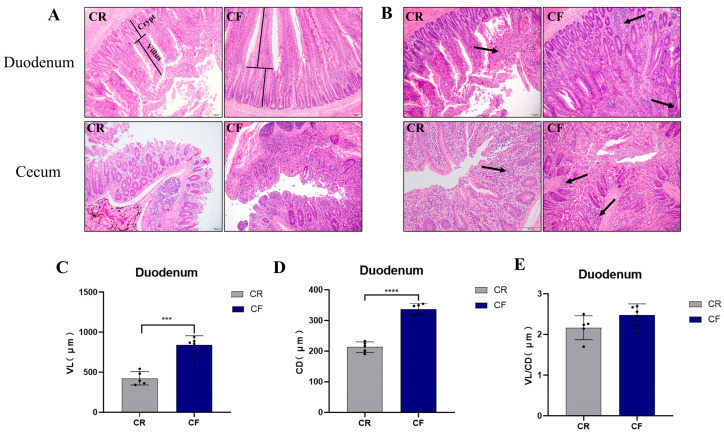
Figure 1
Figure 1
Effects of different rearing patterns on the intestinal morphology of chicken. (A,B) Histological observation of the duodenum and cecum. Black arrows represent inflammatory cell infiltration. Scale bar = 100 μm. (C) Duodenal villi length. (D) Duodenal crypt depth. (E) Villi–crypt ratio. *** p < 0.001, **** p < 0.0001. CR, cage-raised; CF, cage-free.
Figure 2
Figure 2
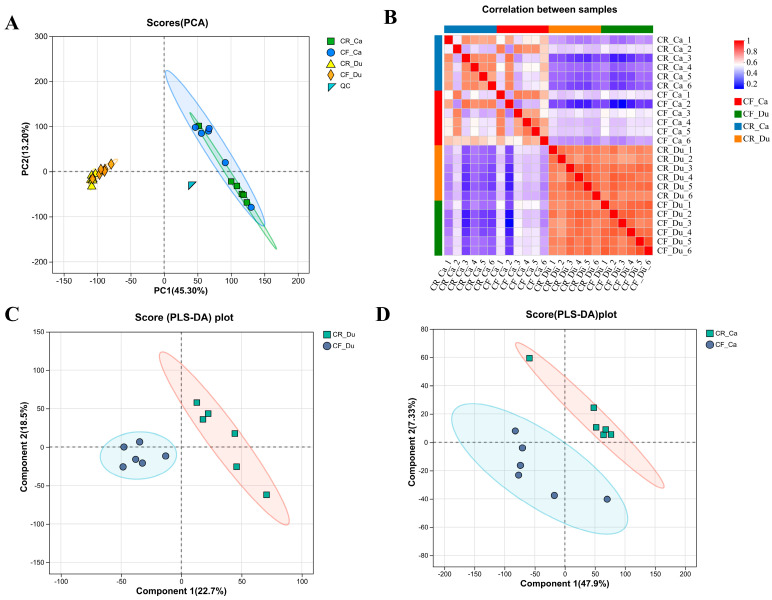
Multivariate analysis of metabolomics data from different rearing methods. (A) Sample PCA analysis; (B) sample correlation heat map; (C) PLS-DA analysis of duodenal samples; (D) PLS-DA sample analysis of cecal samples.
Figure 3
Figure 3
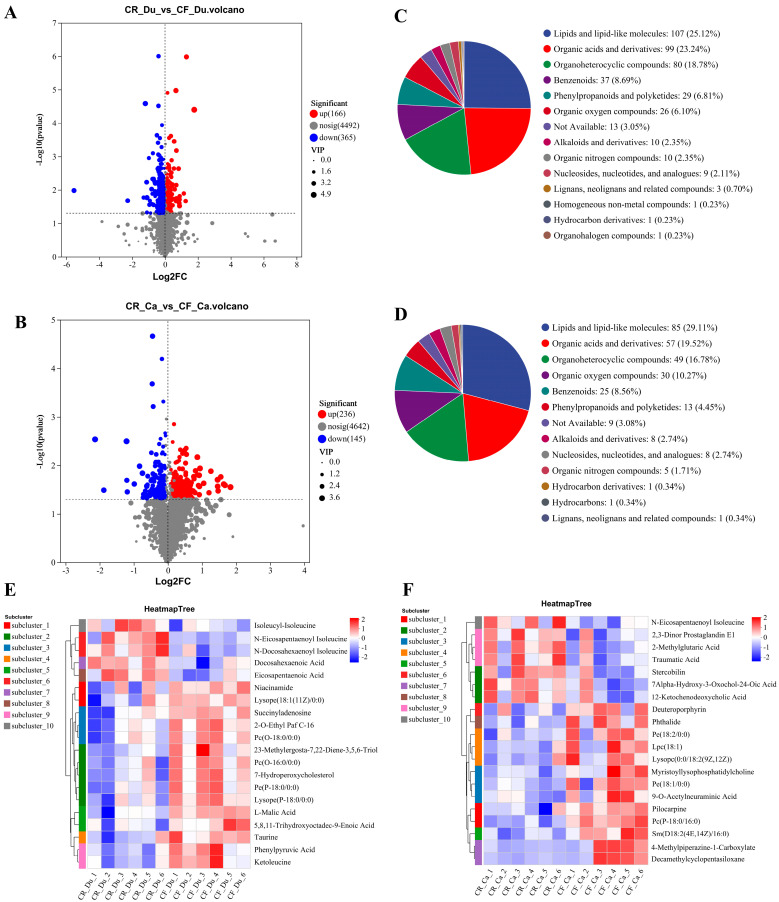
Screening and identification of differential metabolites under different rearing modes. (A) CR vs. CF volcano diagram in the duodenum; (B) CR vs. CF volcano diagram in the cecum; (C) classification of CR vs. CF DMs in the duodenum; (D) classification of CR vs. CF DMs in the cecum; (E) the 20 DMs in the duodenum; (F) the 20 DMs in the cecum.
Figure 4
Figure 4
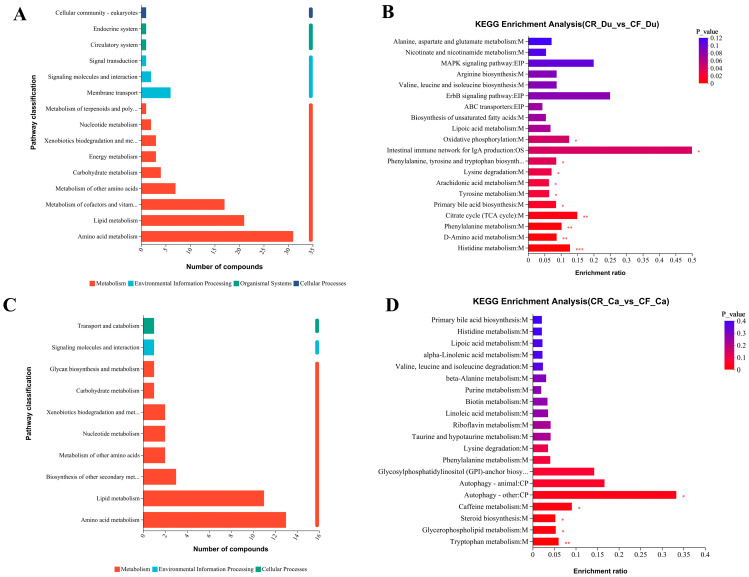
KEGG enrichment of DMs. (A) CR vs. CF DM functional pathways in the duodenum; (B) the enrichment of CR vs. CF DMs in the duodenum; (C) CR vs. CF DM functional pathways in the cecum; (D) the enrichment of CR vs. CF DMs in the cecum. * p < 0.05, ** p < 0.01, and *** p < 0.001.
Figure 5
Figure 5
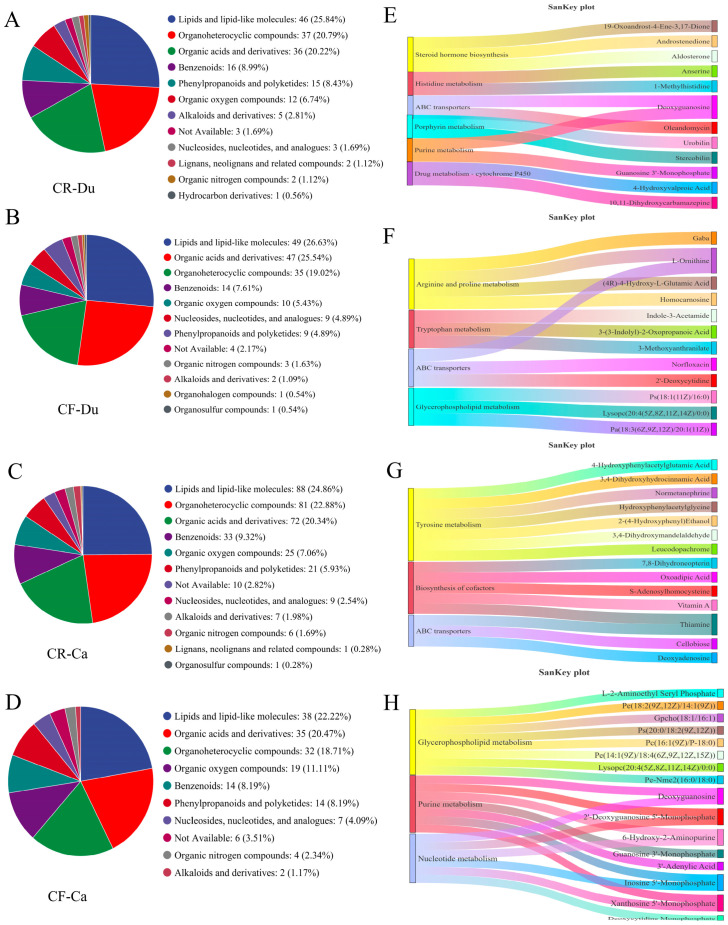
Analysis of unique metabolites under different rearing modes. (A,E) Classification and Sankey diagram of UMs from the CR group in the duodenum; (B,F) classification and Sankey diagram of UMs from the CF group in the duodenum; (C,G) classification and Sankey diagram of UMs from the CR group in the cecum; (D,H) Classification and Sankey diagram of UMs from the CF group in the cecum.
Figure 6
Figure 6
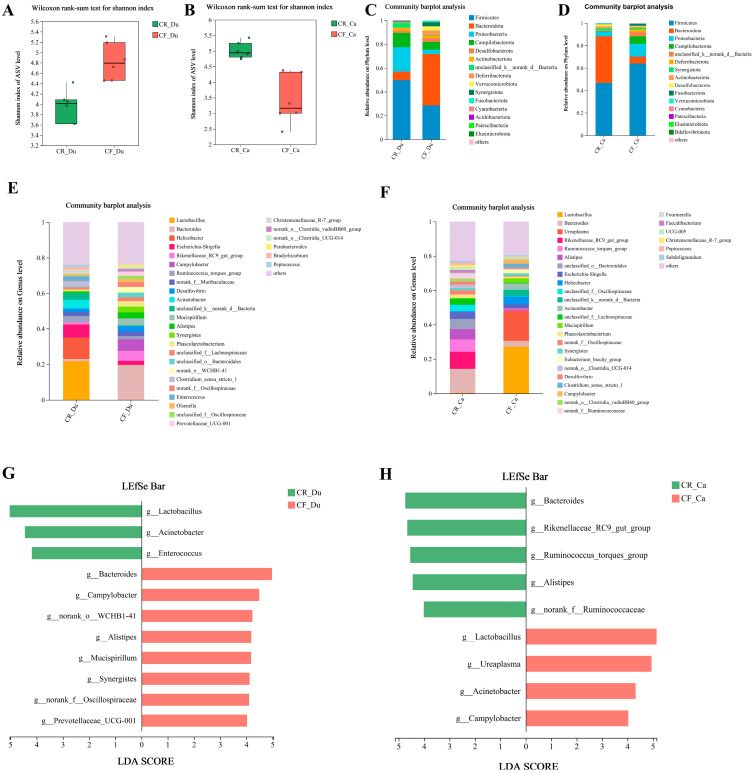
The effects of different rearing modes on the gut microbiota of chicken. (A) Alpha diversity of duodenal microbiota; (B) alpha diversity of cecal microbiota; (C) relative abundance of phylum in the duodenum; (D) relative abundance of phylum in the cecum; (E) relative abundance of genera in the duodenum; (F) relative abundance of genera in the cecum; (G) LEfSe plot of differential taxa in duodenum; (H) LEfSe plot of differential taxa in cecum.
Figure 7
Figure 7
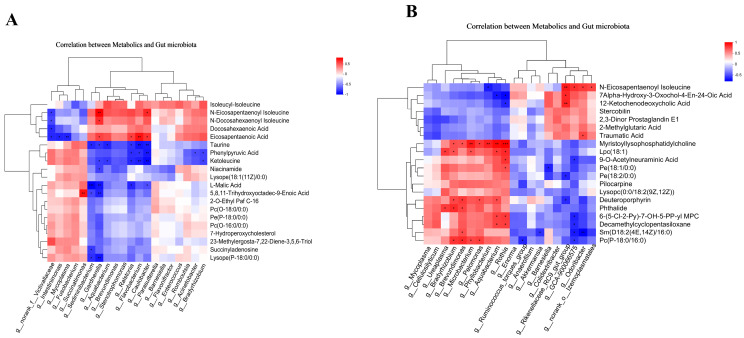
Correlations between gut differential metabolites and microorganisms under different rearing modes. (A) Correlation analysis in the duodenum; (B) correlation analysis in the cecum. * p < 0.05, ** p < 0.01, and *** p < 0.001.

References

    1. Siegel P.B. Evolution of the modern broiler and feed efficiency. Annu. Rev. Anim. Biosci. 2014;2:375–385. doi: 10.1146/annurev-animal-022513-114132. - DOI - PubMed
    1. Shao M.H., Shi K., Zhao Q., Duan Y., Shen Y.Y., Tian J.J., He K., Li D.F., Yu M.L., Lu Y.Q., et al. Transcriptome Analysis Reveals the Differentially Expressed Genes Associated with Growth in Guangxi Partridge Chickens. Genes. 2022;13:798. doi: 10.3390/genes13050798. - DOI - PMC - PubMed
    1. Zhai B., Zhao Y., Li H., Li S., Gu J., Zhang H., Zhang Y., Li H., Tian Y., Li G., et al. Weighted gene co-expression network analysis identified hub genes critical to fatty acid composition in Gushi chicken breast muscle. BMC Genom. 2023;24:594. doi: 10.1186/s12864-023-09685-8. - DOI - PMC - PubMed
    1. Zhang S., Zhang J., Cao C., Cai Y., Li Y., Song Y., Bao X., Zhang J. Effects of Different Rearing Systems on Lueyang Black-Bone Chickens: Meat Quality, Amino Acid Composition, and Breast Muscle Transcriptome. Genes. 2022;13:1898. doi: 10.3390/genes13101898. - DOI - PMC - PubMed
    1. Guo Y., Liao J.H., Liang Z.L., Balasubramanian B., Liu W.C. Hepatic lipid metabolomics in response to heat stress in local broiler chickens breed (Huaixiang chickens) Vet. Med. Sci. 2021;7:1369–1378. doi: 10.1002/vms3.462. - DOI - PMC - PubMed

LinkOut - more resources