


Cold-Sensing TRP Channels and Temperature Preference Modulate Ovarian Development in the Model Organism Drosophila melanogaster
- PMID: 40565102
- PMCID: PMC12192652
- DOI: 10.3390/ijms26125638
Cold-Sensing TRP Channels and Temperature Preference Modulate Ovarian Development in the Model Organism Drosophila melanogaster
Abstract
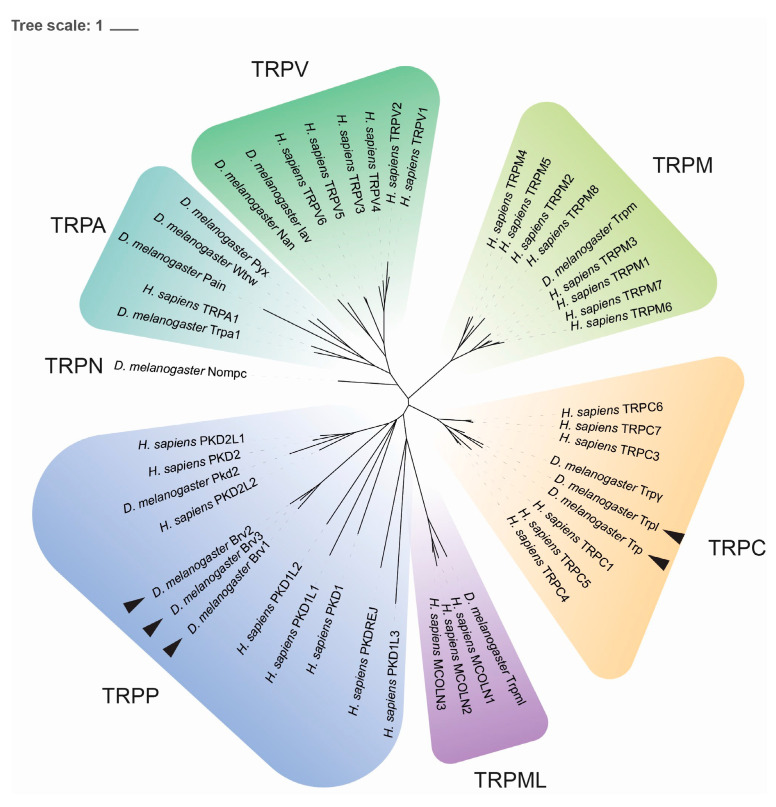
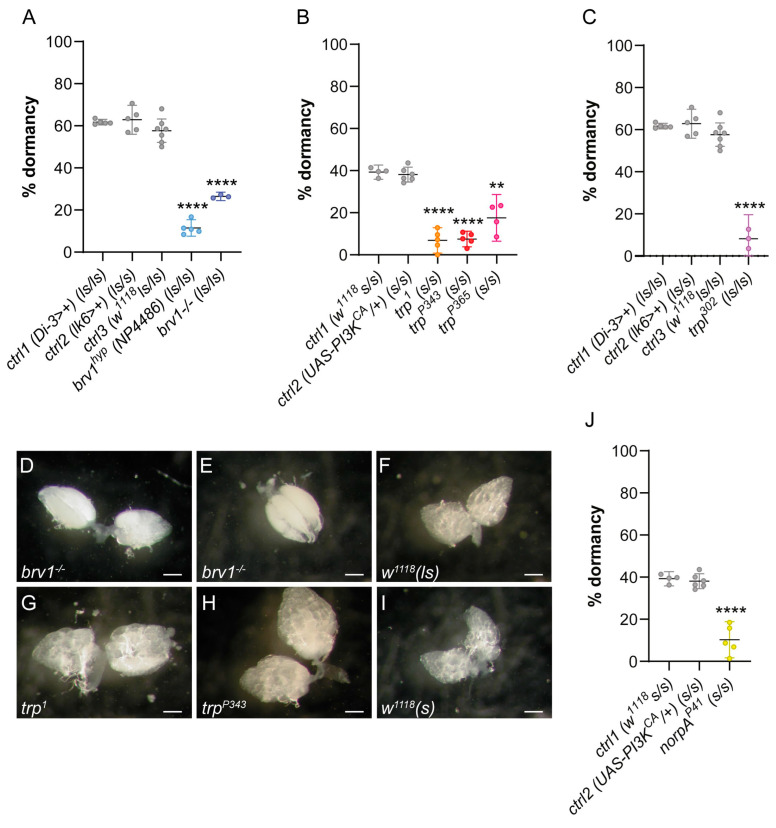
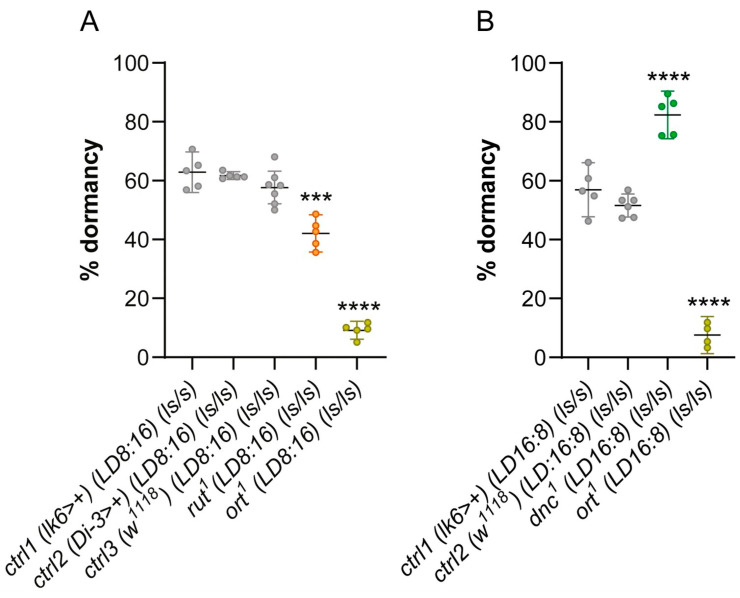
Temperature is perceived primarily via transient receptor potential (TRP) channels, which are integral to the molecular machinery sensing environmental and cellular signals. Functional evidence of TRP channels' involvement in regulating cold-induced developmental/reproductive responses remains scarce. Here, we show that mutations affecting cold-sensing TRP channels antagonize the reduction in ovarian development induced by low temperatures (reproductive dormancy) in Drosophila melanogaster. More specifically, mutants for brv1, trp, and trpl significantly lowered dormancy levels at 12 °C and exhibited well-developed oocytes characterized by advanced vitellogenesis. Similarly, functional knockouts for norpA, a gene encoding a phospholipase C acting downstream to Trp and Trpl, exhibited a reduced dormancy response, suggesting that Ca2+ signaling is key to relaying cold-sensing stimuli during dormancy induction and maintenance. Finally, mutants with an altered temperature preference (i.e., exhibiting impaired cold or warm avoidance) differentially responded to the cold, either lowering or increasing dormancy levels. In summary, our phenotypic analysis provides functional evidence of developmental/reproductive modulation by specific cold-sensing TRP channels in Drosophila melanogaster and indicates that temperature preference affects developmental processes.
Keywords: TRP channels; ovarian development; reproductive dormancy; temperature preference; temperature sensing.
Conflict of interest statement
The authors declare no conflicts of interest.
Figures
References
MeSH terms
Substances
Grants and funding
- NA/CaRiPaRo
- Junior Research Fellowship/Department of Biology at the University of Padua
- Postdoctoral fellowship (Project N° 101109842)/Marie Sklodowska-Curie Actions
- Comparative Insect Chronobiology (CINCHRON), Marie Sklodowska-Curie Initial Training Network/EU Horizon 2020
- project 101169474 - INCITE. Horizon-MSCA-2023-DN-01/EU Horizon 2020
LinkOut - more resources
Full Text Sources
Molecular Biology Databases
Miscellaneous
