


Exploring Runs of Homozygosity and Heterozygosity in Sheep Breeds Maintained in Poland
- PMID: 40565601
- PMCID: PMC12192788
- DOI: 10.3390/genes16060709
Exploring Runs of Homozygosity and Heterozygosity in Sheep Breeds Maintained in Poland
Abstract
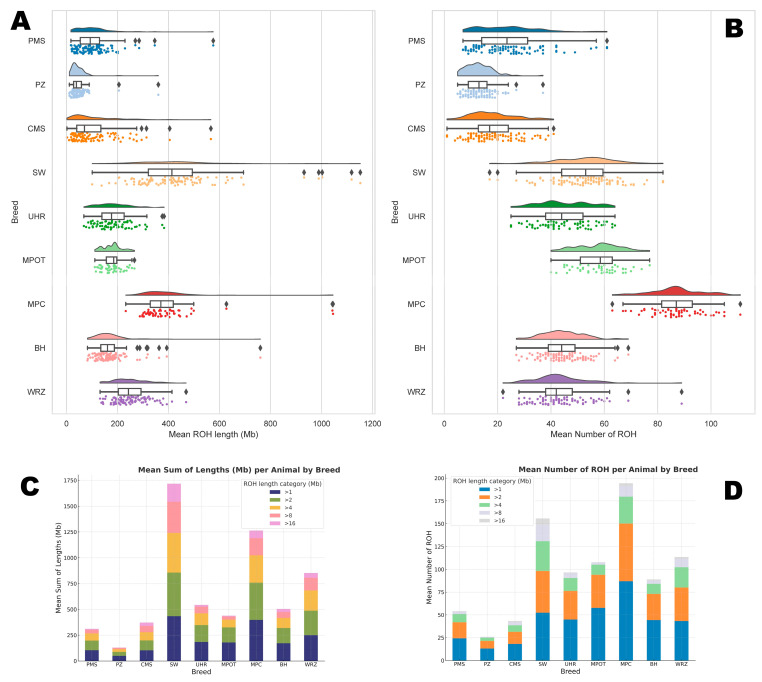
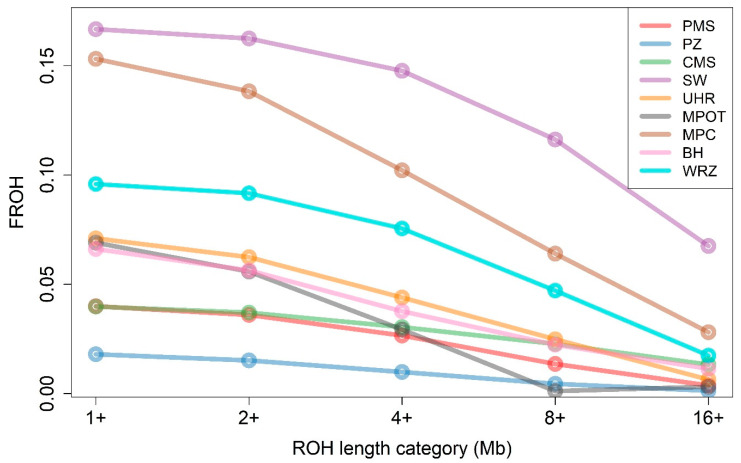
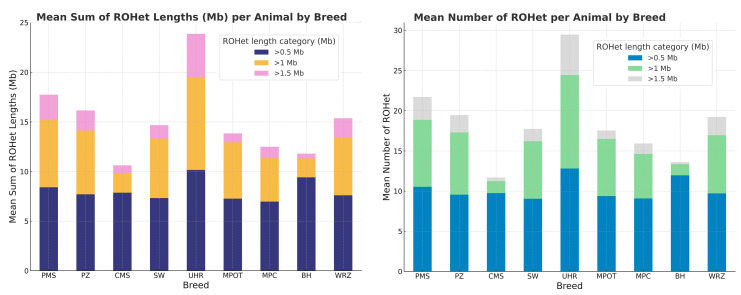
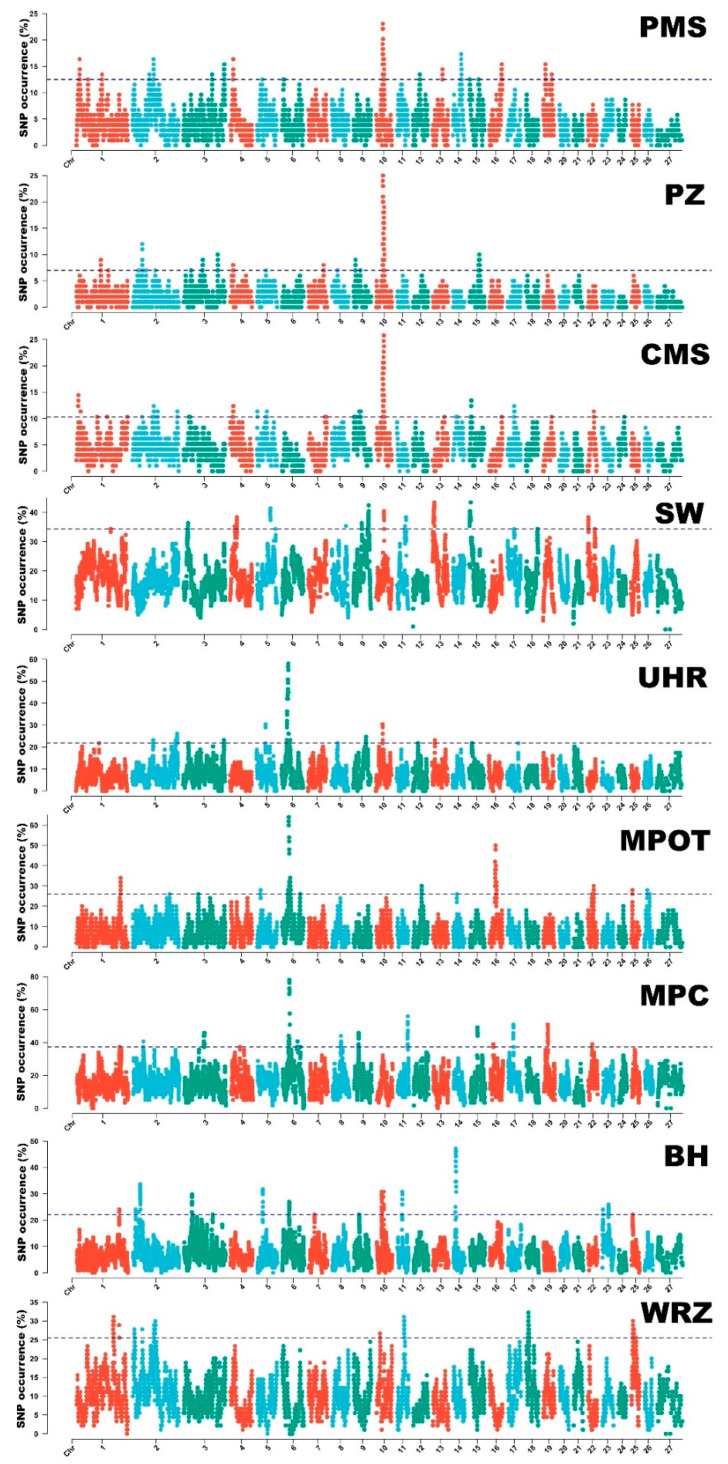
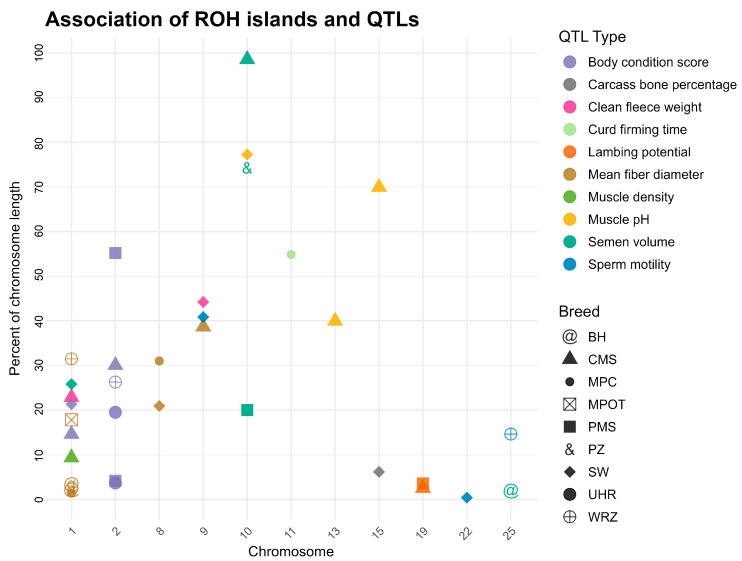
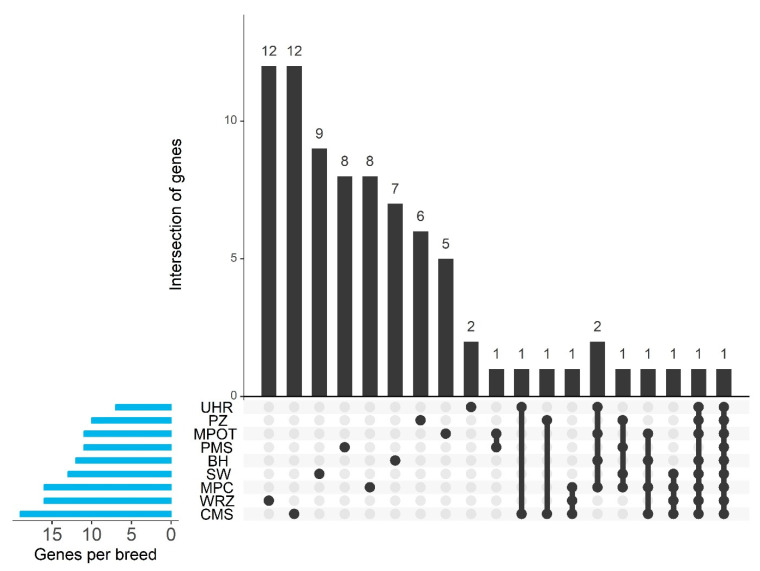
Objectives: The study investigates runs of homozygosity (ROH) and heterozygosity (ROHet), and their patterns in nine sheep breeds (772 animals in total) maintained in Poland (native and conserved), corresponding to their genetic diversity, inbreeding levels, and selection signatures. Methods: Genotypes were obtained using the Illumina OvineSNP50 BeadChip and quality-filtered SNPs were used to detect ROH and ROHet segments with the detectRUNS R package, following stringent parameters for segment length, SNP density, and genotype quality. Results: Significant variation in ROH characteristics was observed across breeds. Short ROH segments were predominant in all breeds, indicating historical inbreeding events. In contrast, longer ROH segments signified recent inbreeding, particularly in Swiniarka (SW) and Polish Merino of Colored Variety (MPC). The ROH-based genomic inbreeding coefficient (FROH) varied across breeds, with SW exhibiting the highest levels, suggesting reduced genetic diversity. ROHet analysis revealed that Uhruska (UHR) had the highest heterozygous segments span, while Black-headed (BH) sheep exhibited the lowest ROHet extent. ROH islands identified across breeds revealed regions under selection, associated with traits such as reproductive performance, wool quality, and body condition. Genes located within these islands (e.g., U6, SPP1, ABCG2) were linked to economically significant traits including milk production, growth, and carcass quality. Conclusions: The presented results highlight the genetic adaptations shaped by selection pressures, while also providing insights into the genetic architecture of sheep breeds maintained in Poland.
Keywords: ROH; autozygosity; breed diversity; inbreeding coefficient.
Conflict of interest statement
The authors declare no conflicts of interest.
Figures
References
-
- Curik I., Ferencakovic M., Solkner J. Inbreeding and runs of homozygosity: A possible solution to an old problem. Livest. Sci. 2014;166:26–34. doi: 10.1016/j.livsci.2014.05.034. - DOI
-
- Kizilaslan M., Arzik Y., Behrem S., White S.N., Cinar M.U. Comparative genomic characterization of indigenous fat-tailed akkaraman sheep with local and transboundary sheep breeds. Food Energy Secur. 2023;13:e508. doi: 10.1002/fes3.508. - DOI
MeSH terms
Grants and funding
LinkOut - more resources
Full Text Sources
Research Materials
Miscellaneous
