


Use of Non-Pharmacological Approaches for Migraine Treatment: Results from the Migraine in Aotearoa New Zealand Survey
- PMID: 40565767
- PMCID: PMC12193725
- DOI: 10.3390/jcm14124023
Use of Non-Pharmacological Approaches for Migraine Treatment: Results from the Migraine in Aotearoa New Zealand Survey
Abstract
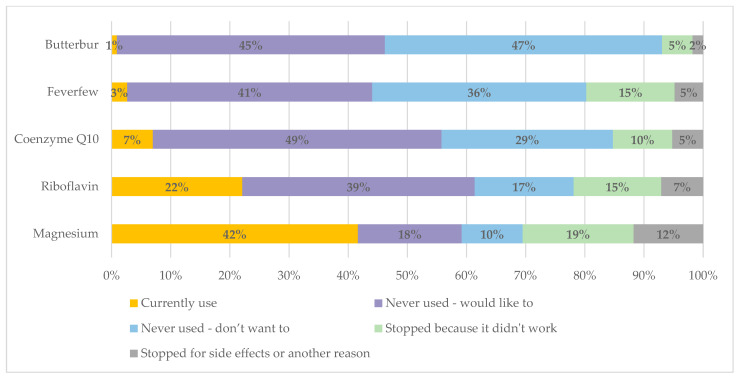
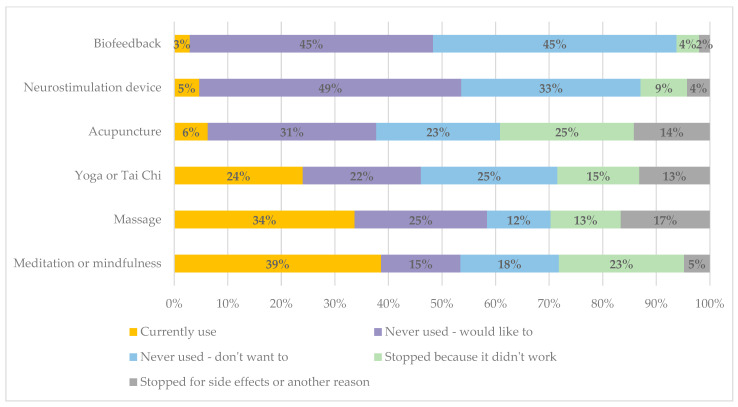
Background/Objectives: Migraine is a common neurological disease with a high disability burden. Despite this, many people with migraine do not take medication to prevent attacks, even when this is indicated. Many non-pharmacological approaches to migraine treatment exist, but little is known about how people with migraine use these options. Methods: The online Migraine in Aotearoa New Zealand (NZ) Survey collected responses from 530 people with migraine from August to October 2022. Questions included current and previous use of preventive medications, supplements (e.g., magnesium, riboflavin, coenzyme Q10) and complementary therapies (e.g., meditation, biofeedback, yoga, acupuncture). Results: Around half of the respondents were currently using a supplement, 58% were currently using complementary therapy and half were taking preventive medication. One in five were using all three approaches for migraine prevention. Of those not taking preventive medication, 44% were taking a supplement, and 53% were using complementary therapy. For commonly used non-pharmacological approaches, 20-30% of people had tried them in the past but stopped due to lack of efficacy or other reasons. A high proportion of people would like to try approaches that are not readily available or expensive in NZ (e.g., neurostimulation devices and biofeedback). Conclusions: The use of supplements and complementary therapies for migraine prevention is common, often in combination with medication. There are high levels of discontinuation due to ineffectiveness and cost prohibits use for many. Improved access to non-pharmacological therapies, particularly as an adjunct, has the potential to improve outcomes for people with migraine, but more and better migraine treatment options are also needed.
Keywords: New Zealand; complementary therapy; integrative treatment; migraine disorders; migraine prevention; migraine treatment; non-pharmacological treatment; online survey; supplements.
Conflict of interest statement
The authors declare no conflicts of interest.
Figures
References
-
- Global Burden of Disease Collaborative Network Global Burden of Disease Study 2021 (GBD 2021) Results. 2024. [(accessed on 12 June 2024)]. Available online: https://vizhub.healthdata.org/gbd-results/
-
- Lipton R.B., Manack Adams A., Buse D.C., Fanning K.M., Reed M.L. A Comparison of the Chronic Migraine Epidemiology and Outcomes (CaMEO) Study and American Migraine Prevalence and Prevention (AMPP) Study: Demographics and Headache-Related Disability. Headache. 2016;56:1280–1289. doi: 10.1111/head.12878. - DOI - PMC - PubMed
LinkOut - more resources
Full Text Sources
Miscellaneous
