


Lamotrigine Therapy: Relation Between Treatment of Bipolar Affective Disorder and Incidence of Stevens-Johnson Syndrome-A Narrative Review of the Existing Literature
- PMID: 40565849
- PMCID: PMC12194526
- DOI: 10.3390/jcm14124103
Lamotrigine Therapy: Relation Between Treatment of Bipolar Affective Disorder and Incidence of Stevens-Johnson Syndrome-A Narrative Review of the Existing Literature
Abstract
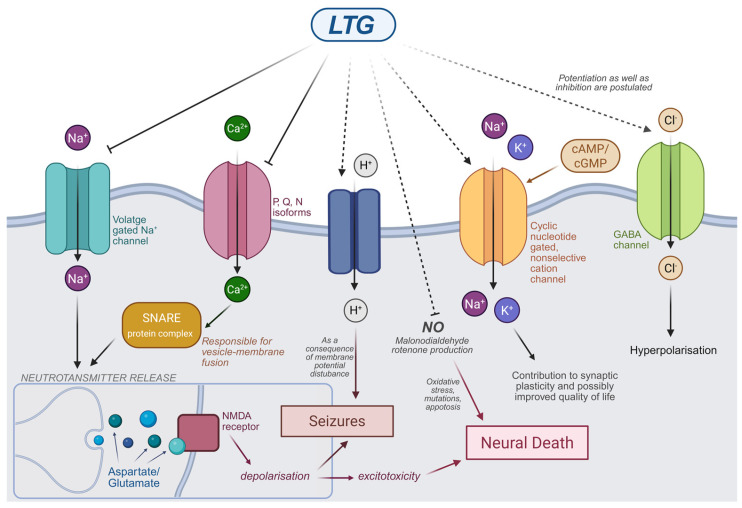
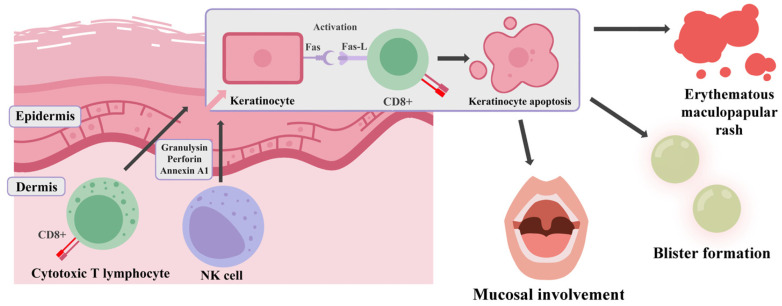
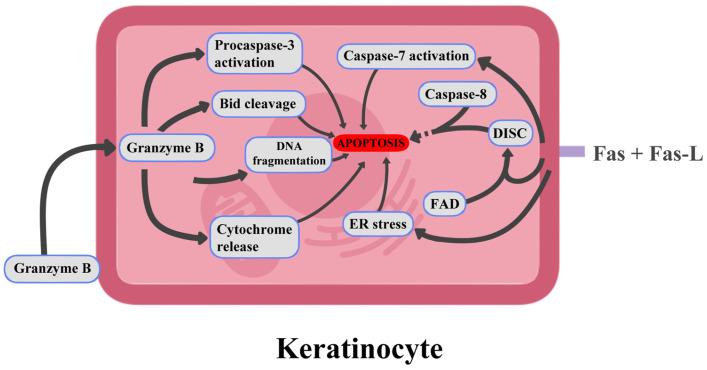
Lamotrigine is the drug of choice for the treatment of depressive episodes in bipolar disorder (BD). Despite its generally favorable tolerability profile, lamotrigine use is associated with a risk of Cutaneous Adverse Drug Reactions (cADRs), including Stevens-Johnson Syndrome (SJS) and Lyell's syndrome, also known as toxic epidermal necrolysis (TEN). Genetic markers HLA and, in particular, HLA-B 15:02 and HLA-A 31:01 are crucial in predicting individuals' susceptibility to developing the symptoms. The symptoms are triggered by type IV hypersensitivity developing because of CTL and NK cell activation, leading to keratinocyte apoptosis, epidermal necrosis and skin detachment. The exact pharmacotherapy that should be widely utilized in treating affected patients has not yet been established. New therapies including JAK inhibitors or cyclosporine show potential in improving outcomes by reducing mortality and enhancing the period of recovery. Key factors in preventing cADRs may include adequate patient observation, gradual titration of the patient's dose, and reduction of risk factors through screening for HLA polymorphisms. When the initial symptoms of cADR are identified, it is imperative to make an immediate decision to discontinue treatment, as this can significantly reduce the risk of progression to SJS/TEN and systemic complications. The purpose of this review is to identify a significant correlation between lamotrigine use in BD and the occurrence of SJS by showing the risk factors, neuropharmacological mechanisms, immune response and correctness of pharmacotherapy.
Keywords: Stevens–Johnson syndrome; bipolar affective disorder; cutaneous adverse drug reactions; hypersensitivity reactions; lamotrigine; mood stabilizers.
Conflict of interest statement
The authors declare no conflicts of interest.
Figures
References
Publication types
LinkOut - more resources
Full Text Sources
Research Materials
